


Orrin Woodward: Life & Business

New York Times best-selling author Orrin Woodward shares his life leadership secrets.

  • Orrin Woodward

    1
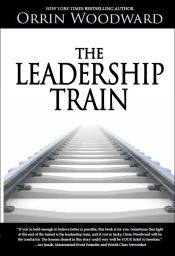
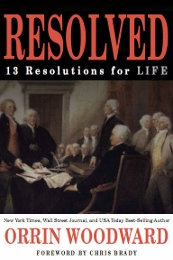
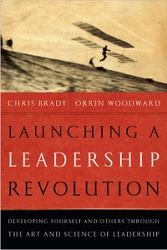
    Orrin Woodward co-authored two NY Times bestsellers: LeaderShift and Launching a Leadership Revolution. His first solo book RESOLVED: 13 Resolutions for LIFE made the Top 100 All-Time Best Leadership Books List. In 2011 Orrin was awarded the (IAB) Leader of the Year Award.

    Orrin has co-founded two multi-million dollar leadership companies and serves as the Chairman of the Board of the LIFE Business. He has a B.S. degree from GMI-EMI (now Kettering University) in manufacturing systems engineering. He holds four U.S. patents, and won an exclusive National Technical Benchmarking Award.

    This blog is an Alltop selection and ranked in HR's Top 100 Blogs for Management & Leadership.

  • Orrin Woodward on Twitter


John Law: Paper Money & Inflation

Posted by Orrin Woodward on May 24, 2013

John Law has been called a knave, fool, and an evil genius. Probably all are true in some sense, but probably most accurately, he is another person who sought utopia in something for nothing (SFN). Printing money is not the same as producing goods. Somehow, however, the lure of SFN, continues tempting governments to print paper and call it real value by government fiat. Simply stated, this results in a devaluing of all the money in the system, making every productive citizen a loser by the government’s unconscionable actions. Nonetheless, inflationary policies, like printing fiat money along with the newer methods involving digits on the computer screen, continue to bilk billions from hard-working Americans.

Most Americans know little about the underlying principles of inflation, but intuitively, they wonder why they work harder every year and yet seem to get further behind. In an effort to educate North America on the evils of inflation, I will share a portion of an article from Adam Hamilton. This article wonderfully explains one of the best documented cases of inflation on record – John Law and France in the 18th century. To truly create a LeaderShift, we must learn what the State is doing to our money, economy, and freedoms. LIFE Leadership is monthly providing CDs, books, and seminars to educate North Americans on their history, liberties, and the need for leadership.

Sincerely,

Orrin Woodward: LIFE Leadership

There are many fabulous examples of this phenomenon throughout history, including Germany after the First World War.  One of the most entertaining ones surrounds the British rogue John Law in the early 1700s.  John Law was forced to flee England in order to avoid prosecution for some alleged crimes.  He traveled around Europe and eventually settled in France, where his powerful personality, incredible mind, and command presence ultimately brought him to the attention of the King of France.

Law convinced the King and the French monetary authorities that in order to have a perpetual business boom, all they needed to do was print enough fiat currency so that business was assured of having access to the capital it needed.  Law stated that a stable gold-backed currency, which by its very nature stops meddlesome government bureaucrats from living beyond their means, was too archaic and far inferior to his new fiat currency theme.  He assured the French ruling class that because the government would print money when more was needed and buy it back when there was a surplus of money, that there would not be inflation and business would have the optimum amount of capital to thrive.  Unfortunately, the French powers that be bought into Law’s inflationist plan and executed the necessary monetary policy to make it happen.

Initially, Law’s plan seemed to be working brilliantly.  In the 1720s, France experienced an incredible boom as vast amounts of new fiat capital flowed into the existing markets.  Prosperity seemed to be everywhere, and the French stock market was exploding.  Soon, ordinary folks were quitting their jobs to hang out on the street where securities were traded and they became day traders.  Charles Mackay reports in his 1841 magnum opus “Extraordinary Popular Delusions and the Madness of Crowds” that one deformed hunch-backed man made large amounts of money renting out his slumped back as a mobile writing table for the frenzied stock jobbers buying and selling French equities on the street!  The wild stories that came out of this particular mania are endlessly fascinating!

John Law became the most famous and loved man in France, accruing enormous wealth for himself.

He then convinced the French government to join him in forming a company to develop the fabled wealth of the Mississippi River, of which the French controlled the gateway with their colony of New Orleans.  The Mississippi company was floated and everyone in France wanted to own shares of this hot new IPO.  They were convinced that they would be able to retire in a year or two because of the legendary wealth that the Mississippi company would generate.  Like hungry sharks boiling around a wounded whale, the people of France started a bidding war that propelled the Mississippi company stock and other French equities to dazzling heights.

Of course, since France was printing inherently worthless fiat money with both hands, the prices of everything in France were rising dramatically.  Gresham’s Law, the timeless axiom that bad money drives good money out of circulation, came into full effect.  Gold coins were hoarded and smuggled out of France, and paper fiat currency was spent as rapidly as it was received.  Eventually the gold hemorrhage became so bad that the French government, on John Law’s advice, outlawed gold.

In the meantime, like all exponential parabolic manias, the French bubble soon collapsed.  The aftermath of the disastrous inflationary policy of creating money out of nothing was brutal, and the Mississippi Scheme is one of the most widely studied speculative manias and bubbles in all of history.  The country of France and the French people bore the consequences of this monetary inflationary nightmare for decades, and some would argue France has never regained the prominence it had before the greatest inflationist of all time, John Law, took the reigns.

The man whom kings used to wait to consult was widely known as the “eldest son of Satan” in France after the bitter fruit of rampant fiat monetary expansion became apparent.  Provocatively, reading accounts of the Mississippi Mania in France and its sister South Sea Bubble in England, which arose at the same time, is eerie in that the parallels with the US NASDAQ tech bubble of early last year are startling and profound.  The lessons of history are never learned by governments and they continually repeat these same mistakes.

Posted in Finances, Freedom/Liberty | 15 Comments »

Edmund Opitz: Man’s Freedom & Responsibility

Posted by Orrin Woodward on May 23, 2013

A man born into freedom is responsible for his life. He cannot blame his father, mother, siblings, environment, partners, or anything else besides himself if he is unhappy with the results. Yes, bad cards are dealt to good people; however, if one keeps playing the game of life, eventually he will receive new cards and develop a winning hand. Man, in other words, must build his life upon the proper principles to reflect his love of God, by serving Him and mankind. People are free to reject what I just wrote, but not free to reject the consequences of living life with improper principles.

Edmund Opitz

Edmund Opitz

I am in the middle of reading a fascinating book by Edmund Opitz, the late Christian Libertarian minister, that is absolutely superb! I love books that make me think at a deeper level and all of Opitz’s books do this. He was an avid reader/thinker, servant of Christ, and lover of (economic, political, and spiritual) liberty. Over the years, I have read most of the classic Christian books like Calvin’s Institutes, Luther’s Bondage of the Will, Augustine’s Confessions, Jonathan Edward’s Freedom of the Will and many others. These books, and my personal leadership journey, led me on a three year study to determine how to explain God’s sovereignty and man responsibility. Since I knew both concepts to be true, I had to comprehend how I could explain this to my own satisfaction and others.

This study was crucial for me as I wanted to be a leader who led people to truth in all areas of life. Consequently, I knew I had plenty of homework ahead of me to get the answers to help others do the same. Mercifully, after hundreds of books read on the subject and thousands of hours of thinking, the breakthrough came. In sum, I do believe man has freedom of will, but, since man’s will is fallen, he wills against God until he is regenerated. I summarized these thoughts on man’s free will and fallen nature in a short quote, “Man is free to will what he wants, but, in his flesh, doesn’t want God.” Anywhere we see man desiring God we know the Holy Spirit has been at work regenerating the mind, heart, and will.

Everyone is free to agree or not agree with what I just wrote, I only share it to explain my three years of pondering one of life’s paradoxes as a lead in to Edmund Opitz’s thoughts on freedom. Think through his thoughts and share why you believe you are responsible to God and mankind and how you live this philosophy in your daily life?

Human beings are virtually without specific instincts. There is no servo-mechanism in men which automatically keeps the human organism or the species within the pattern laid down for human life. Men have to figure things out and, by enormous effort, learn to conform their actions to the relevant norms in the various sectors of life. This absence of instincts in man constitutes the ground for man’s radical inner freedom, the freedom of his will. . .

Men, however, vary enormously from each other at birth, and the differences widen as individuals mature – each into his specialized individuality. And each person has the gift of freedom so radical that he can deny the existence of the creative forces which produced him. This human freedom makes it not only possible but mandatory that man take a hand in the fashioning of his own life. No man creates himself, but every man makes himself, using the created portions of his being as his resources. This is what it means to say that man is a responsible being.

. . . Of all the orders of creation, only man is a responsible being, who can change; everything else, every horse, dog, lion, tiger, and shark is what it is. Only man is, in any measure, responsible for what he is. Man makes himself, and, therefore each person is morally responsible for himself.

Why did the LIFE Leadership founders start our leadership company? Because we want to teach people how to be responsible to their duties in life. Unfortunately, today, we live in a world today where it’s becoming popular to pass the buck. Reality TV shows spew gossip and finger-pointing in an attempt to deflect blame from themselves; radio shows are filled with child-like rants rather than thoughtful solutions to today’s challenges; and free market competition is scorned by Big Business, apparently only allowed on the sports field. Nonetheless, leaders have a responsibility to run against the current of decline, doing their duty by creating a LeaderShift. Whether a leader is recognized, rewarded, or even remembered, it is simply the right thing to do.

Sincerely,

Orrin Woodward

Posted in Freedom/Liberty | 27 Comments »

Entrepreneur as Leader

Posted by Orrin Woodward on May 22, 2013

An entrepreneur must be a leader. Why? Because he or she must build and lead teams of people to accomplish the task, satisfy the customer, and do so at a price that leaves profit for the team members. In other words, ineffective leaders soon prove to be ineffective entrepreneurs because the customer isn’t satisfied nor the teams paid well. Nonetheless, many would-be entrepreneurs start business while ignoring the importance of leadership to the health of their enterprise.

Entrepreneurs should enter into markets where they feel they can satisfy the customers better than their competitors. For instance, Jack Welch, in his early days, was called “Neutron Jack” because he refused to be in a business sector where he couldn’t improve to either #1 or #2. His philosophy of business led him to get out of markets where he couldn’t be the best, and move into markets where he could be the best, thus maximizing profits for the company and ensuring employment for the workers. Incidentally, few seem to understand that only a profitable company can maintain its workers. Since profit is the life-blood of any business, when a company is losing money, it’s similar to a patient losing blood.  In both instances, death results if the bleeding isn’t checked.

Accordingly, leaders are constantly studying the vital signs of their business, ensuring the business is not bleeding to death. In fact, leaders must be PDCA champions, constantly making adjustment in the areas where it can have the most impact. They don’t just change things to make change, however. Instead, they listen, study, and analyze until they determine which area of change could have the biggest impact on the bottom line. Then they do something unheard of in our modern world, namely, take massive action to drive the team and business forward.

Whenever I study a business, the first question I ask is: Who is the leader? If an effective leader is in charge, he can overcome lack of capital, lack of resources, and still beat competitors who have plenty of both. Why? Because leaders constantly are developing innovative ways to solve problems while managers focus on the same methods that worked before. I love the saying: If it isn’t broke, then break it and make it better.

When my co-founders and I started LIFE Leadership, we did so with little funds or resources, but we had a superbly talented leadership team. I knew that the leadership team would quickly build the leadership products that could compete with any leadership team anywhere. Interestingly, over the last 18 months LIFE Leadership has become a $50 million dollar conglomerate through building the highest quality personal development products in the industry.

For example, anyone serious about being an entrepreneur ought to purchase and apply the principles from the Mental Fitness Challenge personal development program. The 13 Resolutions are found in my All-Time Top 100 Leadership book RESOLVED: 13 Resolutions for LIFE.  If applied daily, they will radically change the leadership capabilities of any hungry student. In fact, I have hundreds of emails from satisfied customers who did just that.

In summary, if the reader wants to be a successful entrepreneur, then he must be a successful leader. Building a company without building one’s leadership is a fools way to launch a company. For no company will rise higher than the leadership within the company. America needs leaders to create the LeaderShift! What part will the reader play? Here is another segment of the article on the role of entrepreneurs.

Sincerely,

Orrin Woodward

Entrepreneur as exceptional leader

Hans Karl Emil von Mangoldt  (1824-1868) developed the notion that entrepreneurial profit is the rent of ability. He divided entrepreneurial income into three parts: (1) a premium on uninsured risks; (2) entrepreneur interest and wages, including only payments for special forms of capital or productive effort that did not admit of exploitation by anyone other than the owner; and (3) entrepreneurial rents or payments for differential abilities or assets not held by anyone else. The first part is a return on risk taking; the second part from capital use and production effort, and the third part from ability or asset specificity. Alfred Marshall (1842-1924) carried forward Mangoldt’s notion of rent-of-ability by adding the element of leadership to “entrepreneurial” responsibilities. Marshall’s entrepreneurs “must be a natural leader of men who can choose assistants wisely but also exercise a general control over everything and preserve order and unity in the main plan of business. In fulfilling this organizational function, the entrepreneur must always be “on the lookout for methods that promise to be more effective in proportion to their cost than methods currently in use”. Marshall noted that not everyone had the innate ability to perform this entrepreneurial role as these abilities are so great that very few persons can exhibit all of them in a very high degree. Accordingly, he termed the entrepreneurial rents specifically as a “quasi-rent”, which is a return for exceptional natural abilities, which are not made by human effort, and enable the entrepreneur to obtain a surplus income over what ordinary persons could expect for similar exertions following similar investments of capital and labour in their education and start in life.

Posted in Leadership/Personal Development | 13 Comments »

Clarkston News Reviews LeaderShift

Posted by Orrin Woodward on May 21, 2013

Don Rush, Assistant Publisher for Sherman Publications, wrote an excellent review of LeaderShift recently in the Clarkston News. Don has won numerous awards for column, editorial and feature writing and I was very impressed by the level of detail and understanding he culled out of his first reading of LeaderShift.

I truly believe that any concerned North American, who invest the time to read the book, will finish it a different person than when he began it. The book teaches so much through the dialog and the reports of breakthroughs from different readers astounds even my high expectations of the book.

Oliver DeMille and I had a goal to help change the dialog away from more State/Force solutions and towards more Society/Persuasion solutions. Persuasion solutions require leadership while force “solutions” always resort to threat, intimidation, and losses of freedom. Thank you Don and the Clarkston News for helping create the LeaderShift! Here is Don’s article.

Sincerely,

Orrin Woodward

Don’t Rush Me

I’m part of the ’99%’ and that’s a problem

Which leads me to the new book, LeaderShift


shadow
shadow

May 15, 2013 – Just this weekend I heard/read the Internal Revenue Service was busted targeting groups critical of the government. According to one on-line blog I read:

“The IRS repeatedly changed the criteria it used for singling out nonprofit applications for further review, at one point looking at all groups hoping to make ‘America a better place to live,’ according to new reports Monday morning.

“The Wall Street Journal and Reuters both reported the IRS moved beyond giving a skeptical eye to ‘tea party’ and ‘patriot’ groups. It was also targeting groups focusing on specific issues including ‘government spending,’ ‘government debt,’ ‘Education of the public via advocacy/lobbying to ‘make America a better place to live,’ and all groups that ‘criticize[d] how the country is being run.”

I don’t know about you, but that scares me and it should scare you. Talk about a government/bureaucracy run amok! This is the first we have heard of this even though the powers that be knew about this a full two years ago (in May of 2011). Holy Mother of Tyranny, Batman, how did things go so awry?

It’s been a long time since teachers at Clarkston High School forced me to read George Orwell’s Animal Farm, then 1984 and then Ray Bradbury’s Fahrenheit 451, so I will not draw any conclusions or connections there. Truthfully, that was too long ago and for important stuff I seem to have forgotten my memory.

However (coincidentally?), two weekends ago I finished reading the book, Leadershift by Orrin Woodward and Oliver DeMille. Which, in its own parablistic way explains the problem of a government bloated with money, credentialists and bureaucrats. It also offers an out of the box solution. Solutions only solved by, gulp, changing the Constitution and having taxes broke down like this: local, 4%; state 3% and federal 3% And, let me tell you since I read it, the gears in my head are turning.

It is not a work of nonfiction. It is fiction set in the not too distant future. The premiss, America’s government is broken and run by folks who want to protect their turf, and keep the status quo.

Shift back to recent developments about the IRS. Does anybody see any parallels between Leadershift’s antagonists?

I recommend folks get their hands on this book and read it. And, then get ready to re-read it whilst taking notes, so you can do further research to see if facts portrayed as such, are really true.

For example, in the book I read folks in colonial America were really involved with their local township — and if you were a voting member of the town and you didn’t attend, you could be fined. America’s founders, the authors contend, wrote the Constitution but messed up, because they just figured Americans would always be involved, know the issues, read the laws and ask questions . We don’t and this has allowed more and more power to be usurped by career Washington, DC types.

Which leads me to the headline, “I’m part of the 99% and that’s a problem.” First, while I may be included in the slack-festers of a few years ago who protested the “unfairness” of America (because I can be described by my wealth as a Hundredaire), I am not talking about these folks.

I am talking about the 99% of the voting population who doesn’t attend their local government meetings, or watch broadcast of said meetings, or even read newspaper accounts of local village, township, city or school board meetings. That’s a problem which I am a part of.

I’ve justified not attending local meetings because I used to cover tons of them as a young community newspaper journalist. And let me tell you, these meetings are boring and many times they left bad tastes in my mouth because of the pettiness found there. Like I said, it was my justification for not attending.

Crappy politicians are not born in Washington, DC or in Lansing, Michigan. They start out locally. Then the “cream” of the crop rise to county seats, and so on. I challenge everybody to call their county commissioner and ask them what they learned their first year in office. Here’s how you can tell if that person is honest with you or lying.

“It’s was great. It was democracy in action,” is what the liar will tell you.

“It was an education. The party leaders would come in and tell us how we were gonna’ vote,” is something I’ve heard personally from the mouths of county commissioners.

Do you feel warm and fuzzy now? You shouldn’t. I don’t. Back to Leadershift. Once you read it, your reading isn’t done. You will have to follow up by researching Alexis de Tocqueville’s Democracy in America; the Federalist Papers (in particular Paper 51), 1913 in American history; Twilight of Elites by Christopher Hayes and anything about leadership.

Posted in Freedom/Liberty | 37 Comments »

The IRS & the Five Laws of Decline

Posted by Orrin Woodward on May 17, 2013

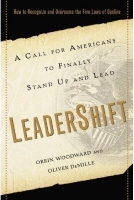
LeaderShift by Orrin Woodward & Oliver DeMille

LeaderShift by Orrin Woodward & Oliver DeMille

Oliver DeMille and I explain the Five Laws of Decline (FLD) in our newly released NY Times bestseller LeaderShift. I originally developed the FLD back in 2008 to explain why companies and societies predictably decline. Indeed, learning to check the FLD is essential for turning around any ailing company or community. Not surprisingly, these five laws are thriving in American Government today. In fact, with the latest disclosures of the IRS targeting conservative groups, the Five Laws of Decline, if anything, appear to be accelerating.  The Founding Fathers intentions of a limited government to provide internal and external defense has been steamrolled by the FLD. Originally, the founders limited federal taxation through state checks and constitutional apportionment. Predictably, although America needed 200 years to reach a trillion dollar national debt, today, it increases over a trillion dollars every year. Evidently, the wisecrack who said, “How did you go broke?” “Well, it was slow at first, but really fast at the end,” spoke more truth than he realized.

President Obama vowed to hold the Internal Revenue Service accountable if reports of political targeting are proven true. “If in fact IRS personnel engaged in the kind of practices that have been reported on and were intentionally targeting conservative groups, then that’s outrageous. And there’s no place for it,” Obama told reporters. “And they have to be held fully accountable. Because the IRS as an independent agency requires absolute integrity, and people have to have confidence that they’re … applying the laws in a nonpartisan way.” In LeaderShift, we explain government expansion, writing, “There is no such thing as limited government without limiting the funds available to the government.” In effect, because the government today, including the IRS, has no real checks upon its powers, the FLD explain why continued crisis and bureaucratic overreach are expanding. LeaderShift, however, doesn’t just identify the FLD. It suggests real solutions to check them in American government today. By viewing society through the FLD lens, LeaderShift studies the tide while other pundits continue to talk about the waves.

Today, on the Dennis Miller Radio Show, at 11:15 am ET, I will be discussing how the FLD are destroying American freedoms through unchecked power-hungry organizations like the IRS. When the State increases its role in America, it does so through an increased use of force. Accordingly, as the coercive State increases, the voluntary communities within society correspondingly decrease, leaving more force and less freedoms for its citizens. Whomever said ignorance was bliss was plain ignorant, and ignorance of the Five Laws of Decline is one of the main reasons America is losing its freedoms and purpose. This is a call for all concerned Americans to get educated on the FLD and how to check them within organization, communities, and society.

Sincerely,

Orrin Woodward

Posted in Freedom/Liberty | 54 Comments »

Role of Entrepreneur

Posted by Orrin Woodward on May 15, 2013

I read an interesting article today on the role of entrepreneurs today. I have played each of these roles at various parts in my entrepreneurial journey just like the reader will in theirs. Entrepreneurs gather as many facts and relevant data as possible in their field of endeavor, but, at the end of the day, they must move ahead without any guarantees on the outcomes. Entrepreneurship, in other words, demands faith to a degree an employee is unwilling to endure.

Richard Cantillon, the great French economist, was the first to recognize the important role of the entrepreneur as the catalyst for economic growth. In a true free-enterprise system, entrepreneurs only advance by serving the customers through innovative methods and processes. Customers do not care about good intentions, hard work, or personal problems, they just want results. Entrepreneurs are those rare individuals who blend leadership, strategy, and courage to implement game plans with the goal to satisfy customer demands.

Free Enterprise is another way of saying the customer is king. Whomever satisfies the customers is promoted into leadership. However, as soon as he or she cannot get the job done, they will be replaced by another competitor who will. Tough; Cold-hearted; Unforgiving? These are all epithets hurled at the free enterprise system by those who do not comprehend the importance of customer satisfaction. Imagine a world where people returned phone calls when they said they would, completed tasks on time, and performed quality work that would stand the test of time. Only when the customer has the freedom to reject anything less, the quality of workmanship and results would increase to this level.

In any event, here is to the much criticized entrepreneurs of the world who have served customers without looking for special deals from government. Instead they rely on their innovativeness, courage, and energy to serve customers who freely choose them. The LIFE Leadership organization teaches all of these characteristics in its highly acclaimed audios, videos, and books from top leaders and bestselling authors. In fact, the Mental Fitness Challenge ought to be devoured by every hungry entrepreneur.

The West needs a LeaderShift and entrepreneurs play a leading role. Here is part one of the ongoing series.

Sincerely,

Orrin Woodward

Successful entrepreneurs are usually modeled as combinations of innovators (with creative and innovative flair) and managers (with strong general management skills, business know-how, and sufficient contacts). Over the years, economists have, however, described more roles of entrepreneurs. The following is a summary of the economists’ interesting discourse that, aspiring entrepreneurs may, hopefully, find useful.

Entrepreneur as risk-taker
Richard Cantillon (1680-1734) suggested that an entrepreneur is someone who has the foresight and willingness to assume risk and take the requisite action to make a profit (or loss). Cantillon’s entrepreneur is forward-looking, risk-taking, alert though need not be innovative in the strict sense.

Two different kinds of risk were distinguished by Frank Knight (1885-1972): one is capable of being measured (i.e., objective probability that an event will happen) and shifted from the entrepreneur to another party by insurance; the other is un-measurable (i.e., no objective measure of probability of gain or loss), e.g., the inability to predict consumer demand. According to Knight, the entrepreneur takes the latter risk: “true” uncertainty found in situations, which do not repeat themselves with sufficient conformity to make possible a computation of probability (what we nowadays term as “unknown and unknowable”).

Posted in Freedom/Liberty, Leadership/Personal Development, Mental Fitness Challenge (MFC) | 20 Comments »

LIFE Leadership Seminars

Posted by Orrin Woodward on May 13, 2013

LIFE Leadership Seminar weekend just wrapped up Saturday night. Across North America, communities gather to learn leadership, life principles, and strategies to move their life forward. Laurie and I had the honor to speak in Pennsylvania with Jerry and Polly Harteis. We packed, fully packed, the high school auditorium with over 1,000 people and had an amazing day. Recognition included several new Turbo 100s along with LIFE Leader and LIFE Coordinator levels. Jerry and Polly were fantastic, bringing their A-game with posture, wisdom, and humor mixed together in a relatable style.

The LIFE Major Convention will have several new PCs recognized and numerous new RT and LIFE pin levels. Momentum is hitting across the community and I want to personally congratulate all the leaders who have stepped up and are moving on by serving customers, serving communities, and leading from the front. We are creating a LeaderShift across North America that will soon spread across the world. What part is the reader intending to play?

If you attended on of the seminar locations, please share who spoke and what nuggets did you learn to propel your life forward? My personal favorite from Jerry was when he said love is blind, but marriage is an eye-opener. :) He had the crowd rolling and learning all night!

Sincerely,

Orrin Woodward

Posted in LIFE Leadership, Life Training | 95 Comments »

HBRN’s Leadership Factory: Special Guest Oliver DeMille

Posted by Orrin Woodward on May 10, 2013

Orrin Woodward: HBRN Leadership Factory

Orrin Woodward: HBRN Leadership Factory

Thank you to Home Business Radio Network (HBRN) and my good friend Doug Firebaugh – co-founder of HBRN – for sponsoring HBRN’s Leadership Factory. My co-host Tony Cannuli and I had a wonderful discussion with Oliver DeMille. This is one the listeners will want to watch in full! Oliver was on fire for freedom from the opening question and the dialogue heated up further when Tony digested the Five Laws of Decline (FLD) and how it affects Western Civilization. Oliver explains why and how LeaderShift can check the FLD and restore freedoms.

Oliver’s background as a constitutional scholar for over 25 years and his endless research into the founders made him the perfect co-author for LeaderShift. His background in classical education (he wrote the critically acclaimed Thomas Jefferson Education series) with a love for leadership marries well with my background in leadership and love for classical education. Any person serious about liberty and leadership ought to watch this, take notes, and read LeaderShift. I especially loved Tony’s wrap up to this show. It was clear after discussing for an hour these issues that he was inspired and ready to be part of the LeaderShift! Here is this month’s Leadership Factory!

Sincerely,

Orrin Woodward

Posted in Freedom/Liberty, Leadership/Personal Development | 13 Comments »

James Froude: Julius Caesar

Posted by Orrin Woodward on May 9, 2013

In my ongoing reading of the classics and the leaders of Greece and Rome, I stumbled across a gem of a book by James Froude on Caesar. I had read much on Caesar, but the interpretations of Froude’s works left me with a much better appreciation of the challenges Caesar faced and what he attempted to do to reform the faltering Roman Republic. Caesar, like everyone else, certainly wasn’t perfect, but his mission was solid and his results were amazing given the constraints he was placed under. Caesar in his day, and in his way, attempted to expand the benefits of the Roman Empire to all provinces and end the Five Laws of Decline working upon the Roman Senate. Successful in politics, war, and leadership, he was assassinated by the threatened Senate. However, his reforms were still implemented, albeit belatedly, delayed by another round of civil wars before Augustus assumed leadership.

Interestingly, Caesar attempted to restore civil peace and was killed and, at nearly the same time, Jesus was restoring spiritual peace and was killed. Evidently, reformers, who threaten the status quo beneficiaries of the Five Laws of Decline, are rarely welcomed by the threatened groups. :) Even so, right is right, justice is justice, and peace is peace. As Teddy Roosevelt said, “There is no peace without justice.” Accordingly, each citizen ought to strive to check the FLD in his life and community, promoting peace with justice for posterity’s sake. The LeaderShift will demand nothing less than our personal best in this area.

Here is a portion of James Froude’s summary.

Sincerely,

Orrin Woodward

Caesar's Assassination

Caesar’s Assassination

“We have killed the king,” exclaimed Cicero in the bitterness of his disenchantment, ” but the kingdom is with us still;” “we have taken away the tyrant; the tyranny survives.” Caesar had not overthrown the oligarchy; their own incapacity, their own selfishness, their own baseness, had overthrown them. Caesar had  been  but the reluctant instrument of the power which metes out to men the inevitable penalties of their own misdeeds. They  had dreamt that the constitution was a living force which would revive of itself as soon as its enemy was gone. They did not know that it was dead already, and that they had themselves destroyed it.

The constitution was but an agreement by which the Roman people had consented to abide for  their common good. It had ceased to be for the common good. The experience of fifty miserable years had proved that it meant the supremacy of the rich, maintained by the bought votes of demoralized electors. The soil of Italy, the industry and happiness of tens of millions of mankind, from the Rhine to the Euphrates, had been the spoil of five hundred families and their relatives and dependents, of men whose occupation was luxury, and whose appetites were for monstrous pleasures.

The self-respect of  reasonable men could no longer tolerate such a rule in Italy or out of it. In killing Caesar the Optimates had been as foolish as they were treacherous; for Caesar’s efforts had been to reform the constitution, not to abolish it. The Civil War had risen from their dread of his second consulship, which they had feared would make an end of their corruptions; and that the constitution should be purged of  the poison in its veins was the sole condition on which its continuance was possible. The obstinacy, the ferocity, the treachery of the aristocracy, had compelled Caesar to crush them; and the more desperate their struggles the more absolute the necessity became. But he alone could have restored as much of popular liberty as was consistent with the responsibilities of such a government as the Empire required.

In Caesar alone were combined the intellect and the power necessary for such a work; and they had killed him, and in doing so had passed final sentence on themselves. Not as realities any more, but as harmless phantoms, the forms of the old Republic were henceforth to persist. In the army only remained the imperial consciousness of the honour and duty of Roman citizens. To the army, therefore, the rule was transferred. The Roman nation had grown as the oak grows, self-developed in severe morality, each citizen a law to himself, and therefore capable of political freedom in an unexampled degree. All organizations destined to endure spring from forces inherent in themselves, and must grow freely, or they will not grow at all. When the tree reaches maturity, decay sets in; if it be left standing, the disintegration of the fibre goes swiftly forward; if the stem is severed from the root, the destroying power is arrested, and the timber will endure a thousand years. . .

In ages less visionary which are given to ease and enjoyment the tendency is to bring a great man down to the common level, and to discover or invent faults which shall show that he is or was but a little man after all. Our vanity is soothed by evidence that those who have eclipsed us in the race of life are no better than ourselves, or in some respects are worse than ourselves; and if to these general impulses be added political or personal animosity, accusations of depravity are circulated as surely about such men, and are credited as readily, as under other influences are the marvellous achievements of a Cid or a St. Francis.

But enough and too much on this miserable subject. Men will continue to form their opinions about it, not upon the evidence, but according to their preconceived notions of what is probable or improbable. Ages of progress and equality are as credulous of evil as ages of faith are credulous of good, and reason will not modify convictions which do not originate in reason. . .

He fought his battles to establish some tolerable degree of justice in the government of this world; and he succeeded, though he was murdered for doing it. Strange and startling resemblance between the fate of the founder of the kingdom of this world and of the Founder of the kingdom not of this world, for which the first was a preparation. Each was denounced for making himself a king. Each was maligned as the friend of publicans and sinners; each was betrayed by those whom he had loved and cared for; each was put to death; and Caesar also was believed to have risen again and ascended into heaven and become a divine being.

Posted in Freedom/Liberty | 11 Comments »

Felix Morley: Democracy, Republics, & the General Will

Posted by Orrin Woodward on May 7, 2013

Felix Morley

Felix Morley

I have enjoyed reading several articles by Felix Morley. Although not knowing too much about him when I started reading, I can speak for his depth of thought on the subjects of society, state, liberty and freedom. After reading the first article, I searched for more and found this gem in Essays on Individualism.

Ideas have consequences and a LeaderShift cannot happen until more people educate themselves on the idea food necessary to maintain liberties and reduce the all-pervasive State down to a limited government again. The stakes are high as I believe Western Civilization hangs in the balance upon what today’s citizens do with their remaining liberties. Here is just a portion of Mr. Morley’s thinking.

Sincerely,

Orrin Woodward

Essentially, Society is the voluntary cooperative action of individuals in areas where the State is not concerned. But these areas are always subject to contraction if the State moves in to make cooperation compulsory. The rules of conduct laid down by Society and those laid down by the State are in both cases binding and in both cases find their philosophic justification in the theory of Social Contract. The essential difference is that the rules laid down by the State are legalized, with physical force behind them, whereas the rules of Society are primarily voluntary agreements and are better described as conventions. He who violates a social convention is likely to be ostracized, or excommunicated in the broad sense of the word. But he who violates a State law or edict is subject to imprisonment or even death.

On the moral scale, therefore, Society is a superior type of organization, since its authority is based on individual agreement rather than on external coercion. Morally speaking, it is reactionary rather than progressive whenever the State expands its authority at the expense of Society. Social security, federal aid to education, unemployment insurance, governmental handouts, subsidies, and interventions of every kind, not least so-called “mutual assistance” to allied governments-all these, however dolled up in a specious humanitarianism, are essentially reactionary measures, calculated to encroach on voluntary goodwill. Put arithmetically, the taxes I pay to support the expanding galaxy of governmental welfare measures diminish by just that much what I might contribute under the prompting of my own conscience through associations and in directions of my own choosing.

Rosseau’s fatal achievement was not only to establish the so-called “General Will” as a political dogma, but also to convince his followers that it is somehow in every respect superior to the individual will, which in any conflict of opinion, in any sort of undertaking, must give way. Clearly this theory, integrated with coercion, involves a most cynical view of human nature. It implies that no man can be trusted to “live a godly, righteous, and sober life,” no matter how needfully he may incline to divine promptings. On the contrary, he must be constantly and subserviently attentive to the orders of “Big Brother,” who by some perverted miracle and political hocus-pocus has come to embody a General Will.

John Milton, among the Protestants, stands out in this period for his affirmation that: “Our liberty … is a blessing we have received from God Himself. It is what we are born to. To lay this down at Caesar’s feet, which we derive not from him, which we are not beholden to him for, were an unworthy action, and a degrading of our very nature.” That thought profoundly influenced the formation of American government.

So it happened that the Social Contract ceased to be a self-denying ordinance and became instead a deceptively disguised instrument of oppression. We have not seen the end of it, for the “People’s Democracies” of the Soviet world are the direct and logical outgrowth of Rousseau’s conception of an unquestionable “General Will.” And the religious, but anti-Christian, fervor of modern Communism owes much more of its proselytizing strength to Rousseau than to Marx.

If the theory of the General Will had been voiced by itself, instead of being cleverly tied in with the valid conception of Social Contract, it would scarcely have survived, let alone prospered, as is the case. The major fallacy is too obvious. In the last analysis some ruler must interpret and promulgate what is assumed to be the General Will. The more sacrosanct this popular desire, the more authoritarian must be the power of those entrusted with its realization. A single, unified popular will implies a single, unified governmental purpose to make the will effective. This is the road to dictatorship; not to what Americans mean when they speak of democracy.

Posted in Freedom/Liberty | 31 Comments »