




Ok, I admit it. I miss Ronald Reagan. I miss his faith, courage, optimism, hope, and dreams. Leaders like Reagan filled American’s with hope of what we can do together. Reagan created a common vision that surpassed party lines and made us all Americans and proud to be so! I am proud to be an American. Is our nation perfect? Absolutely not! Is there any nation that can say that it is perfect? We have imperfect people that have joined together under the American ideals of freedom, community, duties, love, faith, hope, love, and work-ethic – to name a few. Do not surrender to the prevalent pessimism in America. Ronald Reagan gave America back its hope! That is what America needs – hope for the future! We don’t need government solutions, but we do need hard-working Americans to be liberated from excessive taxes, regulations, and arbitrary power. Never underestimate the power of a free people to get the job done! Here is a special Reagan address to the National Association of Evangelicals that is filled with faith and hope! God Bless, Orrin Woodward
Archive for June, 2009
Ronald Reagan – National Association of Evangelicals
Posted by Orrin Woodward on June 29, 2009
Posted in Faith | Comments Off on Ronald Reagan – National Association of Evangelicals
Ten Conservative Principles by Russell Kirk
Posted by Orrin Woodward on June 27, 2009
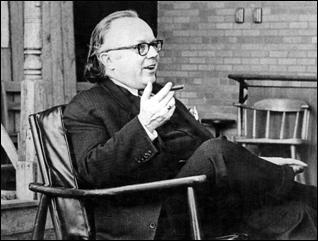 I have been reading and enjoying the books of Russell Kirk. I believe that Russell Kirk takes the great thinking from the Austrian School and tempers it with Christian principles. I encourage everyone to read the Conservative Mind, Roots of American Order, and any other book from Mr. Kirk. I am a proponent of change, but change must take into account an understanding of the existing order first. G. K. Chesterton said, “Never remove a fence line until you determine why it was put there in the first place.” That is common sense to me and Russell Kirk is full of common sense. Keep reading and learning as it is one of our moral and civic responsibilities. Enjoy the article from the Russell Kirk Center. God Bless, Orrin Woodward
Being neither a religion nor an ideology, the body of opinion termed conservatism possesses no Holy Writ and no Das Kapital to provide dogmata. So far as it is possible to determine what conservatives believe, the first principles of the conservative persuasion are derived from what leading conservative writers and public men have professed during the past two centuries. After some introductory remarks on this general theme, I will proceed to list ten such conservative principles.
Perhaps it would be well, most of the time, to use this word “conservative” as an adjective chiefly. For there exists no Model Conservative, and conservatism is the negation of ideology: it is a state of mind, a type of character, a way of looking at the civil social order.
The attitude we call conservatism is sustained by a body of sentiments, rather than by a system of ideological dogmata. It is almost true that a conservative may be defined as a person who thinks himself such. The conservative movement or body of opinion can accommodate a considerable diversity of views on a good many subjects, there being no Test Act or Thirty-Nine Articles of the conservative creed.
In essence, the conservative person is simply one who finds the permanent things more pleasing than Chaos and Old Night. (Yet conservatives know, with Burke, that healthy “change is the means of our preservation.”) A people’s historic continuity of experience, says the conservative, offers a guide to policy far better than the abstract designs of coffee-house philosophers. But of course there is more to the conservative persuasion than this general attitude.
It is not possible to draw up a neat catalogue of conservatives’ convictions; nevertheless, I offer you, summarily, ten general principles; it seems safe to say that most conservatives would subscribe to most of these maxims. In various editions of my book The Conservative Mind I have listed certain canons of conservative thought—the list differing somewhat from edition to edition; in my anthology The Portable Conservative Reader I offer variations upon this theme. Now I present to you a summary of conservative assumptions differing somewhat from my canons in those two books of mine. In fine, the diversity of ways in which conservative views may find expression is itself proof that conservatism is no fixed ideology. What particular principles conservatives emphasize during any given time will vary with the circumstances and necessities of that era. The following ten articles of belief reflect the emphases of conservatives in America nowadays.
First, the conservative believes that there exists an enduring moral order. That order is made for man, and man is made for it: human nature is a constant, and moral truths are permanent.
This word order signifies harmony. There are two aspects or types of order: the inner order of the soul, and the outer order of the commonwealth. Twenty-five centuries ago, Plato taught this doctrine, but even the educated nowadays find it difficult to understand. The problem of order has been a principal concern of conservatives ever since conservative became a term of politics.
Our twentieth-century world has experienced the hideous consequences of the collapse of belief in a moral order. Like the atrocities and disasters of Greece in the fifth century before Christ, the ruin of great nations in our century shows us the pit into which fall societies that mistake clever self-interest, or ingenious social controls, for pleasing alternatives to an oldfangled moral order.
It has been said by liberal intellectuals that the conservative believes all social questions, at heart, to be questions of private morality. Properly understood, this statement is quite true. A society in which men and women are governed by belief in an enduring moral order, by a strong sense of right and wrong, by personal convictions about justice and honor, will be a good society—whatever political machinery it may utilize; while a society in which men and women are morally adrift, ignorant of norms, and intent chiefly upon gratification of appetites, will be a bad society—no matter how many people vote and no matter how liberal its formal constitution may be.
Second, the conservative adheres to custom, convention, and continuity. It is old custom that enables people to live together peaceably; the destroyers of custom demolish more than they know or desire. It is through convention—a word much abused in our time—that we contrive to avoid perpetual disputes about rights and duties: law at base is a body of conventions. Continuity is the means of linking generation to generation; it matters as much for society as it does for the individual; without it, life is meaningless. When successful revolutionaries have effaced old customs, derided old conventions, and broken the continuity of social institutions—why, presently they discover the necessity of establishing fresh customs, conventions, and continuity; but that process is painful and slow; and the new social order that eventually emerges may be much inferior to the old order that radicals overthrew in their zeal for the Earthly Paradise.
Conservatives are champions of custom, convention, and continuity because they prefer the devil they know to the devil they don’t know. Order and justice and freedom, they believe, are the artificial products of a long social experience, the result of centuries of trial and reflection and sacrifice. Thus the body social is a kind of spiritual corporation, comparable to the church; it may even be called a community of souls. Human society is no machine, to be treated mechanically. The continuity, the life-blood, of a society must not be interrupted. Burke’s reminder of the necessity for prudent change is in the mind of the conservative. But necessary change, conservatives argue, ought to he gradual and discriminatory, never unfixing old interests at once.
Third, conservatives believe in what may be called the principle of prescription. Conservatives sense that modern people are dwarfs on the shoulders of giants, able to see farther than their ancestors only because of the great stature of those who have preceded us in time. Therefore conservatives very often emphasize the importance of prescription—that is, of things established by immemorial usage, so that the mind of man runneth not to the contrary. There exist rights of which the chief sanction is their antiquity—including rights to property, often. Similarly, our morals are prescriptive in great part. Conservatives argue that we are unlikely, we moderns, to make any brave new discoveries in morals or politics or taste. It is perilous to weigh every passing issue on the basis of private judgment and private rationality. The individual is foolish, but the species is wise, Burke declared. In politics we do well to abide by precedent and precept and even prejudice, for the great mysterious incorporation of the human race has acquired a prescriptive wisdom far greater than any man’s petty private rationality.
Fourth, conservatives are guided by their principle of prudence. Burke agrees with Plato that in the statesman, prudence is chief among virtues. Any public measure ought to be judged by its probable long-run consequences, not merely by temporary advantage or popularity. Liberals and radicals, the conservative says, are imprudent: for they dash at their objectives without giving much heed to the risk of new abuses worse than the evils they hope to sweep away. As John Randolph of Roanoke put it, Providence moves slowly, but the devil always hurries. Human society being complex, remedies cannot be simple if they are to be efficacious. The conservative declares that he acts only after sufficient reflection, having weighed the consequences. Sudden and slashing reforms are as perilous as sudden and slashing surgery.
Fifth, conservatives pay attention to the principle of variety.They feel affection for the proliferating intricacy of long-established social institutions and modes of life, as distinguished from the narrowing uniformity and deadening egalitarianism of radical systems. For the preservation of a healthy diversity in any civilization, there must survive orders and classes, differences in material condition, and many sorts of inequality. The only true forms of equality are equality at the Last Judgment and equality before a just court of law; all other attempts at levelling must lead, at best, to social stagnation. Society requires honest and able leadership; and if natural and institutional differences are destroyed, presently some tyrant or host of squalid oligarchs will create new forms of inequality.
Sixth, conservatives are chastened by their principle of imperfectability. Human nature suffers irremediably from certain grave faults, the conservatives know. Man being imperfect, no perfect social order ever can be created. Because of human restlessness, mankind would grow rebellious under any utopian domination, and would break out once more in violent discontent—or else expire of boredom. To seek for utopia is to end in disaster, the conservative says: we are not made for perfect things. All that we reasonably can expect is a tolerably ordered, just, and free society, in which some evils, maladjustments, and suffering will continue to lurk. By proper attention to prudent reform, we may preserve and improve this tolerable order. But if the old institutional and moral safeguards of a nation are neglected, then the anarchic impulse in humankind breaks loose: “the ceremony of innocence is drowned.” The ideologues who promise the perfection of man and society have converted a great part of the twentieth-century world into a terrestrial hell.
Seventh, conservatives are persuaded that freedom and property are closely linked. Separate property from private possession, and Leviathan becomes master of all. Upon the foundation of private property, great civilizations are built. The more widespread is the possession of private property, the more stable and productive is a commonwealth. Economic levelling, conservatives maintain, is not economic progress. Getting and spending are not the chief aims of human existence; but a sound economic basis for the person, the family, and the commonwealth is much to be desired.
Sir Henry Maine, in his Village Communities, puts strongly the case for private property, as distinguished from communal property: “Nobody is at liberty to attack several property and to say at the same time that he values civilization. The history of the two cannot be disentangled.” For the institution of several property—that is, private property—has been a powerful instrument for teaching men and women responsibility, for providing motives to integrity, for supporting general culture, for raising mankind above the level of mere drudgery, for affording leisure to think and freedom to act. To be able to retain the fruits of one’s labor; to be able to see one’s work made permanent; to be able to bequeath one’s property to one’s posterity; to be able to rise from the natural condition of grinding poverty to the security of enduring accomplishment; to have something that is really one’s own—these are advantages difficult to deny. The conservative acknowledges that the possession of property fixes certain duties upon the possessor; he accepts those moral and legal obligations cheerfully.
Eighth, conservatives uphold voluntary community, quite as they oppose involuntary collectivism. Although Americans have been attached strongly to privacy and private rights, they also have been a people conspicuous for a successful spirit of community. In a genuine community, the decisions most directly affecting the lives of citizens are made locally and voluntarily. Some of these functions are carried out by local political bodies, others by private associations: so long as they are kept local, and are marked by the general agreement of those affected, they constitute healthy community. But when these functions pass by default or usurpation to centralized authority, then community is in serious danger. Whatever is beneficent and prudent in modern democracy is made possible through cooperative volition. If, then, in the name of an abstract Democracy, the functions of community are transferred to distant political direction—why, real government by the consent of the governed gives way to a standardizing process hostile to freedom and human dignity.
For a nation is no stronger than the numerous little communities of which it is composed. A central administration, or a corps of select managers and civil servants, however well intentioned and well trained, cannot confer justice and prosperity and tranquility upon a mass of men and women deprived of their old responsibilities. That experiment has been made before; and it has been disastrous. It is the performance of our duties in community that teaches us prudence and efficiency and charity.
Ninth, the conservative perceives the need for prudent restraints upon power and upon human passions. Politically speaking, power is the ability to do as one likes, regardless of the wills of one’s fellows. A state in which an individual or a small group are able to dominate the wills of their fellows without check is a despotism, whether it is called monarchical or aristocratic or democratic. When every person claims to be a power unto himself, then society falls into anarchy. Anarchy never lasts long, being intolerable for everyone, and contrary to the ineluctable fact that some persons are more strong and more clever than their neighbors. To anarchy there succeeds tyranny or oligarchy, in which power is monopolized by a very few.
The conservative endeavors to so limit and balance political power that anarchy or tyranny may not arise. In every age, nevertheless, men and women are tempted to overthrow the limitations upon power, for the sake of some fancied temporary advantage. It is characteristic of the radical that he thinks of power as a force for good—so long as the power falls into his hands. In the name of liberty, the French and Russian revolutionaries abolished the old restraints upon power; but power cannot be abolished; it always finds its way into someone’s hands. That power which the revolutionaries had thought oppressive in the hands of the old regime became many times as tyrannical in the hands of the radical new masters of the state.
Knowing human nature for a mixture of good and evil, the conservative does not put his trust in mere benevolence. Constitutional restrictions, political checks and balances, adequate enforcement of the laws, the old intricate web of restraints upon will and appetite—these the conservative approves as instruments of freedom and order. A just government maintains a healthy tension between the claims of authority and the claims of liberty.
Tenth, the thinking conservative understands that permanence and change must be recognized and reconciled in a vigorous society. The conservative is not opposed to social improvement, although he doubts whether there is any such force as a mystical Progress, with a Roman P, at work in the world. When a society is progressing in some respects, usually it is declining in other respects. The conservative knows that any healthy society is influenced by two forces, which Samuel Taylor Coleridge called its Permanence and its Progression. The Permanence of a society is formed by those enduring interests and convictions that gives us stability and continuity; without that Permanence, the fountains of the great deep are broken up, society slipping into anarchy. The Progression in a society is that spirit and that body of talents which urge us on to prudent reform and improvement; without that Progression, a people stagnate.
Therefore the intelligent conservative endeavors to reconcile the claims of Permanence and the claims of Progression. He thinks that the liberal and the radical, blind to the just claims of Permanence, would endanger the heritage bequeathed to us, in an endeavor to hurry us into some dubious Terrestrial Paradise. The conservative, in short, favors reasoned and temperate progress; he is opposed to the cult of Progress, whose votaries believe that everything new necessarily is superior to everything old.
Change is essential to the body social, the conservative reasons, just as it is essential to the human body. A body that has ceased to renew itself has begun to die. But if that body is to be vigorous, the change must occur in a regular manner, harmonizing with the form and nature of that body; otherwise change produces a monstrous growth, a cancer, which devours its host. The conservative takes care that nothing in a society should ever be wholly old, and that nothing should ever be wholly new. This is the means of the conservation of a nation, quite as it is the means of conservation of a living organism. Just how much change a society requires, and what sort of change, depend upon the circumstances of an age and a nation.
Such, then, are ten principles that have loomed large during the two centuries of modern conservative thought. Other principles of equal importance might have been discussed here: the conservative understanding of justice, for one, or the conservative view of education. But such subjects, time running on, I must leave to your private investigation.
The great line of demarcation in modern politics, Eric Voegelin used to point out, is not a division between liberals on one side and totalitarians on the other. No, on one side of that line are all those men and women who fancy that the temporal order is the only order, and that material needs are their only needs, and that they may do as they like with the human patrimony. On the other side of that line are all those people who recognize an enduring moral order in the universe, a constant human nature, and high duties toward the order spiritual and the order temporal.
Posted in Finances | Comments Off on Ten Conservative Principles by Russell Kirk
Peter Schiff Analogies
Posted by Orrin Woodward on June 25, 2009
Here are some great thoughts and analogies from Peter Schiff. Mr. Schiff is a common sense thinker and a proponent of the Austrian School of Economics. I believe the Austrian School is the clearest thinking and historically accurate school of economics in the world. Ludwig Von Mises and Friedrich Von Hayek were original titans in an age of Keynesian copycats. Enjoy the video and think through the analogies for yourself. Education is not an option! God Bless, Orrin Woodward
Posted in Finances | Comments Off on Peter Schiff Analogies
MonaVie Founder – Dallin Larsen, Ernst & Young Entrepreneur of the Year
Posted by Orrin Woodward on June 20, 2009
 Dallin Larsen, Founder of MonaVie, is a personal friend and a great leader! I am so proud to see that others are recognizing his leadership abilities and servant attitude. Dallin leads with character and heart which separates him from the typical executive in corporations. Mr. Larsen sincerely believes in win-win principles and all his actions back up that belief. The Bible says, “Give honor to whom honor is due.” Dallin has earned the honor and respect of millions through his sacrificial service to others. I am honored to be in the MonaVie business with Dallin and the whole MonaVie Team. Here is the official announcement of the prestigious Ernst & Young Award
. God Bless, Orrin Woodward
SALT LAKE CITY–(EON: Enhanced Online News)–MonaVie (www.monavie.com), maker of the premier blend of the Brazilian acai berry, today announces that Dallin A. Larsen received the Ernst & Young Entrepreneur Of The Year® Award in the Distribution and Manufacturing category in the Utah Region. According to Ernst & Young LLP, the award recognizes outstanding entrepreneurs who are building and leading dynamic, growing businesses. Larsen was selected by an independent panel of judges, and the award was presented at a gala event at the Salt Palace Convention Center on June 12, 2009.
“Award recipients of the Entrepreneur Of The Year award build leading businesses and contribute significantly to the strength of our region’s economy. Their success helps our area grow stronger.”
“I’m grateful to be involved in an industry where we talk about going from success to significance,” says MonaVie founder, chairman and CEO Dallin A. Larsen. “As CEO of a company, I know of the challenges, sacrifices, and determination it takes, and I believe that as we become more blessed we should become more of a blessing.”
MonaVie is a direct seller of nutritional beverages made from unique blends of nature’s superfruits. Launched in 2005, MonaVie was created by a team of partners with extensive backgrounds in network marketing and health products. Cumulative sales topped $1 billion in 2008, and MonaVie now operates in 10 countries, with international expansion continuing.
“We are proud to recognize the achievements of Dallin A. Larsen,” said David Jolley, Ernst & Young LLP Entrepreneur Of The Year Program Director for the Utah Region. “Award recipients of the Entrepreneur Of The Year award build leading businesses and contribute significantly to the strength of our region’s economy. Their success helps our area grow stronger.”
The Ernst & Young Entrepreneur Of The Year awards celebrate their 23rd anniversary this year. The program honors entrepreneurs who have demonstrated exceptionality in such areas as innovation, financial performance and personal commitment to their businesses and communities.
As a Utah Region award recipient, Larsen is now eligible for consideration for the Ernst & Young LLP Entrepreneur Of The Year 2009 national program. Award recipients in several national categories, as well as the overall national Ernst & Young Entrepreneur Of The Year award winner, will be announced at the annual awards gala in Palm Springs, California, on November 14, 2009. The awards are the culminating event of the Ernst & Young Strategic Growth Forum, the nation’s most prestigious gathering of high-growth, market-leading companies.
Founded and produced by Ernst & Young LLP, the Entrepreneur Of The Year awards are pleased to have the Ewing Marion Kauffman Foundation and SAP America as national sponsors.
In the Utah Region, local sponsors include Deseret News, Digital Bytes Production and Design, Diversified Insurance Brokers, Scherzer International, Spring2 Technologies, Strong & Hanni, The Summit Group Communications, and Utah Business Magazine.
About Ernst & Young’s Entrepreneur Of The Year® Awards Program
Ernst & Young’s Entrepreneur Of The Year® Award is the world’s most prestigious business award for entrepreneurs. The award makes a difference through the way it encourages entrepreneurial activity among those with potential and recognizes the contribution of people who inspire others with their vision, leadership and achievement. As the first and only truly global award of its kind, the Ernst & Young Entrepreneur Of The Year® award celebrates those who are building and leading successful, growing and dynamic businesses, recognizing them through regional, national and global awards programs in more than 135 cities in 50 countries.
About MonaVie LLC
MonaVie LLC is a rapidly growing company that distributes products to markets around the world. Introduced in January 2005, MonaVie develops and markets scientifically formulated, premium quality products, specifically for person-to-person distribution. MonaVie products feature an exclusive blend of the Brazilian acai berry, found only in remote regions of the Amazon. Developed with a philosophy of Balance-Variety-Moderation, MonaVie brand products deliver phytonutrients and antioxidants to promote and maintain a healthy and active lifestyle.
Posted in All News | 1 Comment »
United States National Debt – A National Disgrace
Posted by Orrin Woodward on June 18, 2009
I watched this video the other day and shook my head in disbelief. How is it possible that the best leaders in our country, that are elected to maintain our national freedoms, are allowing us to sink into the bondage of debt? This is not a little issue, it is the difference between a free & prosperous America or police state. When a country cannot pay its bills, it is no longer free and must do the bidding of its masters. It takes personal discipline to live debt free and it takes national discipline to be debt free as a country. The Founders of this great nation knew the evils of debt and eliminated our national debt. Ernest Hemingway had a line in one of his books that asked how someone went broke. The answer was, “Slowly at first and real fast at the end.” This is America right now. We have slowly been going into debt and now we are speeding towards bankruptcy.
Recently, a two trillion dollar loan was given by the Federal Reserve. Two trillion! That loan is guaranteed by our tax dollars! I am disgraced by the lack of discipline of our “leaders” in Washington. If we do not do battle quickly with the bondage of debt, our children and grandchildren will do battle with the bondage of their masters. This is not a joke and history has never shown a bankrupt nation that did not go through a revolution. The sad state of our education leaves most people blind to the realities of our current situation. Educate yourself through books like The 5000 Year Leap, The Creature from Jekyll Island, and The Coming Economic Earthquake. There are many more, but that is a good start. Debt matters and if anyone tells you that it doesn’t, then tell them to read the history of nations. We can and must make a difference through education and leadership. Watch the video and start studying! God Bless, Orrin Woodward

Posted in Finances | Comments Off on United States National Debt – A National Disgrace
Free Enterprise vs Protectionism
Posted by Orrin Woodward on June 16, 2009
Free enterprise is a system that allows competitors to freely compete for the loyalty of consumers based upon meeting customer expectations. Protectionism, in any of its various forms, limits competitors through regulations, tariffs, taxes, legal harassment etc. Here is a hilarious advertisement that captures what happens when incompetent managers attempt to limit competition through legal harassment. In free enterprise, if your competitor has a better product or service, your objective is to improve your products and methods in order to compete. This improves society as a whole and is an example of Adam Smith’s “invisible hand” at work. Attempting to destroy your competitors is an overt admission that you cannot compete and are seeking protectionist principles. There are so many great lessons taught in this priceless short video. God Bless, Orrin Woodward
Posted in Freedom/Liberty | Comments Off on Free Enterprise vs Protectionism
Randy Forbes – A Christian Nation
Posted by Orrin Woodward on June 15, 2009
Here is a powerful message by Randy Forbes on the historical foundations of the United States. Many of the political ideas that formed the U.S. Constitution were captured from European thinkers like Locke, Montesque, Cicero, Plato etc. Locke’s ideas were, in the main, a watered down version of the thoughts flowing from Oliver Cromwell’s protectorate. Ideas of inalienalble rights given by our Creator, that law is from a higher source than man, and even the division of powers because of man’s falleness – are all based upon a Biblical understanding of man and God. We don’t have to agree with each other to agree to read the books for ourselves. The worst thing to do is to take a soundbite and repeat it until you believe it. That is not education, but propaganda. Educate yourself by reading the books that formed the ideas used by the Founders of America. Anything else is just plain mental lazineness. American’s cannot afford to be lazy any longer. God Bless, Orrin Woodward
Posted in Faith | 1 Comment »
Michael Cuddyer – Launching a Leadership Revolution
Posted by Orrin Woodward on June 10, 2009
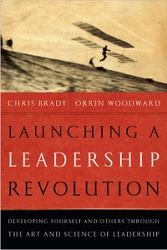
 Chris Brady and my book Launching a Leadership Revolution continues to flourish in the leadership field. Recently it hit number one in the Dallas area for paperback non-fiction. The Dallas area must be a hot spot for leadership development. Yesterday, I noticed that Michael Cuddyer listed the LLR book as the book he was currently reading. Michael Cuddyer is a top homerun hitter for the Minnesota Twins and also interested in improving his leadership abilities. Anyone involved in athletics, business, or social work would be helped by the principles in the LLR. I am glad to see the LLR moving into the mainstream culture as a source of leadership and personal development. The world needs a leadership revolution and it is time to launch it now! God Bless, Orrin Woodward
Posted in All News | 1 Comment »
Goliath Grouper Day – Port St. Lucie
Posted by Orrin Woodward on June 9, 2009
Captain Bill and I went out fishing on Bull Shark Barge this morning. I listened to 4 cds, reviewed 3 chapters of a new book project, and caught 3 Goliath Groupers! We also caught several 7 to 10 foot sharks. The Goliath Groupers were 50, 100 and one literally 150 pounds!! The picture below is from the smallest one that we could lift up to take a picture. Captain Bill will be sending a picture of the 150 pounder on top of the water. Goliath Groupers are a protected species and it took over an hour to get them to the boat to release them. If you are on the MV Team, you can build to Round Table and go fishing with us. You have to dream big dreams for big dreams to come true. God Bless, Orrin Woodward
 /p>
/p>
Posted in Freedom/Liberty, Fun | Comments Off on Goliath Grouper Day – Port St. Lucie
Leadership Awareness Test
Posted by Orrin Woodward on June 1, 2009
Leadership requires an ability to be aware of people’s needs and desires. How would you rate yourself on awareness? Take the test and see how you score. It took me three times to pass this test! Sounds like I need some more PDCA’ing in this area. Enjoy. God Bless, Orrin Woodward
Posted in All News | 2 Comments »