




A quick Memorial Day weekend thanks to Karen Anderson, of Online Christian Colleges, for her selection of my Twitter account as the top tweeter in the Christian writer category. Twitter has become a networking phenomena by allowing thought leaders to share messages to tens of thousands through the power of texting. I was introduced to the networking effects of twitter by my good friend Art Jonak and hit the ground running. Credit for this along with any other recognition goes to the hungriest group of students/leaders on my Twitter, Facebook, and blog online. Have a super weekend and keep leading from the front! God Bless, Orrin Woodward
Archive for May, 2010
Top Tweeter Writer Leader – Online Christian Colleges
Posted by Orrin Woodward on May 29, 2010
Posted in All News | Comments Off on Top Tweeter Writer Leader – Online Christian Colleges
Moral Leadership – Nobilitas Naturalis – William Ropke
Posted by Orrin Woodward on May 26, 2010
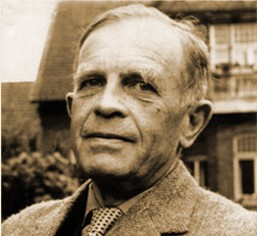 I read the following paragraphs out of A Humane Economy by William Ropke in my daily study of economics. Readers of this blog may have noticed a recurring theme of late on the importance of leadership in economics to prevent social chaos in a disoriented world. William Ropke, a famous German economist, has captured the essence of the value of leadership in society by calling it the Nobilitas Naturalis. As you read Ropke’s thoughts, I encourage you to think of your own leadership journey and contemplate if you are living up to your full potentially in character, task and relationships. Are you ready to lead in the 21st century? Maybe it’s time to step out of the pack and lead at a new level? Thomas Jefferson called the new Aristocracy in America the Aristocracy of Achievement. What I love about Network Marketing is that you cannot hide leadership or the lack of leadership. People follow leaders in Network Marketing, not for titles, but because of the love and encouragement provided by you & your TEAM to them. Enjoy the article and lead your way into the Nobilitas Naturalis – The Aristocracy of Achievement. God Bless, Orrin Woodward
In a sound society,” writes Wilhelm Ropke, leadership responsibility, and exemplary defense of the society’s guiding norms and values must be the exalted duty and unchallengeable right of a minority that forms and is willingly and respectfully recognized as the apex of a social pyramid hierarchically structured by performance. Mass society … must be counteracted by individual leadership-not on the part of original geniuses or eccentrics or will-o’ -the wisp intellectuals, but, on the contrary, on the part of people with courage to reject eccentric novelty for the sake of the ‘old truths’ which Goethe admonishes us to hold on to and for the sake of historically proved, indestructible, and simple human values.
In other words, we need the leadership of … “ascetics of civilization,” secularized saints as it were, who in our age occupy a place which must not for long remain vacant at any time and in any society. That is what those have in mind who say that the “revolt of the masses” must be countered by another revolt, the “revolt of the elite.” … What we need is true nobilitas naturalis. No era can do without it, least of all ours, when so much is shaking and crumbling away. We need a natural nobility whose authority is, fortunately, readily accepted by all men, an elite deriving its title solely from supreme performance and peerless moral example and invested with the moral dignity of such a life.
Only a few from every stratum of society can ascend into this thin layer of natural nobility. The way to it is an exemplary and slowly maturing life of dedicated endeavor on behalf of all, unimpeachable integrity, constant restraint of our common greed, proved soundness of judgment, a spotless private life, indomitable courage in standing up for truth and law, and generally the highest example. This is how the few, carried upward by the trust of the people, gradually attain to a position above the classes, interests, passions, wickedness, and foolishness of men and finally become the nation’s conscience.
To belong to this group of moral aristocrats should be the highest and most desirable aim, next to which all the other triumphs of life are pale and insipid …. No free society, least of all ours, which threatens to degenerate into mass society, can subsist without such a class of censors. The continued existence of our free world will ultimately depend on whether our age can produce a sufficient number of such aristocrats of public spirit. (A Humane Economy 130-131)
Posted in All News | Comments Off on Moral Leadership – Nobilitas Naturalis – William Ropke
Social Means vs. State Power – Conceived in Liberty
Posted by Orrin Woodward on May 19, 2010
Murray Rothbard is fast becoming one of my favorite economists/philosophers/historians. His synopsis of the struggle between liberty and power is the best description I have yet read. Liberty requires freedom for the many and limited power for the few while Power requires subservience of the many to the will of the few. What type of world do you want to live in? Leadership is so important because it is the only way to organize society through Social means and not State control. Social organization is based on freedom to enter and exit based upon what is best for each individual and the culture of each organization. State control is based upon edicts from the power elites with the loss of individual choice and redress. The founding of America was a time where Social means was on the rise and State Power was on the decline. England attempted to apply State pressure to force the Americans to bow to the will of the King and Parliament. America applied the Social leadership skills of a Washington, Jefferson, Franklin, Hancock, Adams, etc, to resist the liberty destroying power grab of the English.
Sadly, the history of America is a constant progress of State Power and subsequent withering of Social means. Will America remain the bastion of liberty or succumb to the will of the few? Where is the watchman on the wall that is sounding the alarm of our lost freedoms? It is up to all good citizens to educate themselves on the history of America and Liberty to ensure our freedoms to lead through Social means. We are in a leadership crisis and I ask all leaders to lead in their Social communities or we risk losing the freedom to lead at all. Here is a profound portion of the Preface of Murray Rothbard’s classic history of America’s Colonies – Conceived in Liberty. Are you building Social Capital or State Power? God Bless, Orrin Woodward
My own basic perspective on the history of man, and a fortiori on the history of the United States, is to place central importance on the great conflict which is eternally waged between Liberty and Power, a conflict, by the way, which was seen with crystal clarity by the American revolutionaries of the eighteenth century. I see the liberty of the individual not only as a great moral good in itself (or, with Lord Acton, as the highest political good), but also as the necessary condition for the flowering of all the other goods that mankind cherishes: moral virtue, civilization, the arts and sciences, economic prosperity. Out of liberty, then, stem the glories of civilized life. But liberty has always been threatened by the encroachments of power, power which seeks to suppress, control, cripple, tax, and exploit the fruits of liberty and production. Power, then, the enemy of liberty, is consequently the enemy of all the other goods and fruits of civilization that mankind holds dear. And power is almost always centered in and focused on that central repository of power and violence: the state. With Albert Jay Nock, the twentieth-century American political philosopher, I see history as centrally a race and conflict between “social power”—the productive consequence of voluntary interactions among men—and state power. In those eras of history when liberty—social power—has managed to race ahead of state power and control, the country and even mankind have flourished. In those eras when state power has managed to catch up with or surpass social power, mankind suffers and declines.
For decades, American historians have quarreled about “conflict” or “consensus” as the guiding leitmotif of the American past. Clearly, I belong in the “conflict” rather than the “consensus” camp, with the proviso that I see the central conflict as not between classes, (social or economic), or between ideologies, but between Power and Liberty, State and Society. The social or ideological conflicts have been ancillary to the central one, which concerns: Who will control the state, and what power will the state exercise over the citizenry? To take a common example from American history, there are in my view no inherent conflicts between merchants and farmers in the free market. On the contrary, in the market, the sphere of liberty, the interests of merchants and farmers are harmonious, with each buying and selling the products of the other. Conflicts arise only through the attempts of various groups of merchants or farmers to seize control over the machinery of government and to use it to privilege themselves at the expense of the others. It is only through and by state action that “class” conflicts can ever arise.
This volume is the story of the seventeenth century—the first century of the English colonies in North America. It was the century when all but one (Georgia) of the original thirteen colonies were founded, in all their disparity and diversity. Remarkably enough, this critical period is only brusquely treated in the current history textbooks. While the motives of the early colonists varied greatly, and their fortunes changed in a shifting and fluctuating kaleidoscope of liberty and power, all the colonists soon began to take on an air of freedom unknown in the mother country. Remote from central control, pioneering in a land of relatively few people spread over a space far vaster than any other they had ever known, the contentious colonists proved to be people who would not suffer power gladly. Attempts at imposing feudalism on, or rather transferring it to, the American colonies had all failed. By the end of the century, the British forging of royal colonies, all with similar political structures, could occur only with the fearsome knowledge that the colonists could and would rebel against unwanted power at the drop of a tax or a quitrent.
Posted in Freedom/Liberty | Comments Off on Social Means vs. State Power – Conceived in Liberty
Writing, Thinking & Leading
Posted by Orrin Woodward on May 5, 2010
Chris Brady and I are excited to be sharing our thoughts in a Leadership Column for the Networking Times. Our goal is to share principles and techniques that will help you develop into the leader you were called to be. Networking Times serves the great Networking community by sharing success stories from around the world and the principles applied to achieve that success. I believe Network Marketing linked with Social Networking is rapidly changing the way business is done across the world.
On another front, Online Degree just rated one of my blog post in the Top 15 for leadership content. Online Degree called out an article written on Define, Learn, Do process to success. Today’s business environment gives anyone with a dream a platform through blogging to share his thoughts with the world. It just proves the principle that anyone willing to read, think, and write can make a difference today like never before. I encourage you to lead in your chosen field and capture your thoughts either on a blog or another platform to share with others. Learn Truth, Live Truth, and then Share Truth with others.
Enjoy the articles and step up your leadership to the next level. God Bless, Orrin Woodward
Posted in All News | Comments Off on Writing, Thinking & Leading
Murray Rothbard – Thomas Kuhn’s Paradigm Shifts
Posted by Orrin Woodward on May 3, 2010
I believe an understanding of economics is essential for any leader in any field today. Without the freedom of action in the economic field, there is a subsequent loss of freedom in any leadership endeavor as well. Chief Justice Marshall stated, “The power to tax is the power to destroy.” When governments covet power more than they value liberties, the citizens lose their freedoms, money, and dignity. If you are a leader or future leader then read the following thoughts by Murray Rothbard in his introduction to his study of Economic History. Rothbard’s thoughts will start the education process to learn why the American and World Economy is in its current mess. Do we honestly still believe that government can solve our problems when they cannot even solve their own? We need a new paradigm that accurately predicted the results of the latest Statist interventions in our economies. The Austrian Economists are the only school that studies the interventions and accurately predicts the dismal results. Modern economics is in a dead end street and must admit failure before it can break free of it prevailing Keynesian paradigm. Every promise by Big Government to solve your problems is actually a power grab to take more of your money and freedoms. Wake up America before it’s too late! God Bless, Orrin Woodward
The continual progress, onward-and-upward approach was demolished for me, and should have been for everyone, by Thomas Kuhn’s famed Structure of Scientific Revolutions. Kuhn paid no attention to economics, but instead, in the standard manner of philosophers and historians of science, focused on such ineluctably ‘hard’ sciences as physics, chemistry, and astronomy. Bringing the word ‘paradigm’ into intellectual discourse, Kuhn demolished what I like to call the ‘Whig theory of the history of science’. The Whig theory, subscribed to by almost all historians of science, including economics, is that scientific thought progresses patiently, one year after another developing, sifting, and testing theories, so that science marches onward and upward, each year, decade or generation learning more and possessing ever more correct scientific theories. On analogy with the Whig theory of history, coined in mid-nineteenth century England, which maintained that things are always getting (and therefore must get) better and better, the Whig historian of science, seemingly on firmer grounds than the regular Whig historian, implicitly or explicitly asserts that ‘later is always better’ in any particular scientific discipline.
The Whig historian (whether of science or of history proper) really maintains that, for any point of historical time, ‘whatever was, was right’, or at least better than ‘whatever was earlier’. The inevitable result is a complacent and infuriating Panglossian optimism. In the historiography of economic thought, the consequence is the firm if implicit position that every individual economist, or at least every school of economists, contributed their important mite to the inexorable upward march. There can, then, be no such thing as gross systemic error that deeply flawed, or even invalidated, an entire school of economic thought, much less sent the world of economics permanently astray.
Kuhn, however, shocked the philosophic world by demonstrating that this is simply not the way that science has developed. Once a central paradigm is selected, there is no testing or sifting, and tests of basic assumptions only take place after a series of failures and anomalies in the ruling paradigm has plunged the science into a ‘crisis situation’. One need not adopt Kuhn’s nihilistic philosophic outlook, his implication that no one paradigm is or can be better than any other, to realize that his less than starry-eyed view of science rings true both as history and as sociology.
But if the standard romantic or Panglossian view does not work even in the hard sciences, a fortiori it must be totally off the mark in such a ‘soft science’ as economics, in a discipline where there can be no laboratory testing, and where numerous even softer disciplines such as politics, religion, and ethics necessarily impinge on one’s economic outlook.
There can therefore be no presumption whatever in economics that later thought is better than earlier, or even that all well-known economists have contributed their sturdy mite to the developing discipline. For it becomes very likely that, rather than everyone contributing to an ever-progressing edifice, economics can and has proceeded in contentious, even zig-zag fashion, with later systemic fallacy sometimes elbowing aside earlier but sounder paradigms, thereby redirecting economic thought down a total erroneous or even tragic path. The overall path of economics may be up, or it may be down, over any give time period.
In recent years, economics, under the dominant influence of formalism, positivism and econometrics, and preening itself on being a hard science, has displayed little interest in its own past. It has been intent, as in any ‘real’ science, on the latest textbook or journal article rather than on exploring its own history. After all, do contemporary physicists spend much time poring over eighteenth century optics?
In the last decade or two, however, the reigning Walrasian–Keynesian neoclassical formalist paradigm has been called ever more into question, and a veritable Kuhnian ‘crisis situation’ has developed in various areas of economics, including worry over its methodology. Amidst this situation, the study of the history of thought has made a significant comeback, one which we hope and expect will expand in coming years. For if knowledge buried in paradigms lost can disappear and be forgotten over time, then studying older economists and schools of thought need not be done merely for antiquarian purposes or to examine how intellectual life proceeded in the past. Earlier economists can be studied for their important contributions to forgotten and therefore new knowledge today. Valuable truths can be learned about the content of economics, not only from the latest journals, but from the texts of long-deceased economic thinkers.
Posted in Finances | 2 Comments »