Orrin Woodward on LIFE & Leadership

Inc Magazine Top 20 Leader shares his personal, professional, and financial secrets.

  • Orrin Woodward

    1
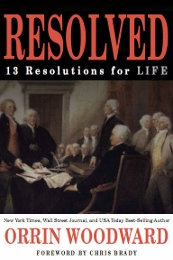
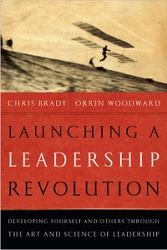
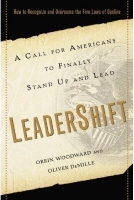
    Former Guinness World Record Holder for largest book signing ever, Orrin Woodward is a NY Times bestselling author of And Justice For All along with RESOLVED & coauthor of LeaderShift and Launching a Leadership Revolution. His books have sold over one million copies in the financial, leadership and liberty fields. RESOLVED: 13 Resolutions For LIFE made the Top 100 All-Time Best Leadership Books and the 13 Resolutions are the framework for the top selling Mental Fitness Challenge personal development program.

    Orrin made the Top 20 Inc. Magazine Leadership list & has co-founded two multi-million dollar leadership companies. Currently, he serves as the Chairman of the Board of the LIFE. He has a B.S. degree from GMI-EMI (now Kettering University) in manufacturing systems engineering. He holds four U.S. patents, and won an exclusive National Technical Benchmarking Award.

    This blog is an Alltop selection and ranked in HR's Top 100 Blogs for Management & Leadership.

  • Orrin’s Latest Book


  • 7 Day Free Access to Leadership Audios!

  • Email Me

  • NY Times Bestselling Book


  • Mental Fitness Challenge

  • Email Subscription

    Enter your email address to subscribe to this blog and receive notifications of new posts by email.

    Join 2,438 other subscribers
  • Categories

  • Archives

Archive for January, 2008

Grandfather’s Letter – Climbing from Peak to Peak

Posted by Orrin Woodward on January 31, 2008

I read a great short story by Steve Brunkhorst called Grandfather’s Grandfather with Grandson picture
letter
.  What incredible nuggets it had for climbers in life!  Steve’s points out that in order to climb from peak to peak—we must endure the valley between the mountains. It takes courage to step off the peak and descend into the valley in order to climb the higher peak on the horizon.  I
feel many of us have walked through a valley for the last 5 or 6 months and are
starting to ascend to another peak.  This is the year to count your blessings, break camp and start the climb to the top!  Enjoy this wonderful story and follow the advice of Grandfather’s letter.

One day, a young man was cleaning out his late grandfather’s belongings when he came across a bright red envelope. Written on the front were the words, “To my grandson.” Recognizing his grandfather’s handwriting, the boy opened the envelope. A letter inside read:

Dear Ronny,

Years ago you came to me for help. You said, “Grandpa, how is it that you’ve accomplished so much in your life? You’re still full of energy, and I’m already tired of struggling. How can I get that same enthusiasm that you’ve got?”

I didn’t know what to say to you then. But knowing my days are numbered, I figure that I owe you an answer. So here is what I believe.

I think a lot of it has to do with how a person looks at things. I call it ‘keeping your eyes wide open.’

First, realize that life is filled with surprises, but many are good ones. If you don’t keep watching for them, you’ll miss half the excitement. Expect to be thrilled once in a while, and you will be.

When you meet up with challenges, welcome them. They’ll leave you wiser, stronger, and more capable than you were the day before. When you make a mistake, be grateful for the things it taught you. Resolve to use that lesson to help you reach your goals.

And always follow the rules. Even the little ones. When you follow the rules, life works. If you think you ever really get by with breaking the rules, you’re only fooling yourself.

It’s also important to decide exactly what you want. Then keep your mind focused on it, and be prepared to receive it.

But be ready to end up in some new places too. As you grow with the years, you’ll be given bigger shoes to fill. So be ready for endings as well as challenging beginnings.

Sometimes we have to be brave enough to move from the familiar to the unfamiliar. Life isn’t just reaching peaks. Part of it is moving from one peak to the next. If you rest too long in between, you might be tempted to quit. Leave the past in the past. Climb the next mountain and enjoy the view.

Dump things that weigh you down emotionally and spiritually. When an old resentment, belief, or attitude becomes heavy, lighten your load. Shed those hurtful attitudes that slow you down and drain your energy.

Remember that your choices will create your successes and your failures. So consider all the pathways ahead, and decide which ones to follow. Then believe in yourself, get up, and get going.

And be sure to take breaks once in a while. They’ll give you a renewed commitment to your dreams and a cheerful, healthy perception of the things that matter the most to you.

Most important of all, never give up on yourself. The person that ends up a winner is the one who resolves to win. Give life everything you’ve got, and life will give its best back to you.

Love always,

Grandpa

Posted in Family | 5 Comments »

Victor Hugo – Freedom, Dictators, and Revolution

Posted by Orrin Woodward on January 30, 2008

The quote below reminds me of:

William Wallace in Bravheart , Maximus in Gladiator, Winston Churchill against Hitler, George Washington against King George and England, Oliver Cromwell against King Charles, Martin Luther against the Pope, Spartacus against his Roman masters, Demosthenes against Philip!

When dictatorship is a fact, revolution becomes a right.

Victor Hugo
(1802-1885)

Throughout history, men and women have fought against tyrants who will steal a person’s property, liberty and life.  It takes men and women of character to stand for their freedom against the tyrants.  Can you give any other examples that this quote reminds you of?

Posted in Freedom/Liberty | 1 Comment »

Leadership Habits – Self Discipline and Success

Posted by Orrin Woodward on January 30, 2008

I am researching the habits of leaders.  Self-discipline is critical to
a successful life and it takes self-discipline to develop the right habits.  Like they say, “You make your habits and your habits make you.”   In the spirit of the Wikinomics book, I am going to open up the discussion on habits for all.  Here is an article discussing some important leadership habits, but I think there are others.  Please read this list of leadership habits and add a habit and your thoughts.   All of us are on a leadership journey and I am curious on the habits we feel are essential to leadership.  The readers of this blog are the best! God Bless, Orrin Woodward

Many people are born leaders, yet the ability to lead is actually an art and an amazing collection of skills which can be learned and sharpened. The following top ten daily habits will help you and/or your clients grow as a leader personally, professionally, and spiritually.

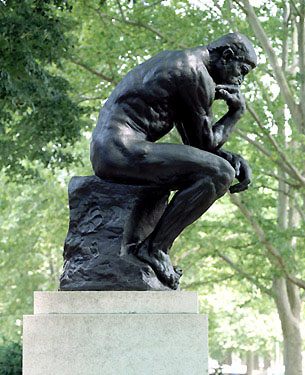
Rodin 4 Thinker picture1. Spend 30 minutes each morning looking for “cracks” in the major
areas of your life. 

Your depth of character is key to
determining your success as a leader. It is easy for us to say that we are “in
integrity,” but your actions are the real indicators of strength of character.


Spend 30 minutes each morning looking at the major areas of your life: career, marriage, family, community, and spirituality. Write down any instances where you see “cracks” (you have cut corners, something is inconsistent, you have not kept your word, you have been dishonest, etc.) Do all in your power to repair those cracks by apologizing and dealing with the consequences of your actions. After facing up to past actions, begin a plan that will rebuild you and prevent you from making further mistakes.

2. Show up and be ten minutes early for every appointment.

Great leaders show up for every appointment, and they are always on time. Each day, practice not only showing up but being ten minutes early for each and every appointment. “The early bird gets the worm” has never been so true than when it applies to becoming a great leader that others want to follow.

3. Be dedicated to a high level of learning.

Great leaders are highly competent, because they are dedicated to a high level of learning, growth, and improvement. Spend 15-30 minutes each day devoted to learning something new. Do not settle for knowing “how” to do something. Dig deeper by asking the question “why” and then, go find the answer. Search the internet, interview an expert, or take a day trip to find the answer to a question that is on your mind or the minds of those who follow you. 

4. Be simple and crystal clear in all communication.

As a leader, your communication should be simple, clean, and clear as a bell. Examine both written and verbal communication for simplicity and clarity. Use as few words as possible, and eliminate jargon and “big words” from your vocabulary. Express yourself in a way that your listeners can understand.

5. Surround yourself with great people.

One of the secrets of a great leader is great people. Hire the right staff, surround yourself with a strong inner circle, and spend time daily with people who have a variety of gifts. With the support of a strong circle of men, women and children, you will be ready for anything that comes your way.

6. Develop a sense of commitment and responsibility. 

People do not follow leaders who are not committed and responsible. Commitment and responsibility can be measured by the hours you spend and how you spend them, the money you spend and how you spend it, and by what you do for others. Spend 15 minutes each day analyzing your time, your checkbook, and your volunteer work. Look closely at how much time you spend with family and friends as compared to work, how you spend your money, and how you give back to the community. You may be very surprised at what you find.

7. Develop a positive attitude by altering your mind.

It is very possible to alter your attitude by altering your mind. Saturate yourself daily with motivational literature, positive people, and inspiring music/art. By conditioning your mind to be more positive on a daily basis, you will find that winning will be a daily reward of your life.

8. Accept responsibility.

Great leaders never play the role of a victim. They recognize that part of being a great leader is being ultimately responsible for all successes and failures. On a daily basis, analyze your current projects, and ask yourself “Have I done all that needs to be done? What have I not done that I should?” Once you have analyzed each project, if you find a weakness, go the extra mile by working extra hours, hiring an outside expert, or getting really creative to repair the weakness or to turn it into a success!

9. Make self-discipline a part of your lifestyle.

What do you need to develop self-discipline? Following a better diet or exercise routine? Getting up one hour earlier? Being rigorous with your spending? Learning something new every day? Eliminate excuse-making from your life, and begin to develop habits that will invite self-discipline to become the foundation of your life. Hire a coach to support you during the development of a routine of self-discipline, and remove rewards until the job is done!

10. Develop courage by facing fear.

By a show of courage, you will inspire others to follow and to walk in your footsteps. Spend 15-30 minutes each day doing something simply for the sake of developing courage: speak to an audience, make a difficult phone call, learn a new skill, write an article or a top ten, or visit someone you have always wanted to meet. As Eleanor Roosevelt acknowledged: “You gain strength, courage, and confidence by every experience in which you really stop to look fear in the face. You are able to say to yourself, ‘I lived through this horror. I can take the next thing that comes along.’ You must do the thing you think you cannot do.”

Posted in All News | 13 Comments »

Warren Bennis – Collaboration and Teamwork

Posted by Orrin Woodward on January 29, 2008

I found a reference to the Gladstone & Disraeli anecdote in the following interview.  Warren Bennis was one of the first leadership authors I ever read.  I truly believe we can Launch a Leadership Revolution—my assignment is to provide the best thoughts from the best minds for us to contemplate and develop our leadership ability.  Here is the article:

David Gergen, editor-at-large of “U.S. News & World Report,” engages Warren Bennis, a professor of business administration at the University of Southern California, co-author of Organizing Genius: The Secrets of Creative Collaboration.

DAVID GERGEN: Warren, you write in your book that the day of the Lone Ranger is over; that the era of creative genius and what we’re going to accomplish creatively in the future is going to be a new one dominated by groups. What do you mean by that?

Warren Bennis pictureWARREN BENNIS, Co-Author, “Organizing Genius”: I think the problems facing us are so complicated that with globalization, galloping technology, and
that the idea of a John Wayne–marvelous as he was as an actor–is just going to make it in the new world. The problems are much too complex. Furthermore, it’s always been a group. If you look through history, even though we tend to lionize
the great man–as one of my students said, it was John Wayne who rode through my childhood, shaped my dreams of power and authority. It’s typically been a small group of thoughtful and committed people who have changed the world. When you ask people who painted the Sistine Chapel, what comes to most people’s minds, the correct answer is Michelangelo. But it was Michelangelo plus 13 terrific artists and a crew of 200 that did the Sistine Chapel. So all throughout history it’s been a group, a creative group.

DAVID GERGEN: We tend to think of Thomas Edison out there tinkering– 

WARREN BENNIS: I know. 

DAVID GERGEN: He had a great number of helpers.

WARREN BENNIS: He had a huge number of people whom he treated quite shabbily, so he kind of, you know, took the spotlight to himself.

DAVID GERGEN: What distinguishes a successful group, a great group–

WARREN BENNIS: A great group? 

DAVID GERGEN: –from one that’s not successful?

WARREN BENNIS: Well, I think the–I was talking engine–source of these groups is that they’re accomplishing something that they really believe, all of them, is going to change the world, that’s going to make a dent in the universe, whether it’s Peter Schneider at the Walt Disney Studios who thinks the next film they’re going to make is the “Hunchback of Notre Dame” or the “Lion King” is just a different way of animating it, or I guess if the paradigmatic group in the book is really the “Manhattan Project.” Imagine, you’re J. Robert Oppenheimer in 1943, with the free world in balance, and your task is to create a nuclear device before the Japanese or Germans do it, so all of these groups felt that they were on a mission from God. In other words, they had a sense of spirit. They–one of them called it his great group of spiritual project. An animator at Walt Disney said, why do I work 80-hour weeks, because I think somehow I’ll find that damn Holy Grail; they can make a dent in the universe. So that all of these groups had a sense of meaning, of spirit, that they could really do something that no one else has ever done, so that this isn’t just your ordinary company vision, you know, which to a lot of people is banal or vapid. But these are groups that all had a sense of true meaning that they’re going to do something that no one else in the world has ever accomplished.

DAVID GERGEN: They also seem to have deadlines.

WARREN BENNIS: Yes, they had that. I should put it differently. At the heart of every great group is a dream, but it’s a dream with a deadline. Great groups, as I wrote about, ship. They get something out, whether it’s a campaign, whether it’s a movie, whether it’s a nuclear device. They all have some–a thingness, if I could. They’re putting out something, not just a lot of talk.

DAVID GERGEN: Steve Jobs and Apple. 

WARREN BENNIS: For example. 

DAVID GERGEN: You’ve got to get your product out. You’ve got to have a dream, but at the end of the day you’ve got to get a product out.

WARREN BENNIS: Right.

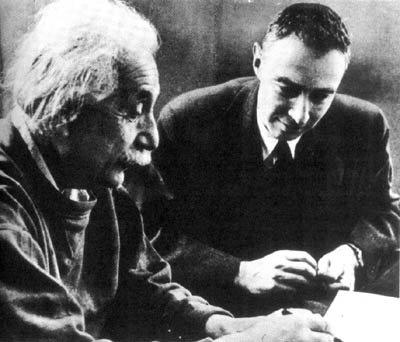
Einstein Oppenheimer pictureDAVID GERGEN: The other thing was that these great groups seem to be young. I had never understood till I read your book at the Manhattan Project, the scientists there, the average age 25 years old. 

WARREN BENNIS: Can you imagine that? I know. Yeah. I hesitate to talk about youth, having turned 72 last week, but–and when I talk a bit about the book to people whose hair is my color, but I do think there’s something about–there’s a certain innocence, a certain sense of not knowing what’s impossible.

DAVID GERGEN: And what you call delusional confidence.

WARREN BENNIS: It’s sort of a reality distortion field, unwarranted optimism, a sense of they can do something. And they don’t know what they don’t know.

DAVID GERGEN: Right. And the other thing I found so interesting, because I did find your–the “Manhattan Project” the paradigm, as you called it, the notion of making sure people in the group, the works in the group, that they think their work is meaningful. The anecdotes that you had about Richard Feinman, the physicist.

WARREN BENNIS: Yeah. They want all these technicians and engineers highly trained, college graduates, and they do sort of calculating work without the computers.

DAVID GERGEN: Bring it into Los Alamos.

WARREN BENNIS: Sort of doing–bringing it to Los Alamos, a godforsaken place, and they were doing just sort of minor calculations here, which were very boring. These were all very bright people. They didn’t know why they were doing it. They were brought their total secrecy. Finally, that young physicist, irreverent, outspoken, said to Dr. Oppenheimer, said, I’ve got to tell these people what they’re working on, because right now they’re just sort of like making little–they have no idea.

DAVID GERGEN: They have no idea about the atom bomb.

WARREN BENNIS: At all, total secrecy. So finally, J. Oppenheimer agreed and had seminars explaining to them not only the meaning of this, what they were doing–the free world was in balance–but also the significance of getting it before the Japanese or the Germans get it. And overnight, according to him, it was a miracle he said. These people began working eighteen-twenty hour days. They knew what they were involved in. Not only did Oppenheimer tell them what the bomb was about but also the physics, the theoretical aspects of it, so they were involved, and he said it was–and finally his words were total transformation. Talk about energizing, animating a group. If people know what the significance of what they’re doing is, I think a lot of people who right now working in boring, dull jobs can, you know, get a new lease on life.

DAVID GERGEN: You’ve written a lot of books about leadership. What is the role of the leader in these groups, the great groups?

WARREN BENNIS: They smell talent. They’re able to hire people, bring people in better than they were. They had–even Oppenheimer before Rolodex had a Rolodex of the best theoretical physicists, nuclear physicists in the world. And he was able to recruit meticulously, so the first, and then secondly to orchestrate this talent, not just to pile a lot of good bodies together. That doesn’t make a great group. But you’ve got to bring together a group of people as Peter Schneider, again, of Disney Studios, the animation studio, said, you’ve got to bring people together who want to play together in the sand box. That’s–the third thing is you’ve got to–you’re not the creator; you’re not necessarily the brightest or the best. You are the curator. You’re not the Fred Astaire on the stage of the Frank Sinatra, but you have created the social architecture that creates the Astaires and the Sinatras doing their best. And the best single anecdote I can give you is about two 19th century English prime ministers, Gladstone and Disraeli, and it was said about Gladstone, Prime Minister Gladstone, that when you had dinner with him, you thought that he was the world’s brightest, wittiest, most charming man you’ve ever met. But when you had dinner with Disraeli, you felt that you were the smartest, the wittiest, the most charming person you’ve ever met. These people inspire. Now, Oppenheimer, take the Manhattan Project, you know, there were seven future Nobel Laureates working for him. They were clearly in a way made more contribution to theoretical physics than he ever did, bright as he was.

DAVID GERGEN: Critical to leadership of an organization, a corporation, is creating trust between the leader and the followers. How much of a challenge is that in an era of downsizing?

WARREN BENNIS: Big, major. I gave a talk recently on, you know, my notions of leadership and empowerment and trust, et cetera, to a group of high potential executives, Fortune 100 company, and after I was through, they said, you know, Dr. Bennis, what you said is absolutely true, but tomorrow there could be a pink slip on my desk. So trust is the major issue facing most institutions right now, generating and sustaining trust. And it’s so difficult. And the only–you know, they can give you a lot of background on trust, you know, talk about constancy and competence, and integrity, and all that, but the major thing is authenticity and to really feel comfortable with your own skin. A leader like Rabin, who had no, you know, social graces of many–politicians had that sense of authenticity. So I think trust–without trust, I don’t think you can have a great group or great organization or lead a great nation state.

DAVID GERGEN: Warren Bennis, thank you very much.

WARREN BENNIS: Thank you, David.

Posted in Life Training | 1 Comment »

Leaders Make Others Feel Important – Not Themselves

Posted by Orrin Woodward on January 29, 2008

I loved this post by Matt Franks so much that I have decided to make it an article for all to see!  I think I will take my favorite comment of the week
and generate an entire post from it.  Please keep the great thoughts coming!
Today’s post is on treating others with dignity and respect.  I have experienced some egotistical managers on life’s journey and am disgusted by the way they view and treat people.  We all must serve and encourage others like Matt is displaying wherever he goes.  I will save the full treatment for a future post, but let me give you a preview to open Matt’s servant based leadership behavior. 

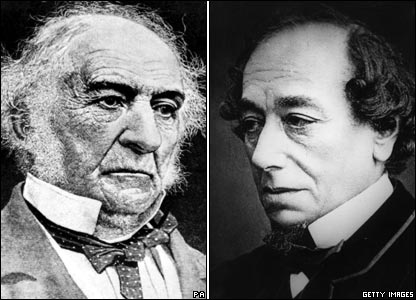
Gladstone Disraeli pictureLet me share a story I wrote about two great Prime Ministers of Victorian England.  The general facts of the personalities of Gladstone and Disraeli are true, but I have taken artistic liberty to add other characters for suspense and development of the points.  

There is a 19th century story told about and older British woman who had the rare opportunity to have separate lunches with the two most famous living Englishmen of the era: William Gladstone and Benjamin Disraeli.  Both had been Prime Ministers of England several times.  Both were men of strong character, convictions and decisive leaders.  A young reporter tracked down the fortunate Victorian lady and requested an interview.  The reporter asked her questions about her lunches to determine what the two legendary PM’s were like as persons.  After asking questions like: “What did you discuss?”, “What did he eat?”, and “What were his thoughts on the political scene?” the reporter was wrapping up his interview and contemplating his story in tomorrow’s paper.  He had only one more question for the patient woman, “Which Prime Minister did you enjoy lunch with more?”  She thought for a moment and then a bright smile covered her face.  “When I went to lunch with William Gladstone,” she shared, “I was convinced that I was dining with the greatest living Englishmen!”  The reporter quickly scribbled down his thoughts and thinking the lady had finished was getting up to leave—not wanting to make her feel uncomfortable that she had chosen William Gladstone over Benjamin Disraeli.  As he was thanking her for her time, she politely told him she was not finished.  “When I went to lunch with Benjamin Disraeli,” she enthused, “I was convinced that he was dining with the greatest living Englishwoman!”   As the reporter was leaving, he vowed to never forget the beaming smile that had transformed the elderly ladies presence.  “Yes,” he thought, “it is nice to feel important and capable of impressing others by discussing eloquently on the many subjects of your choice.  But others will remember you on how nice it was to feel important to you and capable of impressing you by your attentive listening on the many subjects of their
choice.”

Quote: “You can tell how “big” the person is by the way they treat the “little” person.

Orrin, 

I love your 2 quotes! Very thought provoking! Hey I hope the book
signing went well in Michigan! This weekend I had an interesting
experience that I thought might fit into the title of your lesson especially
around responsibilities. It was an experience that I will never forget and
something I couldn’t wait to share with everyone! It reminded me about my
responsibility, as a growing leader, to always be a lifter for other people. 

For me, as I described in a few posts back, I have a responsibility to develop my God given potential and practice my personal “daily dozen” everyday. Why? I believe that my gifts and abilities are God’s gift to me and what I do with those gifts is my gift back to God! One of the practices I try to do daily is add value to people I have never met before. Whether it is opening up doors for others, saying hi, or striking up a conversation to learn about them I just want to add value to others. In other words I just follow the Golden Rule that is taught to all of us in the Bible: “Do unto others as you want them to do unto you.”

Of all places, my experience happened at a Wal-Mart with a 70 year old lady who was a cashier. 🙂 I was checking out in line and just struck up a conversation with this cashier and she worked there because her husband passed away and she needed to earn an income since her retirement was not very good. Anyways to make a long story short one of the items I purchased was 2 packages of Extra chewing gum. When she was done tallying up what I owed her she said “I charged you for 3 packages of gum instead of 2.” Then she burst into tears! I said “What is wrong? Is there anything I can help you with?” She said “about 5 minutes ago I did the same thing to someone else and he told me I was so ignorant that I shouldn’t even work at Wal-Mart. I am sorry if I made you upset.” I told her “ma’am I have shopped at many Wal-Mart’s during my lifetime, but I have never met someone as kind as you. You are a person of worth! I have watched you serve the previous 2 customers and I wish every store I went into had someone like you working the register!” I was in awe that a $1.99 mistake made this experience happen! She
said “the only person that ever said that to me was my husband, but since he
died no one has paid me a compliment like that before.” Can you believe that
someone made this woman feel so low for a $1.99 package of gum?!!!!! Anyways I went and got another package of gum off the shelf since I paid for it and then came back to show this wonderful cashier that it was OK. She held my bags and gave them back to me before I walked out the door. Then she said something to me that I will never forget. She gave me a hug and said “I know God has great things in store for you. Thank you for valuing me as a person and not seeing me as “just a cashier.” Like I said earlier this was at a Wal-Mart! I went out to my car and just sat stunned because I couldn’t believe that experience just happened. It was something I will never forget and know now how important it is to carry out the responsibility of treating everyone with love and respect.

That is why the stakes of leadership are so high! You see when opportunity comes, as we all know, it is too late to prepare. I am very thankful because of my continued leadership learning through TEAM and other leadership organizations I was prepared to add value to someone that just got de-valued by someone else. This experience teaches me that no matter who we ever talk to or run into, God brings us to that moment for a specific reason, but it is our responsibility to be lifters to all people not just a select few! However in order to be a lifter in other people’s lives we have got to check our EGO at the door! Back off and stop taking yourself too seriously, because you can’t help anyone if you are only concerned with helping yourself! I must say though if I would have seen that man treat the cashier the way he did I might have been asking for forgiveness! 🙂

There are so many people that everyday are de-valued or de-edified by Egotistical and our jobs as leaders is to see others not as they are, but see them as they could become. It is our responsibility to see the good in other people and tell them how those great qualities will serve others well.

Thanks Orrin!

Best,

Matt


Assignment:  Are you making others feel important?  In what specific
ways do you make others feel accepted, approved and appreciated?

Posted in Life Training | 1 Comment »

Over 60 Countries Visiting Our Leadership Blog

Posted by Orrin Woodward on January 28, 2008

What has happened to our Leadership Blog is beyond comprehension.  I started this blog with little fanfare as a way to serve the greater leadership
community
.  Through word of mouth and a concept called Six Degrees of Separation—this blog has exploded worldwide!  I can’t wait until mid-February, as I will be able to share the research I have compiled in several different areas.   The amount of countries reading and commenting (Some in other languages) has startled me.  There are 36 countries visiting our site daily to learn leadership development and life coaching.  Here are the daily
countries:

United States, Canada, United Kingdom, Australia, India, Sweden, Germany, Haiti, Philippines, Netherlands, Bahamas, Poland, Hungary, Denmark, South Africa, Thailand, France, New Zealand, Indonesia, Singapore, Portugal, Norway, Greece, Turkey, Italy, Malaysia, Japan, Spain, Kenya, Bulgaria, Belgium, Ireland, Romania, United Arab Emirates, Mexico, Brazil

There are 28 countries visiting weekly to catch up on leadership and life coaching. Here is the weekly list of countries:

Saudi Arabia, Cameroon, Virgin Islands, U.S., Croatia, Nepal, Sri Lanka, Russian Federation, Egypt, Pakistan, Malta, Oman, Bermuda, Austria, Czech Republic, Iran, Islamic Republic of, Afghanistan, Slovakia, Estonia, Chile, Taiwan, Ecuador, Cyprus, Korea, Republic of, Kuwait, Hong Kong,
Bangladesh, Latvia

There are other countries that I did not include because of minimal visits on our site.  Who knows what the future has in store as we build a worldwide
community.  I consider myself a Maven—someone who does research in many areas to save people time and money for all of our benefits.  Here is a portion of the Wiki definition for a Maven:

In recent years, economists have spent a great deal of time studying Mavens, for the obvious reason that if marketplaces depend on information, the people with the most information must be the most important. For example, sometimes when a supermarket wants to increase sales of a given product, they’ll put a promotion sticker in front of it, saying something like
“Everyday Low Price!” The price will stay the same. The product will just be
featured more prominently. When they do that, supermarkets find that invariably the sales of the product go through the roof, the same way they would if the product had actually been put on sale.

But if we’ll buy more of something even if the price hasn’t been lowered, then what’s to stop supermarkets from never lowering their prices? The answer is that although most of us don’t look at prices, every retailer knows that a very small number of people do, and if they find something amiss, a promotion, that’s not really a promotion they’ll do something about it. If a store tried to pull the sales stunt too often, these are the people who would figure it out and complain to management and tell their friends and acquaintances to avoid the store. These are the people who keep the marketplace honest. One name for them is “price vigilantes.” The other, more common, name for them is “Market Mavens.”

If I see something with a good value proposition, I will share with everyone.
If I discover misleading scams, unethical dealings, or poor character based leadership, I will expose this also.  The goal is to improve people’s lives by doing more of what is right and less of what is wrong.  Can you see how through this blog, we can all make a difference in our world?  Let’s build our leadership community and see what doors God’s Providence opens for us.  As to the future; all I can say is, “Bring it!”  God Bless, Orrin Woodward

Posted in All News | Comments Off on Over 60 Countries Visiting Our Leadership Blog

Original Quotes on Responsibilities and Ideals

Posted by Orrin Woodward on January 28, 2008

While flying to Florida from Michigan, two thoughts popped into my head
that I turned into quotes.  I have been thinking about our responsibilities to God and the importance of having ideals in your life.  America is at the crossroads due to many citizens lack of responsibility and ideals.  Both of these quotes clarified my thinking on these important subjects and I hope they do the same for you.  God Bless, Orrin Woodward

If the citizens will not willingly surrender their rights to their responsibilities in Godly obedience—they will be seduced into servitude by Godless dictators of disobedience – Orrin Woodward

I would rather have ideals and be accused of hypocrisy than have no ideals and be praised for sincerity – Orrin Woodward

Posted in Freedom/Liberty | 1 Comment »

500 Million Dollar Scam in United Nations

Posted by Orrin Woodward on January 27, 2008

Here is an article that has me even more concerned about the viability of the United Nations.  Doesn’t the US provide funds to support the United Nations?  Is the U.N. working or is it a big spy ring like this article alleges? 

Double-Agent Deserter Tells Story of $500 Million Scam

United Nation Assembly pictureUNITED NATIONS — A former Russian top spy says his agents helped the government steal nearly $500 million from the UN’s oil-for-food program in Iraq before the fall of Saddam Hussein in 2003.

Sergei Tretyakov, who defected to the United States in 2000, says he oversaw an operation that helped Hussein’s regime manipulate the price of Iraqi oil sold under the program — allowing Russia to skim profits.

Tretyakov, former deputy head of intelligence at Russia’s UN mission from 1995 to 2000, names some names, but sticks mainly to code names. Among the spies he says he recruited for Russia were a Canadian nuclear weapons expert who became a UN nuclear verification expert in Vienna, a senior Russian official in the oil-for-food program and a former Soviet bloc ambassador. He describes a Russian businessman who got hold of a nuclear bomb, and kept it stored in a shed at his dacha outside Moscow.

Tretyakov, 51, had never spoken out about his spying before this week, when he granted his first news media interviews to publicize a book published Thursday. Written by former Washington Post journalist Pete Earley, the book is titled “Comrade J.: The Untold Secrets of Russia’s Master Spy in America after the End of the Cold War.”

“It’s an international spy nest,” Tretyakov said of the UN, during an interview this week. “Inside the UN, we were fishing for knowledgeable diplomats who could give us, first of all, anti-American information.”

His defection was first reported in 2001, followed by the news that he was not a diplomat, but a top Russian spy who was extensively debriefed by the CIA and the FBI.

Posted in Finances | 2 Comments »

James Montgomery Boice – God’s Providence Overruling Evil for Good

Posted by Orrin Woodward on January 27, 2008

James Boice pictureOn this Sunday, I would like to introduce you to another of my favorite authors—James Montgomery Boice.   Very few authors wrote on the deeper concepts of faith as clearly as Boice did.  I remember reading the book, Foundations
of God’s City
and being inspired to live a life honoring to God.  This certainly is easier said than done, but
God’s grace is sufficient for all of us.  I highly encourage you to read any books from James Montgomery Boice and take the time to digest his thinking.  I promise it will enhance your faith and increase your hunger to improve.  Here is just a sample of Montgomery Boice’s thinking out of a book called Foundations of the Christian Faith. James describes how God takes the evil actions of others and overrules them for good in a believer’s life. As you enjoy this Sunday, stop and think about how God’s Providence has turned evil into good in your life?   Please share your thoughts after reading this article.  God Bless, Orrin Woodward 

There is probably no point at which the Christian doctrine of God comes more into conflict with contemporary worldviews than in the matter of God’s providence. Providence means that God has not abandoned the world that he created, but rather works within that creation to manage all things according to the “immutable counsel of His own will” (Westminster Confession of Faith, V, i). By contrast, the world at large, even if it will on occasion acknowledge God to have been the world’s Creator, is at least certain that he does not now intervene in human affairs. Many think that miracles do not happen, that prayer isn’t answered and that most things “fall out” according to the functioning of impersonal and unchangeable laws.

The world argues that evil abounds. How can evil be compatible with the concept of a good God who is actively ruling this world? There are natural disasters: fires, earthquakes, and floods. In the past, these have been called “acts of God.” Should we blame God for them? Isn’t it better to imagine that he simply has left the world to pursue its own course?

Such speculation can be answered on two levels. First, even from the secular perspective, such thinking is not as obvious as it seems. Second, it is not the teaching of the Bible.

A Universe on Its Own?

The idea of an absentee God is certainly Foundation of Christian Faith picturenot obvious in reference to nature, the first of the three major areas of God’s creation discussed earlier. The great question about nature, raised by even the earliest Greek philosophers as well as by contemporary scientists, is why there is a pattern to nature’s operations even though nature is constantly changing. Nothing is ever the same. Rivers flow, mountains rise and fall, flowers grow and die, the sea is in constant motion. Yet, in a sense everything remains the same. The experience of one generation with nature is akin to the experience of

generations that have gone before.

Science tends to explain this uniformity by the laws of averages or by laws of random motion. But that is not a full explanation. For example, by the very laws of averages it is quite possible that at some time all molecules of a gas or solid (or the great preponderance of them) might be moving in the same direction instead of in random directions, and if that were the case, then the substance would cease to be as we know it and the laws of science regarding it would be inoperable.

Where does uniformity come from if not from God? The Bible says that uniformity comes from God when it speaks of Christ “upholding the universe by his word of power” (Heb. 1:3) and argues that “in him all things hold together” (Col. 1:17). The point is that the providence of God lies behind the orderly world that we know. That was the primary thought in the minds of the authors of the Heidelberg Catechism when they defined providence as
“the almighty and ever-present power of God whereby he still upholds, as it were by his own hand, heaven and earth together with all creatures, and rules in such a way that leaves and grass, rain and drought, fruitful and unfruitful years, food and drink, health and sickness, riches and poverty, and everything else, come to us not by chance but by his fatherly hand” (Question 27). Remove the providence of God over nature, and — not only is all sense of security gone—the world is gone; meaningless change would soon replace its
order.

The same thing is true of human society. Once again, there is great diversity and change. But there are also patterns to human life and limits beyond which, for example, evil does not seem permitted to go. Pink argues along such lines in his study of God’s sovereignty: 

For the sake of argument, we will say that every man enters this world endowed with a will that is absolutely free, and that it is impossible to compel or even coerce him without destroying his freedom. Let us say that every man possesses a knowledge of right and wrong, that he has the power to choose between them, and that he is left entirely free to make his own choice and go his own way. Then what? Then it follows that man is sovereign, for he does as he pleases and is the architect of his own future. But in such a case, we can have no assurance that ere long every man will reject the good and choose the evil. In such a case, we have no guaranty against the entire human race committing moral suicide. Let all divine restraints be removed and man be left absolutely free, and all ethical distinctions would immediately disappear, the spirit of barbarism would prevail universally, and pandemonium would reign supreme.

But that does not happen. And the reason it does not happen is that God does not leave his creatures to the exercise of an absolute autonomy. They are free, yet within limits. Moreover, God in his perfect freedom also intervenes directly, as he chooses, to order their wills and actions.

The book of Proverbs contains many verses on this theme. Proverbs 16:1 says that although an individual may debate with himself about what he will say, it is the Lord who determines what he actually speaks: “The plans of the mind belong to man, but the answer of the tongue is from the LORD.” Proverbs 21:1 applies the same principle to human affections, using the dispositions of the king as an example. “The king’s heart is a stream of water in the hand of the LORD; he turns it wherever he will.” Actions are also under the sphere of God’s providence. “A man’s mind plans his way, but the LORD directs his steps” (Prov. 16:9). So is the outcome. “Many are the plans in the mind of a man, but it is the purpose of the LORD that will be established”
(Prov. 19:2 1). Proverbs 2 1:30 sums up by saying, “No wisdom, no understanding, no counsel, can avail against the LORD.”

In the same way, God also exercises his rule over the spirit world. The angels are subject to his express command and rejoice to do his bidding. The demons, while in rebellion against him, are still subject to God’s decrees and restraining hand. Satan was unable to touch God’s servant Job until God gave his permission, and even then certain bounds were set: “Behold, all that he has is in your power; only upon himself do not put forth your hand” (Job 1:12); “Behold, he is in your power; only spare his life” (Job 2:6).

Playing by God’s Rules

The point of major interest for us is not in the area of God’s rule over nature or the angels, however. It is how God’s providence operates with human beings, particularly when we decide to disobey him.

There is, of course, no problem at all with the providence of God in human affairs if we obey him. God simply declares what he wants done, and it is done — willingly. But what about those time when we disobey? And what about the great number of unregenerate people who apparently never obey God willingly? Does God say, “Well, I love you in spite of your disobedience, and I certainly don’t want to insist on anything unpleasant; we’ll just forget about my desires”? God does not operate in that fashion. If he did, he would not be sovereign. On the other hand, God does not always say, “You are going to do it; therefore, I will smash you down so you have to!” What does happen when we decide we don’t want to do what he wants us to do?

The basic answer is that God has established laws to govern disobedience and sin, just as he has established laws to govern the physical world. When people sin, they usually think that they are going to do so on their own terms. But God says, in effect, “When you disobey, it is going to be according to my laws rather than your own.”

We see a broadly stated example in the first chapter of Romans. After having described how the natural man won’t acknowledge God as the true God or worship him and be thankful to him as the Creator, Paul shows that such a person is thereby launched on a path that leads away from God which causes him to suffer grim consequences, including the debasement of his own being. “Claiming to be wise, they became fools, and exchanged the glory of the immortal God for images resembling mortal man or birds or animals or reptiles” (Rom. 1:22-23).

Then comes a most interesting part of the chapter. Three times in the verses, which follow, we read that because of their rebellion “God gave them up.” Terrible words. But when it says that God gave them up, it doesn’t say that God gave them up to nothing, as if he merely removed his hand from them and allowed them to drift away. In each case it says that God gave them up to something: in the first case, “to impurity, to the dishonoring of their bodies” (v. 24); in the second case, “to dishonorable passions” (v. 26); and in the third case, “to a base mind and to improper conduct” (v. 28). In other words, God will permit the ungodly to go their own way, but he has determined in his wisdom that when they go, it will be according to his rules rather than their own.

If anger and tension go unchecked, they produce ulcers or high blood pressure. Profligacy is a path to broken lives and venereal disease. Pride will be self-destructive. These spiritual laws are the equivalent of the laws of science in the physical creation.

The principle is true for unbelievers, but it is also true for believers. The Old Testament story of Jonah teaches that a believer can disobey God, in fact, with such determination that it takes a direct intervention by God in history to turn him around. But when he does, he suffers the consequences that God has previously established to govern disobedience. Jonah had been given a commission to take a message of judgment to Nineveh. It was similar to the great commission that has been given to all Christians, for he was told to “Arise, go to Nineveh, that great city, and cry against it; for their wickedness has come up before me” (Jonah 1:2). But Jonah didn’t want to do God’s bidding, as Christians today often don’t. So he went in the other direction, taking a ship from Joppa, on the coast of Palestine, to Tarshish, which was probably on the coast of Spain. Did Jonah succeed? Not at all. We know what happened to him. He ran into trouble as God took drastic measures to turn him around. After God let him sit in the belly of a great fish for three days, Jonah decided he would obey God and be his missionary.

The Flow of History

Thus far, our study has revealed several uniquely Christian attitudes toward providence. First, the Christian doctrine is personal and moral rather than abstract and amoral. That makes it entirely different from the pagan idea of fate. Second, providence is a specific operation. In Jonah’s case it dealt with a particular man, ship, fish and revelation of the divine will in the call to Nineveh.

There is something else that must be said about the providence of God It is purposive; that is, it is directed to an end. There is such a thing as real history. The flow of human events is going somewhere as opposed to being merely static or without meaning. In Jonah’s case, the flow of history led to his own eventual, though reluctant, missionary work and then to the conversion of the people of Nineveh. In the larger picture, history flows on to the glorification of God in all his attributes, primarily in the person of his Son, the Lord Jesus Christ. That idea is captured in the definition of providence found in the Westminster Confession of Faith which reads, “God the great Creator of all things doth uphold, direct, dispose, and govern all creatures, actions, and things, from the greatest even to the least by His most wise and holy providence, according to His infallible foreknowledge, and the free and immutable counsel of His own will, to the praise of the glory of His wisdom, power, justice, goodness, and mercy” (5, i).

The flow of history leading to the glorification of God is to our good also. For “we know that in everything God works for good with those who love him, who are called according to his purpose” (Rom. 8:28). What is our good? Obviously, there are many “goods” to be enjoyed now, and this verse includes them. But in its fullest sense, our good is to enter into the destiny we were created for: to be conformed to the image of Jesus Christ and thus “to glorify God, and to enjoy him forever.” The providence of God will surely bring us there.

To speak of the “good” introduces the subject of the “bad.” And since the verse in Romans says that “in everything God works for good” to those who are the called ones of God, the question immediately arises as to whether or not this includes the evil. Is evil under God’s direction? It would be possible to interpret Romans 8:28 as meaning that all things consistent with righteousness work to good for those who love God, but in the light of Scripture as a whole that would be an unjustified watering down of the text. It is all things, including evil, that God uses in accomplishing his good purposes in the world.

There are two areas in which God’s use of evil for good must be considered. First, there is the evil of others. Does this work for the believer’s good? The Bible answers Yes by many examples. When Naomi’s son, an Israelite, married Ruth, a Moabitess, the marriage was contrary to the revealed will of God and hence was sin. Jews were not to marry Gentiles. Still the marriage made Ruth a daughter-in-law of Naomi and thus enabled her to be exposed to the true God and eventually come to the place where she made a choice to serve him. “Your people shall be my people, and your God my God” (Ruth 1:16). After Ruth’s husband died, she married Boaz. Through her new husband, Ruth entered into the line of descent of the Lord Jesus Christ, the Messiah (Mt. 1:5).

David was a person who undoubtedly suffered greatly through the sins of others against him, including even the sins of his sons. But as God worked in him through these experiences, he grew to see the hand of God in his suffering and expressed his faith in great psalms. The psalms have been an immeasurable blessing to millions.

Hosea suffered through the unfaithfulness of his wife Gomer. But God used his experience to bring forth one of the most beautiful, moving and instructive books of the Old Testament.

By far the greatest example of the sin of others working for the good of God’s people is the sin which poured itself out against the Lord Jesus Christ. The leaders of Christ’s day hated him for his holiness and wished to eliminate his presence from their lives. Satan worked through their hatred to strike back at God by encouraging merciless treatment of the incarnate Christ. But God turned this to good, working through the crucifixion of the Lord for our salvation. In none of this was God responsible for evil, though human sin and the sin of Satan were involved. In none of this was God made a partner in sin. Jesus himself said, in reference to Judas, “The Son of man goes as it is written of him, but woe to that man by whom the Son of man is betrayed!” (Mt. 26:24). Earlier he had said, “It is necessary that temptations come, but woe to the man by whom the temptation comes!” (Mt. 18:7). Nevertheless, without himself being a party to sin, God worked through it to bring forth good in line with his own eternal purposes.

The other area in which God’s use of evil for his own purposes must be considered is our own sin. This point is somewhat harder to see, for sin also works to our own unhappiness and blinds our eyes to God’s dealing. But there is good involved anyway. For example, Joseph’s brothers were jealous of him because he was their father’s favorite. So they conspired and sold him to a group of Midianite traders who took him to Egypt. There Joseph worked as a slave. In time, he was thrown into prison through the unjust accusations of a rejected woman. Later he was brought to power as second only to Pharaoh and became the means by which grain was stored during seven years of prosperity for the subsequent seven years of famine and widespread starvation. During that period his brothers, who were starving along with everyone else, came to Egypt and were helped by Joseph.

They were helped by the one they had rejected! And the outcome was in God’s control, as Joseph later explained to them.

I am your brother, Joseph, whom you sold into Egypt. And now do not be distressed, or angry with yourselves, because you sold me here; for God sent me before you to preserve life. For the famine has been in the land these two years; and there are yet five years in which there will be neither plowing nor harvest. And God sent me before you to preserve for you a remnant on earth, and to keep alive for you many survivors. So it was not you who sent me here, but God. (Gen. 45:4-8)

After the death of their father, the brothers thought that Joseph would then take vengeance on them. But he again calmed their fears saying, “Fear not, for am I in the place of God? As for you, you meant evil against me; but God meant it for good, to bring it about that many people should be kept alive, as they are today” (Gen. 50:19-20). There had been great evil in the hearts of the brothers. But God used their evil, not only to save others, but even to save their own lives and those of their wives and children.

Patience and Gratitude

There will always be some who hear such a truth and immediately cry out that it teaches that Christians may sin with impunity. This accusation was made against Paul (Rom. 3:8). But it teaches nothing of the kind. Sin is still sin; it has consequences. Evil is still evil, but God is greater than the evil. That is the point. And he is determined to and will accomplish his purposes in spite of
it.

The providence of God does not relieve us of responsibility. God works through means (the integrity, hard work, obedience and faithfulness of Christian people, for example). The providence of God does not relieve us of the need to make wise judgments or to be prudent. On the other hand, it does relieve us of anxiety in God’s service. “If God so clothes the grass of the field, which today is alive and tomorrow is thrown into the oven, will he not much more clothe you, O men of little faith?” (Mt. 6:30). Rather than being a cause for self-indulgence, compromise, rebellion or any other sin, the doctrine of providence is actually a sure ground for trust and a spur to faithfulness.

Calvin has left us with wise advice on this subject. 

Gratitude of mind for the favorable outcome of things, patience in adversity, and also incredible freedom from worry about the future all necessarily follow upon this knowledge. Therefore, whatever shall happen prosperously and according to the desire of his heart, God’s servant will attribute wholly to God, whether he feels God’s beneficence through the ministry of men, or has been helped by inanimate creatures. For thus he will reason in his mind: surely it is the Lord who has inclined their hearts to me, who has so bound them to me that they should become the instruments of his kindness.

In such a frame of mind the Christian will cease to fret in circumstances and will grow in the love and knowledge of Jesus Christ and of his Father, who has made us and who has planned and accomplished our salvation.


Posted in Faith | 1 Comment »

Michael Jordan on Winning Teams

Posted by Orrin Woodward on January 26, 2008

Michael Jordan pictureI found this excellent article
about Michael Jordan.  MJ was one of the most enjoyable athletes to watch in any sport—he was a consummate professional
in his field.  From last minute heroics,
stellar defense or deft passing, Michael helped everyone on his team play better.  In fact, he even helped the opposing team play better because of his presence.   There is much we can learn from individuals
who accept nothing less than excellence in their life.  MJ is one of the greatest and we all should learn from his hunger to rise above the field. 

God Bless, Orrin Woodward

Growing up every body wanted to be like Mike. Kids would wear Michael Jordan shoes in the hopes that some of his magic might rub off onto them. No
other man in history has been able to single handedly shape a game as Michael
Jordan did in his career. He was one of the most fiercest competitors to ever
grace the courts and as a result dominated the game like no one else in history.

His sporting achievements read like a dream list, winning 6 NBA championships, 10-time All-NBA First Team, Defensive Player of the Year, Rookie of the Year, 14-time All-Star, two time Olympic gold medalist, countless MVP’s to his credit and inducted as one of 50 Greatest Players in NBA History. There is no question that Jordan was a winner, here are some timeless lessons we can learn from his legacy:

1. Winners Aren’t Afraid To Fail

“I’ve missed more than 9000 shots in my career. I’ve lost almost 300 games. 26 times, I’ve been trusted to take the game winning shot and missed. I’ve failed over and over and over again in my life. And that is why I succeed.” – Michael Jordan

Jordan ended his amazingly stellar career with a field goal shooting average of 0.497%. Imagine one of the greatest players in history missing nearly one in every two of his shots, some of which were no doubt in pivotal moments of the game and even potential game winners. Most people make decisions in their life as if one misstep or setback would cause their house of cards to come crumbling down beneath their feet. They fear failure, fear letting down their friends or family, fear what others might think about them, fear the consequences of their actions and thus visualize the worst case scenarios in their mind.

Winners are those rare individuals who in spite of all odds, choose to put their hand up for that game winning shot and whether they make the basket or not, know that they put 100% into that moment. The difference between hero and villain is a fine line and winners know the highs and lows of both. To be given the responsibility and the privilege like Jordan did over and over again in his
career to take the game winning shot you must prepare the best you can, live the best you can and believe in every ounce of your ability. Winners don’t just rely on blind faith and see failure as a lesson to learn from. Failure is one of
life’s greatest teachers and if you but embrace those lessons you will be
stronger for it.

2. Winners Work Harder And Smarter

“I’ve always believed that if you put in the work, the results will come. I don’t do things half-heartedly. Because I know if I do, then I can expect half-hearted results.” – Michael Jordan

It is always surprising to hear people who talk about achieving success in their field, instead of being willing to put in the hard work they look for short cuts. They look to gain as much as they can by working as little as they can. To look for shortcuts is a fools game, no one ever achieved excellence in any great undertaking by subscribing to the ethic of laziness. Jordan was cut from the varsity team as a sophomore during his time at Laney High School in Wilmington. “Whenever I was working out and got tired and figured I ought to stop, I’d close my eyes and see that list in the locker room without my name on it,” Jordan said, “and that usually got me going again.” He eventually made the team and led it to the state championship.

At age 35 he was still working harder than most of the players half his age, and he was still out maneuvering them on the basketball courts. He out hustled, out played, and out skilled his contemporaries a fraction of his age. Jordan’s secret was his work ethic was like no other, even at an age where he had already proved he was the greatest living basketball player, he still worked harder than everyone else to continue to develop his game.

3. Winners Rise Above The Low Expectation Of Others

“If you accept the expectations of others, especially negative ones, then you never will change the outcome.” – Michael Jordan

You have to be willing to rise about the mediocrity of your peers and critics. Mediocrity is a disease that takes hold on those who aren’t strong enough to hold onto their dreams, who don’t have enough belief in them self or too scared to rise above the crowd. When Jordan was cut from the Varsity team
in high school, he was relegated to playing for the Junior Varsity team and
worked on his skills during the summer with his brother. He spent that year
developing his skills and honing his craft earning him a spot in the varsity
team a year later. The rest is history. If he was to have believed that he
wasn’t good enough like his coach then imagine history without
Jordan jumping through the air and making impossible jump shots. Winners aren’t confined to the domain of the most gifted, the most talented or the one with the most opportunities and resources. At the end of the day winners are the ones who rise above everybody else’s thinking and believes in themselves. They pay the price to become the best.

4. Winners Love What They Do

“Even when I’m old and grey, I won’t be able to play it, but I’ll still love the game.” – Michael Jordan

It doesn’t take a genius to work out that Jordan loved the game. Basketball for
Jordan was something that brought him joy and fulfillment. He played basketball as a young kid with his father and older brother way before his skills and talents were even known. He worked hard to follow his passion even when obstacles were presented in his path. The path to greatness is all uphill and if you aren’t doing something your passionate about then that road uphill very quickly becomes a grinding slog. Life is too short to slog your way through life, if you know the path is uphill then at least find something that you love to do so that you can have fun while doing it.

5. Winners Are In It To Win

“I play to win, whether during practice or a real game. And I will not let anything get in the way of me and my competitive enthusiasm to win.” – Michael Jordan

Jordan might be considered an over achiever, but he wasn’t sweating it out week in week out to just be in the game. Jordan’s tenacity and drive to win is
what fueled much of his devotion to the game and his outstanding record of
success was the scorecard. He pushed his body to it’s limit so that he could see
what it was possible in achieving. Sure you might argue that it’s just a game,
it’s not like world peace is at stake but what separates winners from losers is
their willingness to get off the sideline and play all in. They dedicate
themselves to an undertaking of excellence in everything they do and commit to a path forged with professionalism.

6. Winners Overcome Obstacles In Their Path

“If you’re trying to achieve, there will be roadblocks. I’ve had them; everybody has had them. But obstacles don’t have to stop you. If you run into a wall, don’t turn around and give up. Figure out how to climb it, go through it, or work around it.” – Michael Jordan

It is amazing how often people quit at the first sign of defeat. Instead of pushing through that defeat they see it as some sort of sign that this path was not theirs to begin with and go seeking another path for their life. The problem is that these people never stick to one thing long enough for success to sprout. They dabble at this and dabble at that and achieve mastery at nothing in life. Obstacles are put on your path to challenge you to rise to a whole new level, a level often time you didn’t even knew existed in your human potential. Obstacles give you a reason to strive further, work harder and find that inner strength that each and everyone of us possess if we just are willing to tap into it.

7. Winners Make Things Happen

“Some people want it to happen, some wish it would happen, others make it happen.” – Michael Jordan

Opportunities don’t magically fall into your lap, you have to create those opportunities. Winners are proactive with their dreams, they are willing to do what the loser’s only dream about. Instead of complaining, getting upset or trying to explain why things didn’t happen for you, stand up and take charge of your destiny. Shape it the way you want, if one door closes, work twice as hard till the next door opens. You can turn around your life today if you just subscribe to the winners mindset that all things are possible if you put your mind to it. Jordan revolutionized the game of basketball, he created what to mere mortals look like impossible shots from impossible angles.

He dazzled professional athletes by making them look amateurish by dribbling around them and pulling out jump shots. Jordan devoted his life to mastering
his craft and created shots that generations to come would emulate. He didn’t
just play the game, he created the game as he went and defined the game.

Posted in All News | 2 Comments »