




Orrin Woodward on LIFE & Leadership

Inc Magazine Top 20 Leader shares his personal, professional, and financial secrets.

  • Orrin Woodward

    1
    Former Guinness World Record Holder for largest book signing ever, Orrin Woodward is a NY Times bestselling author of And Justice For All along with RESOLVED & coauthor of LeaderShift and Launching a Leadership Revolution. His books have sold over one million copies in the financial, leadership and liberty fields. RESOLVED: 13 Resolutions For LIFE made the Top 100 All-Time Best Leadership Books and the 13 Resolutions are the framework for the top selling Mental Fitness Challenge personal development program.

    Orrin made the Top 20 Inc. Magazine Leadership list & has co-founded two multi-million dollar leadership companies. Currently, he serves as the Chairman of the Board of the LIFE. He has a B.S. degree from GMI-EMI (now Kettering University) in manufacturing systems engineering. He holds four U.S. patents, and won an exclusive National Technical Benchmarking Award.

    This blog is an Alltop selection and ranked in HR's Top 100 Blogs for Management & Leadership.

  • Orrin’s Latest Book


  • 7 Day Free Access to Leadership Audios!

  • Email Me

  • NY Times Bestselling Book


  • Mental Fitness Challenge

  • Email Subscription

    Enter your email address to subscribe to this blog and receive notifications of new posts by email.

    Join 2,438 other subscribers
  • Categories

  • Archives

Archive for February, 2008

Trust, Delegation & Productivity

Posted by Orrin Woodward on February 29, 2008

I read a fantastic leadership article on the power of trust to improve working relationships in any business or team.  Chris Brady and I have taught a principle for years called, “Slow to go fast.”   We meant that you have to slow down and build the relationship before you can accomplish any great task.  My personal attitude is that I want to be friends first and then team partners.  I am not interested in shallow non-trusting relationships.  I desire deep meaningful relationships with people who will go to bat for one another when the chips are down.  This has been one of the biggest blessings for Laurie and me – we have some of the deepest and trusting relationships with many super people.  Trust is earned by showing trust first and this article does a great job in describing the art of earning trust!  Read the article and evaluate how you are doing with this leadership essential – Trust.  God Bless, Orrin Woodward
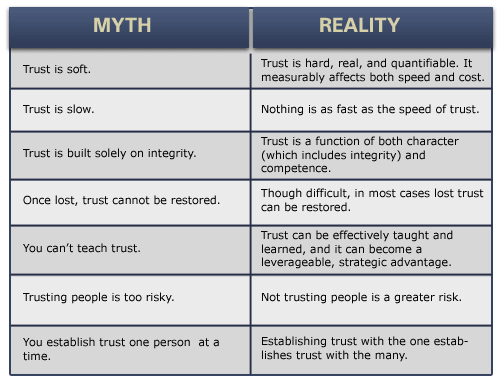
 

Myths Reality Box pictureTrust is an essential basis for a productive, satisfying and fun business environment. Suspicion corrodes working relationships and undermines people’s confidence in themselves and their colleagues. Leaders need to offer trust, since the only way to prove whether others are trustworthy or not is by experience. Organizational leaders have nearly all the power, so it’s usually up to them to set the ball rolling. Trust is always a gift. As a leader, you need to be the one who begins the giving process.


What does it take to initiate a process of trust? Courage, certainly, and the willingness to take a risk.  Employees, who have been denied trust, maybe for years, don’t find it easy to accept responsibility in an instant. You’ll need to help them rebuild their confidence in themselves. You’ll probably have to deal with more than few cynics as well: people who claim to approve the idea of trust, yet constantly find reasons why it shouldn’t be this person, in this circumstance, at this time.


Risks versus Rewards

There are always risks involved in offering trust. Some people—very few, in my experience—will consciously abuse your trust. If so, you may also need the courage and wisdom to refuse to allow the actions of a tiny minority to shape the way you deal with everyone. Others may stumble and betray your trust without intending to. You need to be willing to show them mercy and provide help, not instant condemnation. It’s easy to focus primarily on the negative possibilities: the people who will not live up to the trust placed in them. In reality, the potential for positive outcomes is high enough to tilt the balance of advantage that way.


The results of trust abused are obvious. You find yourself blamed for being “naive” and “too soft.” You suffer a loss of credibility and political standing. You may have to deal with a problem you didn’t expect, or try to reverse losses that might have been avoided by putting less trust in others.


But what are the risks on the other side: The risks of creating a culture marked by chronic lack of trust? Those risks include:


A culture of obsessive secrecy, so important information is not shared and unnecessary mistakes are common.


An organization where all significant decisions, (particularly financial ones), must be referred upwards, clogging senior management time and slowing progress to a snail’s pace.


A “silo” organization, with little or no sharing of information between departments, so the wheel is regularly re-invented.


Internal competitiveness that swamps efforts at co-operation and takes attention away from competing in the marketplace.


Growing numbers of “in groups” and cliques that wreck communication and distract the organization through excessive political partisanship.


Resulting strong class consciousness between “insiders” and the rest.


A culture of protecting your butt first and getting results or serving the customer last.


Staffs that are paid to do jobs they don’t do fully, because their bosses don’t trust them, so do the work themselves instead.


Saving Time

Building trust takes time, but far less than is wasted by needing to check every significant piece of work and do more work you than makes any sense. Part of the deluge of work swamping leaders is due to lack of trust in their subordinates. Delegation no longer seems an option.


The more time leaders spend with their people, the more likely they’ll feel they can trust them. It’s human nature to be somewhat suspicious of those we don’t know very well. You can’t guarantee that giving your staff more time will always increase mutual feelings of trust, but it’s bound to help. A little time invested in this way can save a lot of time later, when staff truly does what they are supposed to do, and take much of the burden of routine work away from those in more senior positions.


There’s a bonus to creating trust. When your staff trusts you, they will look out for you. Many a leader has been saved from bad mistakes—and not a few political ambushes by rivals—because of timely warnings by alert subordinates.


Whom Do You Value?

Trusting someone is essential to valuing them. Imagine saying to someone, “I truly value your contribution to our team . . . but I don’t actually trust you.” There’s no value without trust. That goes for customers as much as employees. All those fine words and positive feelings about valuing the customer are destroyed in an instant by a single instance where the customer realizes he or she isn’t trusted. Exactly the same happens with employees. The message is quickly spread that nobody is really valued by the organization, save those in the charmed circle at the top.


Command-and-control executives display little or no trust towards anyone other then themselves and their chosen cronies. This exacerbates the “us” versus “them” attitudes that mistrust produces. Add to this the “audit mentality” that prevails in many businesses, and you have an attitude that those not found to be untrustworthy have simply been too clever to get caught (yet). The “audit mentality” usually defines most financial decision as significant and requires them to be referred to one of a handful of officers given the authority to spend money. If you can’t trust managers to spend a few hundred dollars wisely, what can you trust them to do?


Slow Down!

Speed and haste undermine trust. Many leaders don’t intend to suggest a lack of trust in their people, but that is how their actions are interpreted. There isn’t time to explain or coach, so they do the job themselves instead. With maybe only a few moments to make a decision, it seems obvious the leader should do it—there isn’t time to risk making a mistake. That isn’t how it will look to the staff, whether it’s true or not. Staff will believe the leader does the work herself because she doesn’t trust them to do it properly.  “She’s a control freak,” they’ll tell one another. “She makes every decision of any importance. Oh, she says it’s because of time pressures, but the real reason is she thinks we’re all dummies. She doesn’t even trust us to make the decisions that are crucial to our work.”


Don’t risk it. Even the “losses” caused by a few genuinely untrustworthy people, and the inevitable frailties of human nature, are minor compared with the damage leaders do when they choose to withhold their trust from the people who work for them. Too many organizations today are wasting money and resources by failing to use the full creative abilities and commitment of their people. Chronic mistrust soon shows on the bottom line.


It’s not just true that if you pay peanuts you get monkeys. If you treat people as untrustworthy through assumed incompetence, low motivation or downright dishonesty, that’s exactly what you’ll get. When you treat employees as feckless dummies, all the good ones will leave, while the rest behave exactly as you seem to expect. A leader without the courage to trust people is as much use as any coward in a fire fight.

Assignment:  What do leaders that you follow consistently do or not do to earn/inspire trust and loyalty?
Posted in All News | 2 Comments »

Randy Pausch – Live, Love & Learn from the Last Lecture

Posted by Orrin Woodward on February 28, 2008

Here is the incredible “Last Lecture” from Randy Pausch a PHD from Carnegie-Mellon.  Randy has been diagnosed with pancreatic cancer and has only months to live.   The professors at Carnegie-Mellon have a tradition of giving a “Last Lecture” to their students.  The first eleven minutes is Randy’s last lecture shared again on the Oprah show.  Some of the key points to think upon from this courageous man are:

1. Anything is possible to someone willing to dream.

2. If you don’t get your dream – you still learn alot in the process.

3. Experience is what you get when you don’t get what you want.

4. People who care will push you.  It’s only when they no longer care that you will not be pushed.

5. Brick walls are in your life for a reason – they let us prove how bad we want our dream.

6. You can spend your time in life complaining or playing the game hard.

7. Live your life properly and the dreams will come to you.

8. Tell the Truth.

9. Apologize (Properly) A. I’m Sorry  B. It’s My Fault  C. How do I make it right?

10. Wait & people will show their good side.

11. People are way more important than things.

Posted in All News | 1 Comment »

Xenophon’s Historical Leadership Lessons

Posted by Orrin Woodward on February 27, 2008


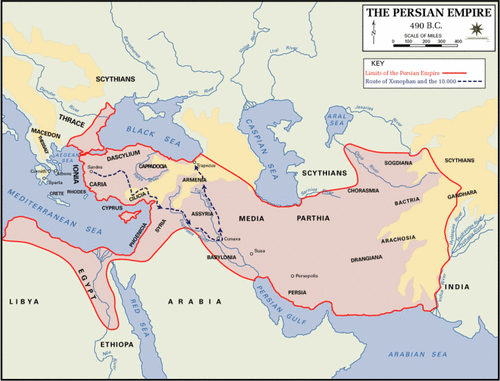
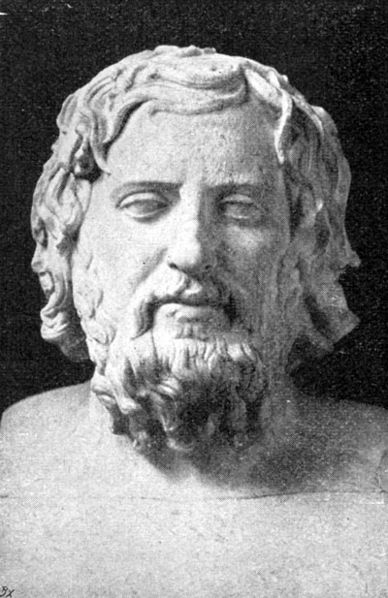
Xenophon pictureI am convinced that a person who does not know world history is severely limiting the amount of experiences to draw upon in times of crisis.  The true story of Xenophon and “the Ten Thousand” men who marched out of Persia is inspirational, educational, and filled with leadership wisdom.  There are many parallels between the five month march of the Greeks out of Persia and the last six months for many reading this blog.  Here is the Wiki history for the background on Xenophon’s and the Ten Thousand’s march.


In his advance against the Persian king, Cyrus the Younger used many Greek mercenaries left unemployed by the cessation of the Peloponnesian War. Cyrus fought Artaxerxes II in the Battle of Cunaxa. The Greeks were victorious in that battle, but Cyrus was killed. Shortly thereafter, the Greek general Clearchus of Sparta was invited to a peace conference, at which he was betrayed and executed. The mercenaries, known as the Ten Thousand, found themselves without leadership deep in hostile territory, near the heart of Mesopotamia, which was far from the sea. They elected new leaders, including Xenophon himself, and fought their way north through hostile Persians, Armenians, and Kurds to Trapezus on the coast of the Black Sea. They then sailed westward back to Greece. On the way back, they helped Seuthes II make himself king of Thrace. Xenophon’s record of the entire expedition against the Persians and the journey home was titled Anabasis (“The Expedition” or “The March Up Country”). It is worth noting that the Anabasis was used as a field guide by Alexander the Great during the early phases of his expedition into Persia.


Now that you have a background of Xenophon and the 10,000 mercenaries, you will enjoy the leadership lessons drawn from Xenophon’s book Anabasis.  Here is a summary of the leadership lessons written by Robert Enzenauer.  What parallels can you draw from the experiences of Xenophon to apply to your life?  Enjoy the article and learn to lead better from Xenophon’s experiences.  God Bless, Orrin Woodward


Many popular books have been written describing the leadership principles of heads of state, Biblical figures, athletes, military commanders and even fictional heroes.


However, according to management expert Peter Drucker, the first systematic book on leadership–and perhaps the best book–was written by Greek historian Xenophon.


Few leaders outside the military even know this extraordinary individual.


Xenophon was one of the well-to-do disciples of Socrates who left Athens to serve with the Greek contingent “the Ten Thousand” raised by Cyrus the Younger of Persia against Artaxerxes.


These troops served Cyrus at the disastrous battle of Cunaxa (401 BC). When Cyrus was killed, the Ten Thousand were forced to flee or surrender to the Persians. After the Persians killed the Greek generals, Xenophon was chosen as one of the leaders of the heroic retreat from Babylon to the Black Sea, with the Greeks fighting their way through an unknown and hostile land.


The success of the five-month march, one of the most famous in military history, was a triumph of discipline and improvisation in the face of overwhelming odds. Xenophon not only managed to lead his men out of Persia, but succeeded in keeping the army intact as a fighting force.


Xenophon’s Anabasis (translated March Up Country or The Persian Expedition) was translated and first published widely in English around the dawn of the 20th century. Drucker read Rex Warner’s 1949 translation and mentioned Xenophon’s writing in his classic The Practice of Management, first published in 1955. Xenophon’s vivid account was revised and reprinted with corrections in 2001 and is now widely available.


Xenophon was a prolific writer. His writing is a veritable treasure trove of examples of successful leadership. Leadership according to Xenophon was the art of inspiring the spirit and the act of following, regardless of the external circumstances. In more metaphysical terms it was the art of turning the soul toward some purpose.


Leadership requires an understanding of human nature Xenophon did not offer checklists of recipes. Rather, he sought to establish a standard for what leadership ought to be. Business leaders should acquaint themselves with this fascinating military figure. Here’s a look at some of Xenophon’s leadership principles that he shared through his writings that are applicable to today’s executives.  


Leaders expect positive results


After the Battle of Cunaxa where Cyrus was killed, the Greek army was demoralized and discouraged as they saw no way of marching 1,000 miles back to Greece with 10,000 soldiers through unfriendly country, not to mention that they currently faced a numerically superior army.


Xenophon assembled the officers and spoke to them. “All of these soldiers have their eyes on you, and if they see that you are downhearted they will become cowards, while if you are yourselves clearly prepared to meet the enemy and if you call on the rest to do their part, you can be sure that they will follow you and try to be like you.”


Xenophon expected positive results and he got them. The Ten Thousand escaped from Artaxerxes and followed Xenophon on the most amazing march in history, despite countless battles and hardships.


Leaders set clear expectations for performance


According to Xenophon, the leader’s primary responsibility in forming his organization is to teach his followers the difference between correct and incorrect performance and behavior, thereby establishing a coherent, attainable set of expectations. For Xenophon, the leader, not the followers, is to blame if expectations are unclear.


Leaders provide a vision of the future


Xenophon thought vision was key. He wrote that “there will be a great rise in their spirits if one can change the way they think, so that instead of having in their heads the one idea of what is going to happen to me? They may think ‘what action am I going to take?'”


Leaders inspire their followers


Sustaining morale was an imperative for Xenophon. The commander who kept his men in a state of readiness, in good physical condition, sustained a competitive spirit and did all he could to ensure their safety.


Xenophon asserted, “You know I am sure that not numbers or strength bring victory in war; but whichever army goes into battle stronger in soul, their enemies generally cannot withstand them.”


Leaders succeed during adversity


According to Xenophon, the true test of a leader is whether people will follow of their own free will even during times of immense hardship. Xenophon regarded it as highly indicative of good leadership when people obeyed someone without coercion and were prepared to remain by him during times of danger.


In describing the superior leadership of Clearchus, Xenophon noted. “When he was in an awkward position, he kept his head, as everyone agrees who was with him anywhere.”


Leaders set the example


Xenophon felt that a great leader had to establish himself in the good opinion of his men and to do this he had to be a model for them by enduring hardship, showing confidence and leading by example.


On one occasion, covered in snow and warm in their beds, the men were unwilling to rise from their sleeping places and face the cold. Xenophon made the point of getting up, although he admitted the need to summon up courage to do so, and started splitting wood for a fire. His example was followed and soon many were doing likewise.


On another occasion, Xenophon was encouraging his men forward while on horseback, when Soteridas criticized him for being mounted while, he, on foot, was tired because of carrying his own shield. Xenophon’s reaction to this was to dismount immediately, take Soteridas’ shield from him, push him out of line, take his place and march with the men.


The reaction of the men to this was to hurl abuse at Soteridas and to pelt him with small stones until he reclaimed his shield and allowed Xenophon to remount.


Xenophon described Clearchus as a good leader. “Here was a good opportunity of seeing how Clearchus led his men, with his spear in his left hand and a staff in his right. If he thought that any of the men detailed for a job were slacking, he would pick on the right man and beat him.


At the same time he went into the mud and lent a hand himself, so that everyone was ashamed not to be working hard with him.”


Leaders are accessible and available


As for Xenophon himself, “Everyone knew that it was permissible to come to him whether he was in the middle of breakfast or supper, or to wake him from his sleep and talk to him, if they had anything to say which had a bearing on the fighting.”


Leaders show initiative


According to Xenophon: “… in heaven’s name, let us not wait for other people to … call upon us to do great deeds. Let us instead be the first to summon the rest to the path of honor. Show yourselves to be the bravest of all the captains, with more of a right to leadership than those who are our leaders at present. As for me, if you are willing to take the initiative like this, I am prepared to follow you.”


Leaders lead from the front, not from the rear


During a march with Seuthes, the King of Thrace, Xenophon came to a part where there was a lot of snow. He examined the ground to see whether there were any footprints leading one way or the other.


After finding that there were tracks on the road, he came back quickly. “We shall be upon these people before they know anything about it,” he said, “I shall now lead the way with the cavalry, so that, if we see anyone, he will not get the chance of running away to give information to the enemy.”


Leaders provide timely and fair discipline


Xenophon was a believer in firm and just discipline. He viewed good morale as of prime importance and saw discipline as a foundation on which to build. He noted the harm that can result from “not punishing people who were behaving in a disorderly way. The result is that, by turning a blind eye to them, you have given the worst elements among them a chance of becoming insufferable.”


He was adamant about fairness, as well. “I admit, soldiers, that I have struck men in cases where there has been lack of discipline–the sort of people who were quite content to have their lives saved by you marching in formation and fighting when it was called for, but who left the ranks themselves and ran ahead and wanted to get more than their fair share of booty.”


Leaders are honest and trustworthy


For Xenophon, trust between men and leader was an imperative. A significant motivation for warfare during Xenophon’s time was the accumulation of the “spoils of war.” However, Xenophon felt that there are no nobler and brilliant possessions than honor and fair dealing and generosity.


“I have never had anything from you for the soldiers and kept it. I have never for my own personal profit asked you for what was theirs. I have never even demanded from you what you promised me. And I swear that I would never have taken it, even if you had offered it to me, unless the soldiers were going to get what was due to them at the same time. It would have been a dishonorable action to get my own affairs straight and allow theirs to remain in a bad way, especially when I was held in honor by them.”

Leaders reward good performance


Xenophon instructed those in his control “… when you have come and taken over the command, you will give to Dexippus and to the rest of them a chance of showing what each is good for, and you will reward each according to his merits.”


In describing Cyrus, he said. “Indeed, whenever anyone carried out effectively a job which he had assigned, he never allowed his good work to go unrewarded. Consequently, it was said that Cyrus got the best officers for any kind of job.”


And, Xenophon added, “When he saw that a man was a capable administrator, acting on just principles, improving the land under his control and making it bring in profit, he never took his post away from him, but always gave him additional responsibility. The result was that his administrators did their work cheerfully and made money confidently.”


Leaders have loyal followers


One of the strongest beliefs held by Xenophon was that a commander must inculcate loyalty in his men. His attitude toward the treatment of all men, including slaves, is plain.


Willingness rather than coercion is the better way, “I think that anyone who makes trouble for his commander when there is a war on is making trouble for himself.”


In describing Clearchus’ leadership, Xenophon noted. “In difficult positions, the soldiers would give him complete confidence and wished for no one better.”


Leaders uphold the highest standards of ethical behavior


In defending himself, Xenophon called an assembly, speaking as follows: “Soldiers, I hear that someone is accusing me of wanting to deceive you. I must beg you therefore to give me a hearing. If it is proved that I am doing you wrong, then I ought not to leave this place without suffering for it. If, on the other hand, it is proved that it is my accusers who are doing the wrong, then you must treat them just as they deserve.”


Leaders take care of their followers


For Xenophon, the link between leader and soldier was an unspoken contract. The care of those under his command was paramount and went hand in hand with sustaining morale. This was not merely adopting successful tactics to ensure their safety, but meant looking after their day-to-day welfare.


Xenophon graphically describes the problems encountered when the march had to be made through deep snow and Xenophon listed the means by which such sufferings could be avoided. As a concerned leader, he ensured that his men followed instructions. According to Xenophon, the most important thing for a commander to do was to sacrifice on behalf of his men.

Posted in All News | 1 Comment »

Self-Leadership vs. Selfish-Leadership

Posted by Orrin Woodward on February 26, 2008

I have been doing research on the difference between self-responsibility and self-centeredness.  On one hand, a person must absolutely accept responsibility for the results produced in their life and be accountable for the outcomes—both good and bad.  On the other hand, a person cannot be focused entirely on self and forget to serve others or they will fall into self centeredness and lose influence.  One of the biggest turnoffs for people is to follow people or companies who are selfish.  If I were to pinpoint the lid on most people’s leadership, it would boil down to one word—Self.  Until a person can reign in their selfish desires and motives, they will never lead to their full potential.  No matter how hard a person works, people will not follow them fully until they are convinced the person desires what is best for them.  The question boils down to: How do I focus on self-discipline while being other-people centered?  This is not something that can be answered in one article—but let’s start with this excellent article from Scott Campbell.  There are some thought provoking points on accountability and self-responsibility in this article.  I remember reading a story about Robert E. Lee: he was asked late in life by a young mother, what advice he could give to her to pass on to her baby boy?  His answer still resonates with me today, “Teach him to deny himself.”  God Bless, Orrin Woodward


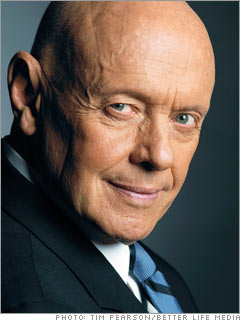
Covey pictureMy original copy of Stephen Covey’s The Seven Habits of Highly Effective People still bears the scars from the time I hurled it in anger against the wall of what was then my office. The broken spine and loose pages bear witness to my lapse in self-control!


I had come across Covey’s book in the early 1990’s, a time when my life seemed to be unraveling. I was angry much of the time, unhappy with my career, my marriage, and much of life in general. I had recently begun counseling to try to untangle this web of misery and was beginning to touch on some very painful events from my childhood. For the very first time in my life, I was beginning to acknowledge the impact of what had happened to me as a child.


And then I read Habit # 1 of Covey’s book: Be Proactive.


Essentially, Covey seemed to be saying, “You are as happy as you are choosing to be. You are responsible for the current state of your life.” When I read that I reacted in anger. And Covey went hurtling.


I was furious at him. I remember thinking, “What does this highly successful, affluent consultant who jet-sets around the world, whose clients are Fortune 500 companies, know about suffering? He’s had an easy ride and knows nothing of what prolonged childhood trauma can do to you. How dare he tell me that I am responsible for my current level of misery!”


But I couldn’t stop reading his book. He had struck a nerve, gotten under my skin.

When I returned to Habit # 1, I went on to read (for the first time) the story of the Jewish psychiatrist, Victor Frankl. Frankl, as some of you likely know, is the father of ‘Logotherapy,’ an approach to therapy that emerged out of his own experience as a survivor of the Nazi death camps of World War II.


While I might dismiss Covey’s experience as lacking credibility for his claims, I could not dismiss Frankl’s experience. Here was a man who had suffered in ways I could not imagine. Thus, when I read the words of Frankl as quoted by Covey, they struck the core of my soul:


“Everything can be taken from a man but one thing: the last of human freedoms—to choose one’s attitude in any given set of circumstances, to choose one’s own way.”


These words came from a survivor of the most horrific atrocity of the 20th century, a man who had lost his own family and friends to the horrors of Nazi brutality.


These words I could not dismiss.


I began to realize that what Covey was saying was not a denial of my pain and trauma but rather, a way out of it!


The “pill” of assuming personal responsibility for my life was a hard one for me to swallow, but I realized that unless I accepted at a deep level that I was responsible for how I had responded to what had happened to me, I would forever be a captive of my past. But if I could accept that I had chosen my response, I was now free to choose a different one.


Hope began to dawn inside me. I started to believe that if I was responsible and able to choose my attitude, to choose my own way, I could choose a new and better path for my life. One that would result in greater happiness, greater inner freedom, and better decisions for my future.


This was my awakening to the importance—and the freedom—of self-leadership.


Since then my conviction has only grown that self-leadership is the foundation of a deeply satisfying, truly successful life.


I define “self-leadership” as the capacity and commitment both to take full responsibility for one’s own responses to life and to create a life that is personally meaningful and fruitful. It is the antithesis of shifting responsibility for one’s degree of happiness and satisfaction to others or circumstances.*


It is by no means easy to exercise self-leadership. From personal experience, I know how easy it is to become stuck in blame. I know the seductiveness of victimhood. For many of us, self-leadership runs against the natural tendency of our thoughts and feelings. Furthermore, self-leadership is, to some degree, counter-cultural. Our culture tends to be blame-oriented. I spill coffee on myself so I sue the company that brewed it. Practicing self-leadership can seem like swimming upstream. What’s more, life’s circumstances frequently are difficult to change—whether it’s a career that doesn’t fit, a marriage that isn’t working, financial difficulties, cynical colleagues, a tyrannical boss, a downturn in the economy, or a myriad other tough times.


It’s important to acknowledge and anticipate that self-leadership isn’t easy.

But it is vital to inner freedom and outer success.


When we fail to exercise self-leadership, we give our power away to others and/or circumstances. The failure to exercise self-leadership tends to enshrine the status-quo. It leaves success and positive change to chance and the desires, dictates, and decisions of others. It can foment feelings of bitterness, anger and disappointment (trust me, I know!). The price we pay when we fail to exercise self-leadership is huge.


So, how can we increase our practice of self-leadership? How can we cultivate it as a habit of mind? Here are five suggestions.


First, accept at a deep level that you are responsible for your past and present responses to what life has brought your way. Don’t deny the past or present and their impact on you. But accept that you had a role in adopting whatever negative beliefs, attitudes, and self-concepts that may have become imbedded in your life as a result of your past and present responses to life’s hardships. Give up the very understandable and natural desire to blame others for your difficulties or negative emotions. Choose to accept that your outlook and emotional responses to life’s challenges were/are your own choice.


This first step tends to be much more a process than an event. Especially if, like me, you have had years and years of practice in blaming others and circumstances for your pain and disappointments. So, commit to the process of learning to accept responsibility for your responses to life and the consequences those choices have created.


Second, start monitoring your self-talk and assumptions in specific situations. Watch to see when you are saying things to yourself (or others) like, “Well, if only they would…” or, “There’s nothing you can do when…” or, “You make me so…” These types of statements, verbalized or thought, lead away from the vista of self-leadership toward the murky bog of blame and reactivity.


Third, when faced with a difficult situation, consciously ask yourself, “What would it mean to exercise self-leadership right now?” If, for example, your boss has been berating you in front of others on a regular basis, ask yourself, “What would it mean for me to exercise self-leadership in this situation?” There are numerous possible answers that could be right for you: choosing to confront your boss at a separate time when you are calm, transferring to a different department, reminding yourself of the pressure that your boss is under and deciding not to take it personally. By asking the question you create the space to be proactive rather than reactive. If you have the time, journal your answers or, if you prefer, talk it through with someone to gain clarity about the best response for you.


Until self-leadership becomes a habit of mind, we will often need to pause and consciously shift to a self-leadership stance. Posing and answering this question forces us to look at circumstances and decisions from a self-leadership perspective.


Fourth, deepen your own self-awareness. The more you know about your deepest needs and values, your talents and strengths, as well as your stressors and blind spots, the more you can make choices that result in greater satisfaction and effectiveness. Self-awareness allows you to play to your strengths in exercising self-leadership. It allows you to better get your needs met, manage your stress, and compensate for your weaknesses. It helps you create circumstances that work for you, not against you.**


Fifth, dream of the future you want to have. While taking action is the ultimate expression of self-leadership, visualizing the future we want to have (whether that is a matter of responding differently in your current circumstances or changing the circumstances themselves) is a key for increasing our motivation for action. Furthermore, it actually increases the likelihood that we will do what we are visualizing. Athletes have used the power of positive visualization for years to increase their levels of performance by visualizing themselves excelling. Recent studies have demonstrated that visualization actually creates the patterns in our brains in advance that we will use during the actual performance.


Most of us already visualize regularly. It’s just that usually we envision things going poorly. Why not use the power of this mental process in a positive way? Exercise self-leadership over your imagination by using positive visualization to increase your likelihood of success.

These five suggestions should get you started on the road to self-leadership.


As I have moved more and more (though not perfectly) towards the regular practice of self-leadership, I have seen several positive results in my life. I am much happier about my present and immensely hopeful about my future. I have actually achieved more in the last decade than I ever would have imagined possible. And, most importantly, I am creating the life I want, rather than merely enduring what life had given.


Self-leadership isn’t easy. But it is vital. It is the foundation of personal and professional success. It is the portal to inner freedom. My bruised copy of Covey’s Seven Habits stands as a reminder to me of these truths.


* I want to emphasize that this is hugely different from denying the impact of our past or the real challenges and difficulties of current circumstances. Self-leadership is a perspective that allows you to acknowledge but not be trapped by the past or the present. It is the portal to inner freedom and the foundation for outer effectiveness.


** Models of personality type (Temperament, Interaction Styles, Psychological Type) are useful as tools to deepen our self-awareness. They give us insights into key dimensions of our psychological make-up, talents, unique stressors, and characteristic behaviors.

Posted in All News | Comments Off on Self-Leadership vs. Selfish-Leadership

Leaders Overcome Obstacles

Posted by Orrin Woodward on February 22, 2008

Are you part of the problem or part of the solution in your community?  I love this parable of the peasant who chose to do something about the problem.  This is how we must be in life.  Instead of complaining about the lack of compassion in our culture – be compassionate.  Instead of railing about the selfish attitudes – be selfless.  Don’t be disappointed by the leadership of our country – be a leader with honor.  I looked for someone to fix all the ills of our society, then I realized I was someone.  Enjoy the parable.  God Bless, Orrin Woodward

In ancient times, a King had a boulder placed on a roadway. Then he hid himself and watched to see if anyone would remove the huge rock. Some of the kirig’s wealthiest merchants and courtiers came by and simply walked around it. Many loudly blamed the king for not keeping the roads clear, but none did anything about getting the stone out of the way. Then a peasant came along carrying a load of vegetables. Upon approaching the boulder, the peasant laid down his burden and tried to move the stone to the side of the road. After much pushing and straining, he finally succeeded. After the peasant picked up his load of vegetables, he noticed a purse lying in the road where the boulder had been. The purse contained many gold coins and a note from the king indicating that the gold was for the person who removed the boulder from the roadway. The peasant learned what many of us never understand. Every obstacle presents an opportunity to improve our condition.

Posted in All News | 1 Comment »

The Power of Determination – Glenn Cunningham

Posted by Orrin Woodward on February 21, 2008

Perseverance and determination will make the difference in life.  I encourage everyone to read good books that feed the soul a message of hope and encouragement.  Be the thermostat not the thermometer every where you go.  Here is an inspiring article from Burt Dubin about the life of athletic star Glenn Cunningham.  If Glenn can overcome his obstacles and setbacks in life, then you can too!  Enjoy the article and hope to see you in St. Louis.  God Bless, Orrin Woodward


The little country schoolhouse was heated by an old-fashioned, pot-bellied coal stove. A little boy had the job of coming to school early each day to start the fire and warm the room before his teacher and his classmates arrived. 

One morning they arrived to find the schoolhouse engulfed in flames. They dragged the unconscious little boy out of the flaming building more dead than alive. He had major burns over the lower half of his body and was taken to a nearby county hospital.

From his bed the dreadfully burned, semi-conscious little boy faintly heard the doctor talking to his mother. The doctor told his mother that her son would surely die – which was for the best, really – for the terrible fire had devastated the lower half of his body.

But the brave boy didn’t want to die. He made up his mind that he would survive. Somehow, to the amazement of the physician, he did survive. When the mortal danger was past, he again heard the doctor and his mother speaking quietly. The mother was told that since the fire had destroyed so much flesh in the lower part of his body, it would almost be better if he had died, since he was doomed to be a lifetime cripple with no use at all of his lower limbs.

Once more the brave boy made up his mind. He would not be a cripple. He would walk. But unfortunately from the waist down, he had no motor ability. His thin legs just dangled there, all but lifeless.

Ultimately he was released from the hospital. Every day his mother would massage his little legs, but there was no feeling, no control, nothing. Yet his determination that he would walk was as strong as ever.

When he wasn’t in bed, he was confined to a wheelchair. One sunny day his mother wheeled him out into the yard to get some fresh air. This day, instead of sitting there, he threw himself from the chair. He pulled himself across the grass, dragging his legs behind him.

He worked his way to the white picket fence bordering their lot. With great effort, he raised himself up on the fence. Then, stake by stake, he began dragging himself along the fence, resolved that he would walk. He started to do this every day until he wore a smooth path all around the yard beside the fence. There was nothing he wanted more than to develop life in those legs.

Ultimately through his daily massages, his iron persistence and his resolute determination, he did develop the ability to stand up, then to walk haltingly, then to walk by himself – and then – to run.

He began to walk to school, then to run to school, to run for the sheer joy of running. Later in college he made the track team.

Still later in Madison Square Garden this young man who was not expected to survive, who would surely never walk, who could never hope to run – this determined young man, Dr. Glenn Cunningham, ran the world’s fastest mile!

Posted in All News | Comments Off on The Power of Determination – Glenn Cunningham

Gladiator Leadership – The Eight Virtues

Posted by Orrin Woodward on February 20, 2008

Here is an incredible article from Greg Smith that exemplifies the type of leaders I see on this Leadership Team Blog.  In today’s competitive global business market only the brave, courageous and honorable leaders will mobilize their teams to success.  Leadership is not for the weak at heart!   Are you developing your Gladiatorial leadership qualities?  Read the article and see for yourself. God Bless, Orrin Woodward


Remember the heart-pounding, soul-stirring message of last year’s critically acclaimed movie Gladiator? Remember how Maximus, the Russell Crowe character, rallied his men around him and led them to victory, even in the face of almost certain defeat? Remember his “envision the goal” technique for getting through the horrors of battle? Now, consider the leadership in your own company. Any gladiators in the ranks? Are you a gladiator?


The time is right for a more heroic style of leadership. Desperate times lend themselves to the rise of gladiators. Instead of seeing today’s economy as a negative, executives should view it as an opportunity in disguise–a chance to position your organization for the inevitable economic upswing. Here are eight virtues of Gladiator Leadership.


1. Gladiators have a mission for which they feel real passion. Call it a purpose, an obsession, a calling: whatever the terminology, good leaders have a defining mission in their life. This mission, above all other traits, separates managers from leaders. In Gladiator, Maximus lived for the mission of killing the evil usurper Commodus and restoring Rome to the values that made her great.


2. Gladiators create a vision. Having and communicating a clear picture of a future goal will lead to its achievement. Dare to think great! Maximus helped his fellow gladiators see that they could overthrow their enemies and survive the horror of the battles they were forced to participate in. In business, a leader may create an “enemy” the economy, the competition, inefficiency-to challenge the energies of his or her people and give them something to fight for.


3. Gladiators lead from the front-they don’t dictate from the back. In the movie, both when Maximus was a general and a gladiator, he fought up front where the firestorm was heaviest. So does a good business leader. Working “in the trenches” shows that you’re not afraid to get your hands dirty, it helps you fully understand the issues your “soldiers” are facing, and inspires loyalty in your troops.


4. Gladiators know there is strength in teams. Where would Maximus have been if he hadn’t trusted his men to fight with him and cover his back? Likewise, where would you be without your employees? While the gladiator leader has the skills to draw people together, he doesn’t hog the spotlight. He has care and compassion for his team and wants every member to be recognized for his or her efforts. This is especially important in a time when the old style “command and control” structure is waning. Younger workers (Generations X and Y) tend to be loyal to their coworkers rather than the traditional “organization.”


5. Gladiators encourage risk-taking. In the Roman Empire, gladiators were expected to die with honor. Refusing to lie down and let one’s opponents win was bucking the status quo. (And certainly, killing the reigning emperor-however corrupt-simply was not done!) If a company does not examine its way of doing things, if it does not push out its boundaries, if it never makes mistakes, it may become road kill.


6. Gladiators keep their heads in a crisis. Maximus had to think on his feet and refuse to give into terror and panic. He faced the most formidable foes calmly and with focus. Business leaders must do the same. They must take a position and defend it when things go awry. Being graceful and brave under fire is the surest way to build credibility-a necessity for sound leadership. Gladiators don’t retreat due to the slowing economy, but look for the opportunity under their feet.


7. Gladiators prepare for battle 24 hours a day. Essentially, a Roman gladiator was a fighting machine. To stay alive, his mind had to be constantly on the upcoming battle. Business leaders, likewise, must be obsessed with training and developing their people in good times and bad. People need and want to hone their individual skills and “sharpen their swords.” Furthermore, good leaders must constantly learn what’s necessary to survive and unlearn the “old rules.” Just because a management style worked a decade ago does not mean it will work in today’s economy-good leaders evolve with the times.


8. Gladiators are teachers and mentors. Maximus taught his men the lessons they would need to survive in their new role as gladiators. In today’s rapidly changing environment, leaders must also teach and train those who may soon replace them. We are not necessarily talking about formal classroom training. We need leaders talking to people in the hallway, in the restaurant . . . everywhere. Everyone should be mentoring someone.


Update: Laurie and I look forward to seeing some Gladiators in St. Louis!

Posted in All News | Comments Off on Gladiator Leadership – The Eight Virtues

The Dumbing of America – How Team Makes a Difference

Posted by Orrin Woodward on February 19, 2008

Want more evidence of why a Team of leaders must step up and pursue excellence?  I was sent this article written by Susan Jacoby that captures the love affair with mediocrity in America.  If I were to begin personally mentoring every one of the blog readers—I would start by encouraging you to read Magic of Thinking Big.  No single book describes the importance of having a big dream to create hunger, as well as this book.   David Schwarz wrote this book in the 1950’s, but its lesson is so relevant today.  Read the book and take notes on the key points to focus on now.   I love the readers of this blog, because they represent a group of men and women prepared to make a difference.  If you want to make a difference in this world, then you need to be different from the world.  The world may shout out a message of hate, mediocrity and situational ethics, but inside of you is a voice that whispers of your God-given destiny.  A life filled with love, honor, courage, and perseverance.  Every day that passes, the voice grows weaker.  Reading and listening to other leaders revives the faint voice inside of you!  God’s gives us the gift of life—what a shame to return it unopened.  The Team training teaches people to read, listen and think again.  We can and will make a difference because we are different!  Enjoy the article.  God Bless, Orrin Woodward

American Idol picture“The mind of this country, taught to aim at low objects, eats upon itself.” Ralph Waldo Emerson offered that observation in 1837, but his words echo with painful prescience in today’s very different United States. Americans are in serious intellectual trouble — in danger of losing our hard-won cultural capital to a virulent mixture of anti-intellectualism, anti-rationalism and low expectations.


This is the last subject that any candidate would dare raise on the long and winding road to the White House. It is almost impossible to talk about the manner in which public ignorance contributes to grave national problems without being labeled an “elitist,” one of the most powerful pejoratives that can be applied to anyone aspiring to high office. Instead, our politicians repeatedly assure Americans that they are just “folks,” a patronizing term that you will search for in vain in important presidential speeches before 1980. (Just imagine: “We here highly resolve that these dead shall not have died in vain . . . and that government of the folks, by the folks, for the folks, shall not perish from the earth.”) Such exaltations of ordinariness are among the distinguishing traits of anti-intellectualism in any era.


The classic work on this subject by Columbia University historian Richard Hofstadter, “Anti-Intellectualism in American Life,” was published in early 1963, between the anti-communist crusades of the McCarthy era and the social convulsions of the late 1960s. Hofstadter saw American anti-intellectualism as a basically cyclical phenomenon that often manifested itself as the dark side of the country’s democratic impulses in religion and education. But today’s brand of anti-intellectualism is less a cycle than a flood. If Hofstadter (who died of leukemia in 1970 at age 54) had lived long enough to write a modern-day sequel, he would have found that our era of 24/7 infotainment has outstripped his most apocalyptic predictions about the future of American culture.


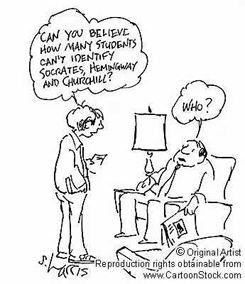
Dumbness, to paraphrase the late senator Daniel Patrick Moynihan, has been steadily defined downward for several decades, by a combination of heretofore irresistible forces. These include the triumph of video culture over print culture (and by video, I mean every form of digital media, as well as older electronic ones); a disjunction between Americans’ rising level of formal education and their shaky grasp of basic geography, science and history; and the fusion of anti-rationalism with anti-intellectualism.


First and foremost among the vectors of the new anti-intellectualism is video. The decline of book, newspaper and magazine reading is by now an old story. The drop-off is most pronounced among the young, but it continues to accelerate and afflict Americans of all ages and education levels.


Reading has declined not only among the poorly educated, according to a report last year by the National Endowment for the Arts. In 1982, 82 percent of college graduates read novels or poems for pleasure; two decades later, only 67 percent did. And more than 40 percent of Americans under 44 did not read a single book — fiction or nonfiction — over the course of a year. The proportion of 17-year-olds who read nothing (unless required to do so for school) more than doubled between 1984 and 2004. This time period, of course, encompasses the rise of personal computers, Web surfing and video games.


Does all this matter? Technophiles pooh-pooh jeremiads about the end of print culture as the navel-gazing of (what else?) elitists. In his book “Everything Bad Is Good for You: How Today’s Popular Culture Is Actually Making Us Smarter,” the science writer Steven Johnson assures us that we have nothing to worry about. Sure, parents may see their “vibrant and active children gazing silently, mouths agape, at the screen.” But these zombie-like characteristics “are not signs of mental atrophy. They’re signs of focus.” Balderdash. The real question is what toddlers are screening out, not what they are focusing on, while they sit mesmerized by videos they have seen dozens of times.


Uneducated Cartoon pictureDespite an aggressive marketing campaign aimed at encouraging babies as young as 6 months to watch videos, there is no evidence that focusing on a screen is anything but bad for infants and toddlers. In a study released last August, University of Washington researchers found that babies between 8 and 16 months recognized an average of six to eight fewer words for every hour spent watching videos.


I cannot prove that reading for hours in a treehouse (which is what I was doing when I was 13) creates more informed citizens than hammering away at a Microsoft Xbox or obsessing about Facebook profiles. But the inability to concentrate for long periods of time — as distinct from brief reading hits for information on the Web — seems to me intimately related to the inability of the public to remember even recent news events. It is not surprising, for example, that less has been heard from the presidential candidates about the Iraq war in the later stages of the primary campaign than in the earlier ones, simply because there have been fewer video reports of violence in Iraq. Candidates, like voters, emphasize the latest news, not necessarily the most important news.


No wonder negative political ads work. “With text, it is even easy to keep track of differing levels of authority behind different pieces of information,” the cultural critic Caleb Crain noted recently in the New Yorker. “A comparison of two video reports, on the other hand, is cumbersome. Forced to choose between conflicting stories on television, the viewer falls back on hunches, or on what he believed before he started watching.”


As video consumers become progressively more impatient with the process of acquiring information through written language, all politicians find themselves under great pressure to deliver their messages as quickly as possible — and quickness today is much quicker than it used to be. Harvard University’s Kiku Adatto found that between 1968 and 1988, the average sound bite on the news for a presidential candidate — featuring the candidate’s own voice — dropped from 42.3 seconds to 9.8 seconds. By 2000, according to another Harvard study, the daily candidate bite was down to just 7.8 seconds.


The shrinking public attention span fostered by video is closely tied to the second important anti-intellectual force in American culture: the erosion of general knowledge.

People accustomed to hearing their president explain complicated policy choices by snapping “I’m the decider” may find it almost impossible to imagine the pains that Franklin D. Roosevelt took, in the grim months after Pearl Harbor, to explain why U.S. armed forces were suffering one defeat after another in the Pacific. In February 1942, Roosevelt urged Americans to spread out a map during his radio “fireside chat” so that they might better understand the geography of battle. In stores throughout the country, maps sold out; about 80 percent of American adults tuned in to hear the president. FDR had told his speechwriters that he was certain that if Americans understood the immensity of the distances over which supplies had to travel to the armed forces, “they can take any kind of bad news right on the chin.”


This is a portrait not only of a different presidency and president but also of a different country and citizenry, one that lacked access to satellite-enhanced Google maps but was far more receptive to learning and complexity than today’s public. According to a 2006 survey by National Geographic-Roper, nearly half of Americans between ages 18 and 24 do not think it necessary to know the location of other countries in which important news is being made. More than a third consider it “not at all important” to know a foreign language, and only 14 percent consider it “very important.”


That leads us to the third and final factor behind the new American dumbness: not lack of knowledge per se but arrogance about that lack of knowledge. The problem is not just the things we do not know (consider the one in five American adults who, according to the National Science Foundation, thinks the sun revolves around the Earth); it’s the alarming number of Americans who have smugly concluded that they do not need to know such things in the first place. Call this anti-rationalism — a syndrome that is particularly dangerous to our public institutions and discourse. Not knowing a foreign language or the location of an important country is a manifestation of ignorance; denying that such knowledge matters is pure anti-rationalism. The toxic brew of anti-rationalism and ignorance hurts discussions of U.S. public policy on topics from health care to taxation.


There is no quick cure for this epidemic of arrogant anti-rationalism and anti-intellectualism; rote efforts to raise standardized test scores by stuffing students with specific answers to specific questions on specific tests will not do the job. Moreover, the people who exemplify the problem are usually oblivious to it. (“Hardly anyone believes himself to be against thought and culture,” Hofstadter noted.) It is past time for a serious national discussion about whether, as a nation, we truly value intellect and rationality. If this indeed turns out to be a “change election,” the low level of discourse in a country with a mind taught to aim at low objects ought to be the first item on the change agenda.

Posted in All News | 2 Comments »

Empathy – The Art of Understanding

Posted by Orrin Woodward on February 18, 2008

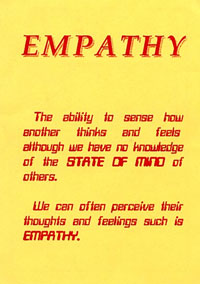
Empathy pictureHere is a fantastic article on empathy by Kelly Gerling, Ph.D. published in The Spinal Column, Nelson Marlborough Health Services, Nelson New Zealand, in December 2000.  Empathy is the ability to put yourself into someone else’s shoes to feel and think what they are feeling and thinking.  Every great leader must develop the ability to think from the perspective of those they lead.  Without this ability, you will not build deep connections with others.  People follow leaders who they feel understand them.  Here is the article. God Bless, Orrin Woodward


On a planet far away, the creature had been tunneling through underground rock, killing miners and sabotaging life support systems needed for the miners to survive underground. The USS Enterprise was called in by the mining authorities to help stop this violence against the miners on this planet. Captain Kirk and Mr. Spock took the lead to try and remedy the situation.


This episode of the original Star Trek TV series, called Devil in the Dark, features a species called the Horta, a creature that lives underground.


Rather than kill the creature, the away team decides to attempt to negotiate with it to develop a win/win solution. The trouble is, they had no understanding of its life cycle, intelligence or motives.


They decided that Mr. Spock would attempt a Vulcan mind-meld with the creature to understand its violent behavior. The creature allowed the mind-meld. By doing the Vulcan mind-meld, Mr. Spock developed a deep, accurate and felt understanding of the creature. He realized that the she lives her whole life underground, is the last of her kind, her environment was threatened by the mining activities, she was a mother and the miners have been killing her eggs. She was defending the eggs when she attacked and killed the miners, and began sabotaging their life support systems.


This understanding became the basis for negotiations whereby the miners could mine in certain areas, and stay away from the Horta’s eggs and environment. In return, the Horta would help them with some tunneling and otherwise leave the miners alone.


It was the mind-meld and the empathy it enabled Mr. Spock to experience that made a win/win, cooperative solution possible.


Empathy


The literature of Star Trek has other characters that exemplify the use of empathy and its importance in improving relationships. For example, Counselor Troi from the Next Generation series comes from a planet inhabited by “empaths” who can experience the feelings, images, words and intentions of others through a form of empathic telepathy.


Fiction often makes clear what is possible in the real world. In my work in helping people in conflict, the use of or development of empathy is nearly always necessary for healing values violations, giving relationships new and healthy beginnings, and allowing real win/win solutions to emerge.


The easiest way to understand the importance of empathy is to recall times when you have been misunderstood or have been in pain. Think of how nice, how pleasant, indeed, how heart-warming it is when someone develops and demonstrates empathy for you.


When someone understands our situation, feels our pains, and deeply cares for our well-being, it changes their behavior and ours. It makes it possible for a damaged relationship to heal and even to emerge from the discussion even stronger than it ever was. This is what empathy makes possible.


Obstacles to Empathy


Perhaps the most common obstacle to empathy for others, is a failure to set aside our own pain long enough, and well enough, to walk in the steps of others. When we get stuck in our own pain, it makes it difficult to feel the pain of others, or to understand them deeply.


Yielding to victim behaviors such as blaming, avoiding, whining, labeling negatively or sarcasm also prevents empathy for the object of one’s negativity. Instead of yielding to destructive impulses, it is far better to heal the wounds that underlie them. Then empathy and other thinking skills become available to you.


Many of our automatic reactions to people with unmet needs or people in conflict come from family or cultural patterns. The various inner capabilities in the VBL system have different degrees of emphasis in different families and cultures. Not all families and cultures promote empathy as a good skill to develop and use. Therefore it is important to recognize thinking limitations that you have inherited from your family and cultural background. Once you’ve done that you can work on overcoming such limitations.


So What If I’m Not Good At Empathy?


If you recognize that you are not so good at empathy, that is the first step toward developing this skill.


Empathy is not limited to particular families, genders, cultures or classes. It is a human skill, one that any of us can develop. When another person is in pain, you can feel it, or learn how to. When another is in a situation different from your own, you can learn to fully understand their experiences. In short, you can develop empathy, each of us can — it is not genetically withheld. It is part of our cognitive heritage as human beings.


How to Develop Your Empathy


One way to develop or activate your empathy for someone is to do so directly. That is, mentally and emotionally use your imagination to step into the other person’s experience. Some actors do this as a way to create their character. Doing so is like the Vulcan mind-meld from Star Trek stories — it happens all at once. Most people have the capability of bringing about empathy in this way. Anyone who dreams at night can use the same skill of imagination, during the day, to put themselves into the experience of others.


Another way to develop your empathy is to remember when you have been in a situation similar, in crucial respects, to the situation the other person is in. If the other person feels disrespected or wronged, remember when you have been disrespected or wronged. If the other person is angry, recall when you have been angry, and feel it. If the other person has dug in their heels and refuses to budge from a position or point of view, remember when you have done the same thing.


Other methods include meditating for understanding, interviewing and listening to learn about the person’s inner world, praying for compassion, and activating values such as a feeling of caring and a sense of responsibility.


Using any of these methods to develop a felt understanding for another person will result in an increase in your empathy. And this will give you a chance to lead the way to deepening understanding, resolving conflicts, and ultimately fulfilling values.


Empathy in Balance with Other Capabilities


A good way to understand VBL inner capabilities like empathy, integrity and objectivity is to visualize them like chairs around a table of leadership intelligence. (Other “chairs” in the VBL system are analytical thinking, seeing the good in others, preventing the victim cycle, long-term and wide-angle vision, and values in action to bring about a leadership cycle.)


In the table scheme, the other person’s chair is the 2nd person position that enables us, when we sit in their chair, to experience empathy; one’s own chair becomes is the 1st person position from which integrity becomes possible; a dispassionate observer’s chair is the 3rd person position that bring about objectivity. (The other chairs expand thinking even further.)


Any excessive “getting stuck” in one chair to the long-term exclusion of the others will throw one’s leadership out of balance. For example, while empathy is a necessary inner skill for leadership, if the needs of others are always the main emphasis, the inevitable result will be some form of co-dependence, and your own values will be neglected. Likewise, an overemphasis on one’s own needs, values and situation, that is, getting stuck in the integrity chair, leads to egotistical self-centeredness. Furthermore, too much objectivity leads to a cold and distant detachment.


It is best for a leader to rotate around the table of leadership intelligence, sitting in each chair, mentally, in a dynamic balance. This type of balance between these and other chairs brings about a coherent type of expanded thinking — leadership intelligence — the result of an integration of our various capabilities.


Results of Empathy in Balance


The way to enjoy good relationships with nearly anyone is to approach them as complete equals. By that I don’t mean equal skills or equal positions or the same roles in an organization. Rather, I mean you can see others as equals in a basic, human sense.


Each person you or I meet is the same as us in that they, like us, seek to fulfill positive healthy values and to prevent values violations and their resulting pain. They, like us, have moments of weakness and make mistakes. They, like us, want to be understood.


By recognizing, through empathy, that each other person is the same in such a deep and basic ways, it is easier to communicate genuinely, to understand them, to bring about cooperation, and to lead the way to the fulfillment of healthy values like trust and respect, excellence and service, love and caring.


Develop your empathy. You’ll be a better, more understanding, more compassionate leader as a result. You’ll confirm how others are similar to you. And you will enjoy discovering more of the mysteries of how others are different from you, even those who seem like creatures, whose behavior seems to make no sense.


I’m reminded of a line from the song, Colors of the Wind from the Pocahontas soundtrack, written by Stephen Schwartz:


” . . . if you walk the footsteps of a stranger

you’ll learn things you never knew you never knew”

Posted in All News | 2 Comments »

Listening – The Lost Art in Relationships

Posted by Orrin Woodward on February 13, 2008

Active Listening pictureIf I were to pick the most important art in dealing with people it would be the art of listening.  Nothing increased my ability to lead people as much as learning how to listen.  No matter how powerful a speaker you develop into, it is not as effective as powerful listening.   I am hesitant to share this topic because I am aware of how much I need to improve in this area still!   With that said, I can still remember the day I focused on listening to others before drawing wrong conclusions and solving the wrong problems.  What a breakthrough it was to realize that not everyone wanted the problem solved as much as they wanted someone to listen!  If I were to pick one area for all Team Leaders to improve in, I would pick listening over all others besides character.   You cannot connect with others until you have listened long enough for them to feel understood by you.  When a person feels you understand; you can work together to solve any issues that need to be addressed, in a spirit of teamwork.  Without listening to others, your solutions come across as domineering and not heartfelt.  Remember, people do not care how much you know until they know how much you care!  Do you care for your community?   If you do, then close your mouth and actively listen to them.  You have two ears and one mouth – please use in that proportion.  Ask questions and listen – save the seminars for when you are asked to speak!  Here is a great article on listening that was emailed to me.  If someone knows the author of the article please add it to the comments.  I would like to recognize the talented authors of the articles shared.  Keep sending me the great articles and if I like them, I will post on our blog! God Bless, Orrin Woodward


We all take talking for granted. Though you may occasionally feel your hands grow cold before giving a speech, you often talk without recognizing the simultaneous changes that occur in your body.


Research shows that while we speak with our words, we also speak with every fiber of our being. This ‘language of the heart’ is integral to the health and emotional life of all of us.


Blood pressure and heart rate elevates every time you speak, even when discussing the most neutral topic. Even those who speak through signing had the same results.


For people who are hypertensive, the rise caused by talking was much greater than for healthy people, and often well into the danger zone. How do hypertensive people handle this? After all, most do not drop dead during social encounters. Other studies show that they subconsciously maintain distance in their relationships and minimize what can be for them ‘lethal dialogues’.


What makes the cardiovascular system of hypertensive’s so vulnerable to verbal communication? Though the hypertensive’s studied were outwardly calm, many tended to talk intensely and breathlessly, interrupting and speaking over other people. This kind of speech is typical of Type – A behavior, an impulsive, hard driving life style linked to increased risk of heart disease.


Most normal talk is a seesaw. The rising of blood pressure when one talks is balanced by a rapid lowering of pressure when one listens. But the rhythm is out of sync in hypertensive’s. They frequently fail to listen; they are on guard, defensive. So their pressure stays up.


Learning to calmly listen to another person helps lower blood pressure. By learning to listen more, by breathing regularly while talking, and paying attention to what the other person is saying, you can learn to lower your blood pressure.


Since so few people genuinely attend to others, those who will learn to draw out the other person can be guaranteed all the friendships they can handle and can be assured of deepening the relationships they presently own.


The road to the heart is the ear. – Voltaire


Why are so many of us poor listeners? Much of our listening education was in the form of be quiet, listen and pay attention. Most of the people in our society are passive listeners, geared to react on trigger words, and shut out tedium.


Time spend learning in school:

40% learning how to read

35% learning how to write

25% learning how to talk

1% learning how to listen or communicate


We can learn to be good listeners with some work and practice. The rewards can be great.


1. Know when you are not listening.


Check yourself by asking silently: Can I repeat, rephrase or clarify what has just been said?” If you can’t, the sound may be on but the replay is broken.


2. Know why you are not listening.

As you define your excuses for not listening you will systematically eradicate the ‘watching someone talk’ syndrome.  Check the following common reasons for not listening and begin to take silent control of the communication.


            * We hear only what we want to hear.

            * We consider the topic or information unimportant.

            * We jump to conclusions

            * Too many other problems on our minds.

            * Radical departure from our own thinking.

            * Waiting for our turn to talk.


3. Avoid judgments.


Nearly all the reasons for not listening focus on our own ego and our inability to grant equal attention to another person.  As soon as the person speaking is elevated to a pinnacle of importance, the active listening process begins and we weigh each thought mightily as if our lives depended on a total recitation of the prior narrative. As you fine tune your listening skills avoid listening only when you deem the speaker worthy of hearing.


4. Match your thought process to the speaker’s words.

We think and hear about 1.000 words per minute. The average speaking speed is 125 words per minute. What then do we do with the time lapse? Human nature combats the problem with anything from boredom to rudeness. Good listeners use the time to clarify, validate and reiterate the conversation topic in their mind.  Listen for ideas and emotions rather than facts. Fact listening is defensive. Emotion listening is offensive. Idea listening is progressive.


5. Know thyself.

Do words like difficult, stupid, revolutionary, or assignments shut off your listening process? Does a reference to love, food or fun cause your ears to perk and your antenna to turn in?  Understand where your hot and cold buttons are and adjust your listening process to circumvent any sudden shut down because of an emotion laden word or phrase. (This seems to me to be what happens with communication with husbands and wives. We allow too many words to become hot or cold buttons and therefore we render ourselves unable to really communicate)


6. Conversation always moves from agreement to disagreement and then stops.


Listeners who are involved in two way conversation and are prepared to repeat and clarify information will immediately direct the conversation back to agreement and then reach an understanding.


7. Keep alert.


Listening shuts down when both apathy and anxiety set in. Strive for enthusiasm in listening. Communicate with you body; lean forward, smile, nod, become involved by maintaining direct eye contact.  If you are on the telephone; stand up, walk. The more attentive and alert, the better you listen.  Listening is an acquired skill that is critically important to success in life. Adults spend about 75% of each day in verbal communication. 45% of this time is spent listening. Persons in a business or social situation who do not have good listening skills are ineffective. Mistakes due to poor listening skills cost organizations thousands of dollars each year.  Listening to another is the highest form of building personal self esteem. For only when we feel good about ourselves and the world around us do we go beyond ‘waiting for our turn to talk’ or ‘watching someone else talk’ to ‘passionate’ listening that elevates us to pinnacles of thought and action separates us from animals making noise.


The greatest gift you can give another is the purity of your attention. –  Richard Moss

A smile is the light in your face that lets others know your heart is at home.


Listening attentively to another is to pay the highest compliment to them.  You do not have to be witty to be a good conversationalist you simply have to know how to listen. The secret of being interesting is to be interested in the other person. Ask questions the other person will enjoy answering. Encourage them to talk about themselves. But don’t be the silent partner in the conversation. Silence can be described as negative feedback. Like a failed monitoring system on a moon rocket, it tells you something is wrong, but it doesn’t go very far toward telling you what. “Respond to their questions and especially their comments that can open the emotional connection between you.


Conversation with your friends will indeed get sparse if you restrict yourselves to facts, but when you talk about your feelings there will always be plenty to discuss.  It’s amazing the way a man listens to you. When you talk to him he looks you squarely in the eye. He seems to shut out all other interests and hang on every word you utter. It is flattering to have someone give you that much of his attention. The eye lock is a powerful magnet for making contact with people. Look people squarely in the eye it is one of the surest indicators that you are interested in the other person.


Be careful not to give advice too quickly. Often people ask for advice when what they really want is for someone to listen to them. By listening to them you help them get the problem outside of themselves and on the table between you, the issues become clear and they are able to arrive at their own decision.


When people confide in you they are often afraid they have said too much. They will be watching you to see if you raise your brows or appear to have lost confidence in them. It is important to alley those fears by not over reacting to what has been said. To put them at ease compliment them on being able to share with you. By all means don’t reveal anyone’s private matters. When you tell something told to you in confidence you identify yourself as an untrustworthy confidant. So the way to be a confidant is to let no one know that you are a confidant to others.


That which is in the well of the heart is bound to come up in the bucket of speech.


You never really understand a person until you consider things from his point of view. Harper Lee – To Kill a Mockingbird


Seek first to understand and then to be understood.  Most people do not listen with the intent to understand: they listen with the intent to reply.  They’re filtering everything through their own paradigm, reading their autobiography into other people’s lives.  The Seven Habits of Highly Effective People – Covey

Posted in All News | 5 Comments »