Orrin Woodward on LIFE & Leadership

Inc Magazine Top 20 Leader shares his personal, professional, and financial secrets.

Archive for April, 2014

And Justice For All

Posted by Orrin Woodward on April 30, 2014

Lady Justice

Lady Justice

I am so excited to be finally releasing the first of a trilogy of books on the never-ending power-struggle between the State and Society in human history. And Justice for All will be released at the LIFE Leadership Major Convention in Columbus Ohio in June. I am so thankful to the LIFE Leaders who have blessed me with their friendship, thoughts, and suggestions to make this book better.

A special thanks to my amazing wife Laurie Woodward and our two youngest sons (Lance and Jeremy) for participating in our family discussions upon the concepts in this book. I have experienced first-hand the growth of these two teenager of their knowledge of the roles of the State and Society. 

Here is a short segment from the book to illustrate the power of ideas in one’s life.

Sincerely,

Orrin Woodward

Author Warren T. Brookes captures how the duality within human nature and methods for creating wealth has led to a division within the science of economics as well:

One view, defined by Adam Smith and Jean-Baptist Say, is that wealth is primarily metaphysical, the results of ideas, imagination, innovation, and individual creativity, and is therefore, relatively speaking, unlimited, susceptible to great growth and development . . . After all, if wealth truly is metaphysical, the result more of mind than matter, the “wealth of nations” has to be seen as the direct result of the creative activity of individuals and the degree to which that activity is either liberated or restricted by governmental, trade, or societal structures and strictures . . . The other, espoused by Thomas Malthus and Karl Marx, contends that wealth is essentially and primarily physical, and therefore ultimately finite. The modern presentation of this view argues that since usable energy is steadily diminishing into entropy, all wealth is really cost to be shared more equitably . . .  If one believes that wealth is primarily a function of material resources, and is therefore limited (or declining), it is only natural that one would see the role of economic policy as the just and collective conservation, distribution, and redistribution of these limited resources until the end is reached.

Smith and Say believe wealth is metaphysical, and since ideas are unlimited, society should employ the “economics means” of wealth creation to raise the tide of humanity and its societal ships. In contrast, Malthus and Marx believe wealth is physical, and since resources are limited, society should employ the “political means” of wealth expropriation to direct the tide equitably between societal ships. This divergence in economic thought relates back to the divergence in methods to create wealth which tracks back to the divergence within man himself.

One of the key objectives of this book is to educate leaders in the systematic interactions between these two opposing forces within society.  For only when this is understood can we achieve long lasting concord within society.  Towards that end, there are three questions that must be answered in order to achieve enduring concord within society.

  1. What areas of society prosper best under liberty and persuasion?
  2. What is the proper role of government within society to ensure justice for all?
  3. How does society check government’s “monopoly of force” from expanding into areas it doesn’t belong?
Posted in Freedom/Liberty, LIFE Leadership | 23 Comments »

Ancient Greece’s Power Pendulum

Posted by Orrin Woodward on April 19, 2014

The Six Duties of Society (SDS) and the Five Laws of Decline (FLD) are present in every human society because it the seeds of both processes are inherent within the human heart. LIFE Leadership is a company that focuses on expanding the SDS and restraining the FLD. In a similar fashion, every successful society rises under the impetus of the SDS and eventually falls when the FLD kill it.

I promise that anyone who reads history with an SDS and FLD mindset will see it everywhere. For instance, the following video about the Greeks and the Power Pendulum is from a talk I gave last year. Listen to the video and tell me where else you have seen the FLD working within society.

Sincerely,

Orrin Woodward

Posted in Freedom/Liberty, LIFE Leadership | 5 Comments »

Robinson Crusoe: The Entrepreneur

Posted by Orrin Woodward on April 16, 2014

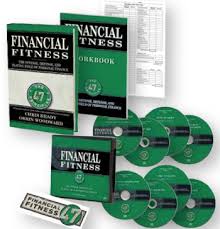
Financial Fitness Pack

Financial Fitness Pack

This is part 2 of Hernando de Soto’s enlightening example of the savings process role in a non-State-interventionist’s free market economy.  LIFE Leadership has taught, since its inception, the three keys to wealth (1. Long term Vision; 2. Delayed Gratification; 3. Utilize the Power of Compounding). Unfortunately, the State does not follow these concepts and, since 1913, it has rarely attempted to apply these principles. Instead, it chooses inflation, taxation, and debt accumulation, seeking short-term bandaid fixes while the underlying issues become a greater risk to society’s future.

Needless to say, the current lack of long term vision, delayed gratification, and positive power of compounding must be changed. I believe the only way to change the political process is to change the thinking of the populace. Instead of demanding the State take care of everything, what if we put the State on a fixed budget and demanded they balance it? Imagine someone in Washington having to balance the budget like practically every household in the world must.

The State must end the temporary stopgaps (printing money and debt growth) which only mortgage our children’s financial futures to satisfy the State’s financial lunacy.

What can we do? We can start by displaying financial literacy in our own home by applying the principles from the LIFE Leadership Financial Fitness Pack. On a weekly basis, I am receiving letters, emails, and LIFE Lines describing how the Financial Fitness Pack has changed their financial future. Indeed, how can we criticize the financial mess in Washington until we model the proper behavior personally?

Let’s lead our homes first and then find leaders who will do the same in every branch of government.

If you have applied the principles from the Financial Fitness Pack and have achieved progress in your personal financial situation then please share a comment below.

Sincerely,

Orrin Woodward

Robinson Crusoe’s production process, like any other, clearly arises from an act of entrepreneurial creativity, the actor’s realization that he stands to benefit, i.e., he can accomplish ends more valuable to him, by employing action processes which require a longer period of time (because they include more stages). Thus action or production processes yield capital goods, which are simply intermediate economic goods in an action process whose aim has not yet been reached. The actor is only willing to sacrifice his immediate consumption (i.e., to save) if he thinks that by doing so he will achieve goals he values more (in this case, the production of ten times more berries than he could gather by hand).

Furthermore Robinson Crusoe must attempt to coordinate as well as possible his present behavior with his foreseeable future behavior. More specifically, he must avoid initiating action processes that are excessively long in relation to his savings: it would be tragic for him to run out of berries (that is, to consume all he has saved) halfway through the process of producing a capital good and without reaching his goal. He must also refrain from saving too much with respect to his future investment needs, since by doing so he would only unnecessarily sacrifice his immediate consumption. Robinson Crusoe’s subjective assessment of his time preference is precisely what enables him to adequately coordinate or adjust his present behavior in relation to his future needs and behavior.

On the one hand, the fact that his time preference is not absolute makes it possible for him to forfeit some of his present consumption over a period of several weeks with the hope of thus being able to produce the stick. On the other hand, the fact that he does have a time preference explains why he only devotes his efforts to creating a capital good he can produce in a limited period of time and which requires sacrificing and saving for a limited number of days.

If Robinson Crusoe had no time preference, nothing would stop him from dedicating all of his efforts to building a hut right away (which, for example, might take him a month minimum), a plan he would not be able to carry out without first having saved a large quantity of berries. Therefore he would either starve to death or the project, out of all proportion to his potential saving, would soon be interrupted and abandoned. At any rate, it is important to understand that the real saved resources (the berries in the basket) are precisely the ones which enable Robinson Crusoe to survive during the time period he spends producing the capital good and during which he ceases to gather berries directly.

Posted in Finances, Freedom/Liberty, Leadership/Personal Development, LIFE Leadership | 9 Comments »

Robinson Crusoe the Capitalist?

Posted by Orrin Woodward on April 14, 2014

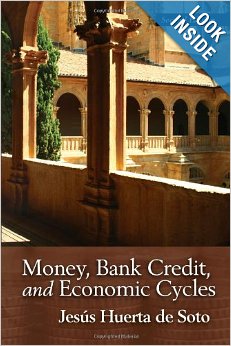
Jesus Huerta de Soto

Jesus Huerta de Soto

In Hernando de Soto’s fantastic book Money, Bank Credit, and Economic Cycles, he uses a simple example from Robinson Crusoe to explain how savings is essential for the free enterprise process. Understanding these concepts at the simplest levels helps one decipher the more complicated cases in today’s modern economies. I have spent the last year really studying the fractional reserve banking (FRB) methods and now realize the highly inflationary nature of this process.

Unfortunately, the modern State’s marriage to the banking system has only exacerbated the ill effects of FRB by juicing the whole process with fiat money created through the central banks. Thus, the money supply grows precipitously during the Boom process and banks enjoy massive profits until the borrowers (both business and consumers) realize their inability to repay the debts at the now inflated prices cause the the monetary expansion. Of course, this leads to the Bust when debt defaults rapidly reverse the FRB monetary expansion.

LIFE Leadership is just months away from releasing my new book And Justice for All that reveals the SDS and FLD and how they interact within society. Increasingly, entrepreneurs are failing because they can no longer make accurate predictions based upon current prices thanks to the Boom/Bust FRB cycles. With that said, however, I am not a doom and gloom person as I believe the truth sets you free. It’s time for We the People to learn, live, and apply truth in the areas of finances (both personally, professionally, and societally) and restore the American (along with every other societies) Dream for the next-generation.

Here is part I of a two part series.

Sincerely,

Orrin Woodward

The sine qua non for producing capital goods is saving, or the relinquishment or postponement of immediate consumption. Indeed in an action process the actor will only be able to reach successive and increasingly time-consuming intermediate stages if he has first sacrificed the chance to undertake actions which would produce a more immediate result. In other words, he must give up the achievement of immediate ends which would satisfy current human needs (consumption).

To illustrate this important concept, we will use the example given by Böhm-Bawerk to explain the process of saving and investment in capital goods carried out by an individual actor in an isolated situation, such as Robinson Crusoe on his island. Let us suppose that Robinson Crusoe has just arrived on his island and spends his time picking berries by hand, his only means of subsistence. Each day he devotes all of his efforts to gathering berries, and he picks enough to survive and can even eat a few extra daily.

After several weeks on this diet, Robinson Crusoe makes the entrepreneurial discovery that with a wooden stick several meters long, he could reach higher and further, strike the bushes with force and gather the necessary berries much quicker. The only problem is that he estimates it could take him five whole days to find a suitable tree from which to take the stick and then to prepare it by pulling off its branches, leaves, and imperfections. During this time he will be compelled to interrupt his berry picking. If he wants to produce the stick, he will have to reduce his consumption of berries for a time and store the remainder in a basket until he has enough to survive for five days, the predicted duration of the production process of the wooden stick.

After planning his action, Robinson Crusoe decides to undertake it, and therefore he must first save a portion of the berries he picks by hand each day, reducing his consumption by that amount. This clearly means he must make an inevitable sacrifice, which he nevertheless deems well worth his effort in relation to the goal he longs to achieve. So he decides to reduce his consumption (in other words, to save) for several weeks while storing his leftover berries in a basket until he has accumulated an amount he believes will be sufficient to sustain him while he produces the stick. This example shows that each process of investment in capital goods requires prior saving; that is, a decrease in consumption, which must fall below its potential level.

Once Robinson Crusoe has saved enough berries, he spends five days searching for a branch from which to make his wooden stick, separating it from the tree and perfecting it. What does he eat during the five days it takes him to prepare the stick, a production process which forces him to interrupt his daily harvest of berries? He simply consumes the berries he accumulated in the basket over the preceding several-week period during which he saved the necessary portion from his handpicked berries and experienced some hunger. In this way, if Robinson Crusoe’s calculations were correct, at the end of five days he will have the stick (a capital good), which represents an intermediate stage removed in time (by five days of saving) from the immediate processes of the berry production (by hand) which up to that point had occupied him.

With the finished stick Robinson Crusoe can reach places inaccessible to him by hand and strike the bushes with force, multiplying his production of berries by ten. As a result, from that point on his stick enables him to gather in one-tenth of a day the berries he needs to survive, and he can spend the rest of his time resting or pursuing subsequent goals that are much more important to him (like building a hut or hunting animals to vary his diet and make clothes).

Posted in Freedom/Liberty, LIFE Leadership | 22 Comments »

Anti-Federalist Fears are Today’s Reality

Posted by Orrin Woodward on April 8, 2014

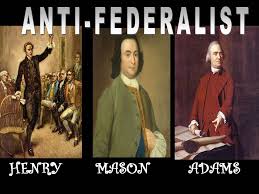
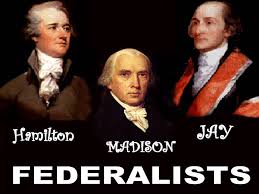
The Federalist/Anti-Federalist debates at the founding of America have some of the best insights into government and society that have ever been written. Unfortunately, few have read both sides of the debate. I am working on a book project that will provide the main points from both sides and discuss where history has proven each side right.

LIFE Leadership is about providing truth for one to learn how to think and reason in order to better his/her life. I am so thankful I get to do what I do with the greatest compensated community and customer base in the world! 🙂 Below is a short segment from the upcoming work.

Sincerely,

Orrin Woodward

The Anti-Federalist

The Anti-Federalist

“[C]onstitutions are not so necessary to regulate the conduct
of good rulers as to restrain that of bad ones.”
—Robert Yates (Brutus), Anti-Federalist

What the Anti-Federalists Had to Say

The Anti-Federalists had a number of very important things to say about the powers of the sword and the purse. For example, as one Anti-Federalist wrote in the Pennsylvania Minority Report: “[T]he new government will not be a [cooperation] of states, as it ought, but one consolidated government, founded upon the [federal control] of…the states…”

In other words, one huge problem with the Constitution was that it gave too much power to the federal government, swinging the nation in the direction of Coercion—as I have already discussed. But the really interesting thing is exactly how the Pennsylvania Minority Report predicted that this would happen:

The Federalists

The Federalists

“The powers of Congress under the new constitution, are complete and unlimited over the purse and the sword, and are perfectly independent of, and supreme over, the state governments, whose intervention in these great points is entirely destroyed. By virtue of their power of taxation, Congress may command the whole, or any part of the property of the people.

“They may impose what imposts upon commerce; they may impose what land taxes, poll taxes, excises, duties on all written instruments, and duties on every other article that they may judge proper; in short, every species of taxation, whether of an external or internal nature is comprised in section the 8th, of article the 1st [of the Constitution], viz., ‘The Congress shall have power to lay and collect taxes, duties, imposts, and excises, to pay the debts, and provide for the common defence and general welfare of the United States.”

This was a major concern for the Anti-Federalists. They predicted that the federal government would use the power of the sword as an excuse to increase the federal power of the purse, and then just keep increasing their powers until the federal government did much, much more than protect our national defense.

They saw that the federal powers of sword and purse would lead to federal involvement in every facet of our lives. This is exactly what happened.

Posted in Freedom/Liberty, LIFE Leadership | 20 Comments »

America’s Power Pendulum

Posted by Orrin Woodward on April 2, 2014

American society is moving away from concord and quickly into coercion. Where people used to function with leadership and service to others, it is now functioning more and more under compulsion and threats. Unfortunately, this is the normal outcome when the State assumes responsibility for society’s roles.

In my soon-to-be-released book And Justice for All, I cover the roles of the force State and free society. Anytime the roles get mixed up the Power Pendulum moves into either chaos or coercion. LIFE Leadership is an all-volunteer community based upon leadership and service to others. Our goal is to build compensated communities and teach people entrepreneurship and the principles of a healthy civilization.

Below is a portion of a talk I gave last year in Saginaw, Michigan.

Sincerely,

Orrin Woodward

Posted in Leadership/Personal Development, LIFE Leadership | 15 Comments »