I wanted to share on my blog an article I wrote for LinkedIn on Soft Skills and Hard Skills. LIFE Leadership is in the sweet spot for business and personal development with its emphasis on Soft Skill growth. Soft Skills could be compared to Emotional Quotient while Hard Skills could be compared to Intelligence Quotient. Both are important but the picture of the iceberg below depicts their relative contribution. A huge thank you to CEO Chris Brady, the field leaders, and our many customers for your support.
Sincerely,
Orrin Woodward
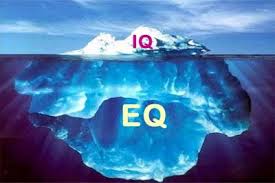 There is a leadership revolution brewing in America today. Companies have discovered that the mastery of technical skills alone does not make an employee a leader. In addition to the technical “hard skills,” a leader must also master the relational “soft skills” in order to advance personally and professionally.
While technical hard skills are typically learned during one’s formal education and supplemented with on-the-job training, soft skills, in contrast, are rarely taught in school or at work. Therefore, a potential leader must take personal responsibility for learning and applying the relational soft skills in his daily interactions with others. However, to do this properly, one must first understand the difference between a hard skill and a soft skill.
Perhaps the simplest method for differentiating between the two types of skills is to consider hard skills as science and soft skills as art. Whereas science focuses on objective numerical outcomes that can be measured, art focuses on subjective aesthetic outcomes that must be experienced. Hard skills (like typing speed, IQ level, or computer programming skills) can be measured objectively, while soft skills (like teamwork, patience, and persistence) can only be measured subjectively.
Soft skills produce impressive objective results because they are absolutely essential for great leadership. For instance, just because one cannot scientifically measure a leader’s influence, that does not mean it isn’t real or valuable to the company. It simply means that teammates experience the art of a leader’s soft skills despite the fact that those skills are not quantifiable. Of course leaders must have science-side competence (objective skills), but the difference maker is their art-side influence (subjective skills).
The second difference between hard and soft skills is in their scope of use. While hard skills are job-dependent techniques that can change with time and new assignments, soft skills are people-dependent and thus practically unchanging because they are based on timeless principles. When a person studies the leadership lessons from ancient Greece, Rome, and Jerusalem, he is struck by how soft skills of yesterday worked the same as they do today. That is to say, the art-side soft skills are timeless and relevant regardless of the profession one chooses, so long as it involves working with other people.
The third difference between the two skill sets is in how those skills are taught to others. Leaders can develop soft skills and even master them, but this doesn’t make it any easier to teach them to others. Unlike hard skills mastery, which can be taught in classrooms through memorization of rules and formulas, soft skills mastery must be learned in real-life experiences. In other words, hard skills can be learned in a classroom through instruction of the mind, but soft skills must be learned in life through instruction of the heart. Leadership mastery is rare because it is an art taught mostly through experience. It demands from leaders the ability to make decisions while juggling numerous initiatives, resources, and people to produce profitable results that honor the company and its people—not an easy assignment by any means and even more difficult to pass along to others.
Interestingly, today’s technological scientific age has not reduced the importance of soft skills but has, if anything, increased it. Nearly every company has impressive technology and brains, but only those with leadership apply the soft skills to adapt quickly. MIT Professor Peter Senge once wrote, “The only sustainable competitive advantage is an organization’s ability to learn faster than the competition.” Companies learn faster when leaders model and message soft skill development within their teams. The result is that more employees feel connected to the company, its leaders, and its vision, which means the organization will learn and change faster.
Not surprisingly, modern statistical research confirms the importance of soft skills. Google, in a study codenamed “Project Oxygen,” data-mined every performance review, feedback survey, and nomination for top-manager awards within the company. Google identified the eight most important skills for effective leadership and discovered that technical expertise ranked dead last out of the eight. Historically, Google’s management strategy was simple: leave the programmers alone, and when they needed help, they could reach out to their bosses, who were promoted based upon their mastery of technical skills. However, according to Laszlo Bock, Google’s Vice President of “Human Operations,” Project Oxygen changed their mindset. “In the Google context, we’d always believed that to be a manager, particularly on the engineering side, you need to be as deep or deeper a technical expert than the people who work for you,” Mr. Bock says. “It turns out that that’s absolutely the least important thing. It’s important, but pales in comparison. Much more important is just making that connection and being accessible.”
Google’s findings are not really new but merely confirm statistically what was previously known intuitively, namely, that everything rises and falls on leadership. In 1936, Dale Carnegie described what Google’s study revealed when he wrote, “. . . 15 percent of one’s financial success is due to one’s technical knowledge and about 85 percent is due to skill in human engineering—to personality and the ability to lead people.”
To be sure, hard skills are vital for professional competence, but if a person desires to climb within his profession, he must not neglect his leadership soft skills. For true leaders combine the science-side hard skills and the art-side soft skills to build leadership cultures of trust and influence. Simply put, leadership is the only sustainable competitive advantage in today’s marketplace.