Private Property and Prosperity
And Justice For All
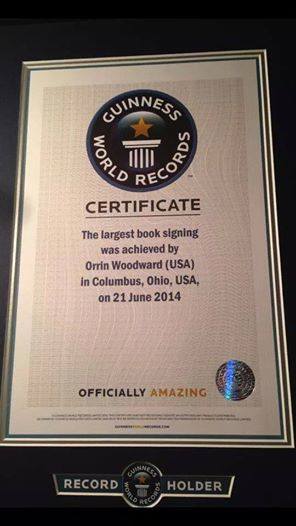
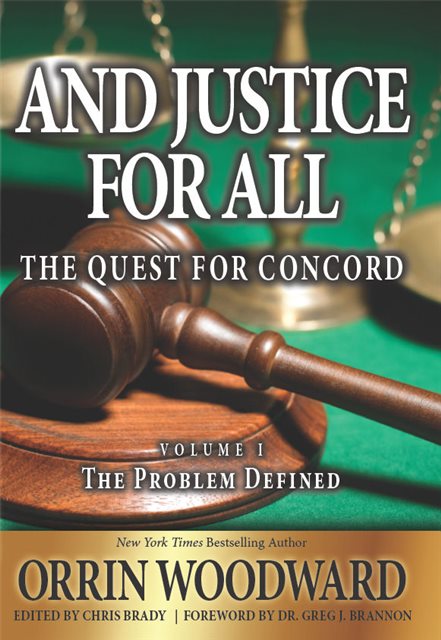
The right to private property, as I discuss in my recently released Guinness World Record breaking book And Justice For All: The Quest for Concord, is an essential part of a working civilization. Without it, injustice and apathy quickly destroy the Six Duties of Society productivity. This isn’t just my opinion, it has been proven over and over again throughout history. For instance, the Pilgrims (a Godly group of Puritan separatist) attempted a communal approach to land when they first arrived in Plymouth, The catastrophic results nearly wiped out the colony.
Why? Because people quickly discover that regardless of how much work they do, they share in the rewards equally. This causes a Gresham’s Law decline in productivity as everyone seeks to do the minimum possible. However, because few work under this plan, famine and hunger result. For the past 20 years I have studied the effects of of compensation upon results. LIFE Leadership realizes that in a Compensated Community, the rewards must follow those who do the work. In other words, private property reigns.
William Bradford, the leader of the Plymouth Colony discovered this for himself. In fact, he captured the challenge and response in his history of the settlement. Private Property is the only way that a person can reap what he has sown. If he does not work, he will not eat as Paul stated. Hunger, it seems, has historically been a great motivator for people to act. A modern equivalent is the statement that a timid salesperson has skinny kids. 🙂 If a person can eat without working, rest assured many people will follow Gresham’s Law and choose the same path.
Indeed, remember that someone always owns property. The choices are 1) private individuals with no monopoly of force or 2) the State with a monopoly of force. If feel much safer knowing private people own property, not only for the productivity gains, but also for the protection of liberty inherent within ownership. Private property tells the State to keep it hands off this private sphere. However, if the State owns everything then the peopler are merely serfs or slaves.
Leon Trotsky, the Russian communist, said as much when he cynically changed the Biblical admonition to work into “He who will not obey will not eat.” Simply put, allowing the State to own the land means the people are at the mercy of those in power. Therefore, those who hate private property inadvertently support oppression of the people and depression of the economy. Perhaps its time to learn from our Bradford’s history of the Plymouth Plantation.
Sincerely,
All this while no supplies were heard of, nor did they know when they might expect any. So they began to consider how to raise more corn, and obtain a better crop than they had done, so that they might not continue to endure the misery of want. At length after much debate, the Governor, with the advice of the chief among them, allowed each man to plant corn for his own household, and to trust to themselves for that; in all other things to go on in the general way as before. So every family was assigned a parcel of land, according to the proportion of their number with that in view, — for present purposes only, and making no division for inheritance, — all boys and children being included under some family.
This was very successful. It made all hands very industrious, so that much more corn was planted than otherwise would have been by any means the Governor or any other could devise, and saved him a great deal of trouble, and gave far better satisfaction. The women now went willingly into the field, and took their little ones with them to plant corn, while before they would allege weakness and inability; and to have compelled them would have been thought great tyranny and oppression.
The failure of the experiment of communal service, which was tried for several years, and by good and honest men proves the emptiness of the theory of Plato and other ancients, applauded by some of later times, — that the taking away of private property, and the possession of it in community, by a commonwealth, would make a state happy and flourishing; as if they were wiser than God.
For in this instance, community of property (so far as it went) was found to breed much confusion and discontent, and retard much employment which would have been to the general benefit and comfort. For the young men who were most able and fit for service objected to being forced to spend their time and strength in working for other men’s wives and children, without any recompense. The strong man or the resourceful man had no more share of food, clothes, etc., than the weak man who was not able to do a quarter the other could. This was thought injustice. The aged and graver men, who were ranked and equalized in labour, food, clothes, etc., with the humbler and younger ones, thought it some indignity and disrespect to them. As for men’s wives who were obliged to do service for other men, such as cooking, washing their clothes, etc., they considered it a kind of slavery, and many husbands would not brook it.
This feature of it would have been worse still, if they had been men of an inferior class. If (it was thought) all were to share alike, and all were to do alike, then all were on an equality throughout, and one was as good as another; and so, if it did not actually abolish those very relations which God himself has set among men, it did at least greatly diminish the mutual respect that is so important should be preserved amongst them. Let none argue that this is due to human failing, rather than to this communistic plan of life in itself. I answer, seeing that all men have this failing in them, that God in His wisdom saw that another plan of life was fitter for them.
These matters premised, I will now proceed with my account of affairs here. But before I come to other things I must say a word about their planting this year. They felt the benefit of their last year’s harvest; for by planting corn on their own account they managed, with a great deal of patience, to overcome famine. This reminds me of a saying of Seneca’s (Epis. 123): that an important part of liberty is a well-governed belly, and patience in want.
The settlers now began to consider corn more precious than silver; and those that had some to spare began to trade with the others for small things, by the quart, pottle, and peck, etc.; for they had not money, and if they had, corn was preferred to it. In order that they might raise their crops to better advantage, they made suit to the Governor to have some land apportioned for permanent holdings, and not by yearly lot, whereby the plots which the more industrious had brought under good culture one year, would change hands the next, and others would reap the advantage; with the result that manuring and culture of the land were neglected. It was well considered, and their request was granted.
Every person was given one acre of land, for them and theirs, and they were to have no more till the seven years had expired; it was all as near the town as possible, so that they might be kept close together, for greater safety and better attention to the general employments.